Key Takeaways
1. Researchers are exploring the use of quantum rods instead of quantum dots to improve energy efficiency in future TVs and displays.
2. Traditional quantum dots are currently used in QLED models but have limitations, including a lack of self-emissive versions on the market.
3. Quantum rods have shown potential for high thermal stability and may be ideal for bright HDR displays.
4. Research on practical applications of quantum rods is still in early stages despite foundational feasibility being proven.
5. Marketing of quantum materials is complex, with companies like Samsung facing challenges in accurately representing their QLED technology.
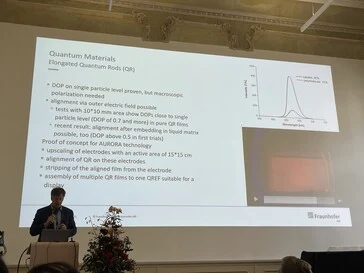
Will the QRED TV be the next advancement after QLED and LCD TVs? Researchers are currently engaged in discussions about the potential of using quantum rods instead of quantum dots, as revealed in a presentation at the SID-MEC conference held in Germany. Quantum rods, which have a rod-like structure, could enhance the energy efficiency of future TVs and displays, according to Jan Niehaus. He has dedicated years to the study of quantum materials and quantum rods at Fraunhofer IAP-CAN.
Quantum Dots and Their Limitations
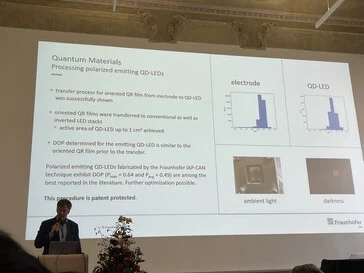
Traditional quantum dots are utilized as a layer in TVs labeled as QLED models (LCD with QD-BLU), and they may also show up in easier-to-manufacture microLED screens. However, the self-emissive versions for authentic QLED TVs are not yet available on the market, and they might also be referred to as EL-QD, QD-LED, QED, QE display, or nano LED. When compared to these quantum dots, the layer of aligned rods could lead to reduced energy use.
Promising Research Developments
Niehaus states that the foundational feasibility has been proven in research. A QR layer has been successfully implemented and is anticipated to exhibit high thermal stability. Thus, these rods might be especially well-suited for very bright HDR displays and televisions. However, it’s important to note that research into practical applications is still in its infancy.
Complex Marketing Challenges
Additionally, the marketing of quantum materials remains rather complex. In a recent promotional video, Samsung has started to differentiate between authentic and inauthentic QLED displays. However, the company approaches this in a way that may not align with researchers’ expectations, as Samsung’s “real” QLED displays are still technically not genuine QLED displays. This is why Samsung refers to its own QLED technology as “QE display” or “QED,” attempting to sidestep the confusion of marketing claims that clash with ongoing research in the field.