
Key Takeaways
1. Psyche is a unique metal-rich asteroid located in the asteroid belt between Mars and Jupiter, with a diameter of about 140 miles.
2. Scientists speculate that Psyche may be an exposed planetary core, potentially providing insights into the cores of planets and their formation processes.
3. NASA’s Psyche mission, launched in 2023, aims to reach the asteroid by 2029 to analyze its surface composition, gravity, magnetic field, and density variations.
4. Researchers have created a 3D model of Psyche and conducted simulations to study the effects of impactors on the asteroid, helping to predict crater formation and surface characteristics.
5. The mission will allow scientists to compare real-world data from Psyche with simulation results, improving understanding of planetary interior formation and early celestial collisions.
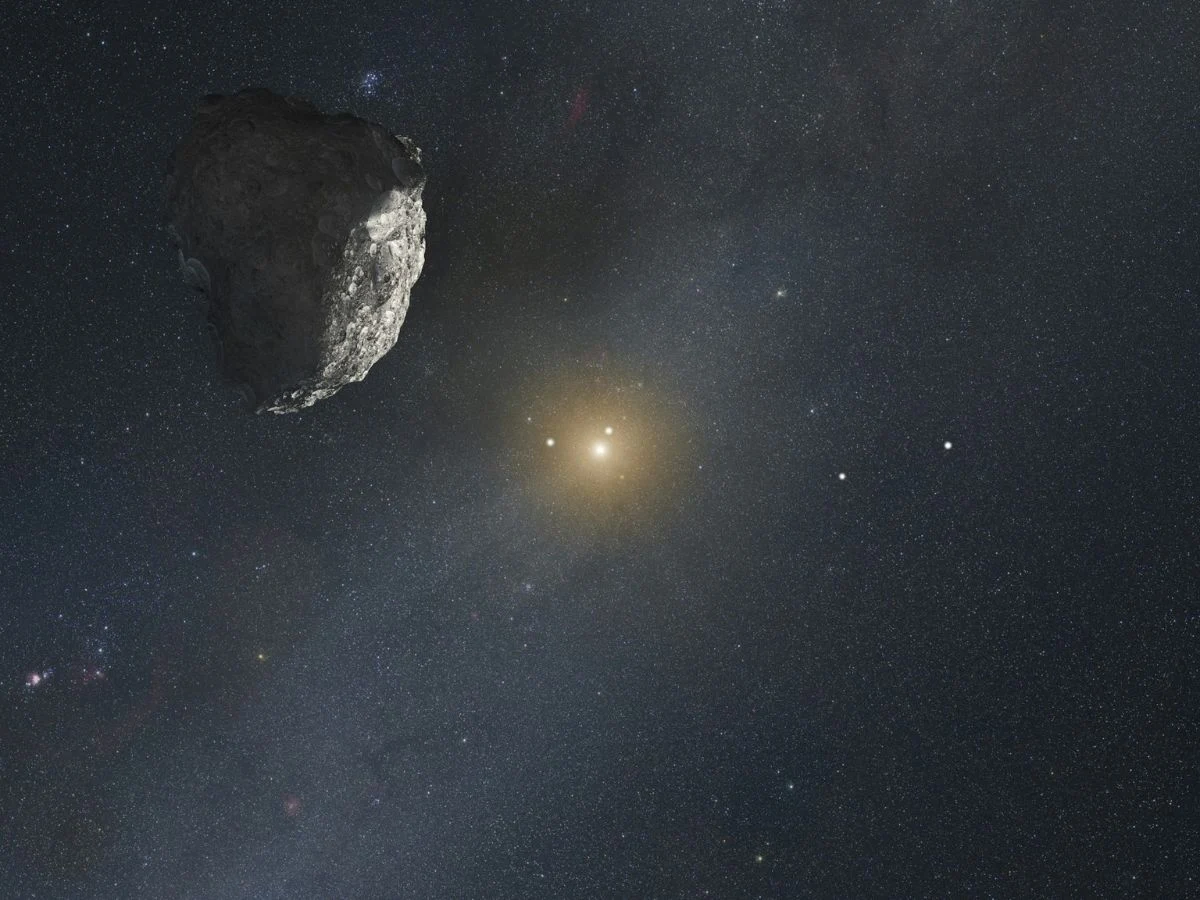
Asteroid Psyche is quite a unique asteroid. Located in the asteroid belt between Mars and Jupiter, it has a diameter of about 140 miles. Unlike most asteroids, which are rich in silicates or carbon, Psyche is primarily made up of metals, making it the largest known metal-rich asteroid.
Questions About Psyche’s Origin
Scientists have pondered whether Psyche could be a piece of a planetary core. If it is indeed an exposed core, it might provide valuable information about the cores of planets. There are various theories surrounding its formation. One idea suggests it was once part of a larger celestial body, where violent collisions stripped away the outer rocky layers, leaving just the metallic core behind. Another theory proposes that massive impacts fractured Psyche, causing a random mix of metal and rock. Some experts even believe Psyche could be a planet that is partially formed and rich in metals.
NASA’s Psyche Mission
To explore this fascinating asteroid, NASA initiated the Psyche mission in 2023, with plans for the spacecraft to reach Psyche by 2029. The spacecraft is designed to analyze the surface composition, gravity, magnetic field, and variations in density.
Simulation Studies
To prepare for the mission’s results, scientists have constructed a 3D model of Psyche and examined it under various scenarios. They altered both the speed and size of impactors to see how they would affect the asteroid. Porosity is another key element; a porous asteroid would soak up impact energy, leading to deeper craters. Tests were conducted with various sizes of impactors on two different models: one representing a metallic core and the other a mixture of rock and metal. The simulations indicated that a 3-mile-wide impactor could produce the craters we’ve observed.
The simulations also forecasted slight variations in crater shapes, ejecta patterns, density differences, and the distribution of metals on the surface. Once the spacecraft reaches Psyche in 2029, scientists will be able to match real-world observations against their simulations. This comparison will enhance our understanding of how planetary interiors form and what early collisions were like.
Source:
Link