
Key Takeaways
1. Researchers at KIT developed a hydrogen gas turbine that sets a new operational benchmark by running for 303 seconds without a compressor, surpassing NASA’s record.
2. The new system avoids energy loss from mechanical air compression by using pressure-gain combustion, creating high pressure through natural air patterns and shockwaves.
3. The engineering team successfully used rapid combustion to rotate a turbine and generate electricity, overcoming a significant technical challenge.
4. Hydrogen is identified as the ideal fuel for this technology due to its quick reaction and stable pressure increases.
5. The compressorless design has the potential to create lighter, cheaper, and more efficient power plants, with future applications in aviation.
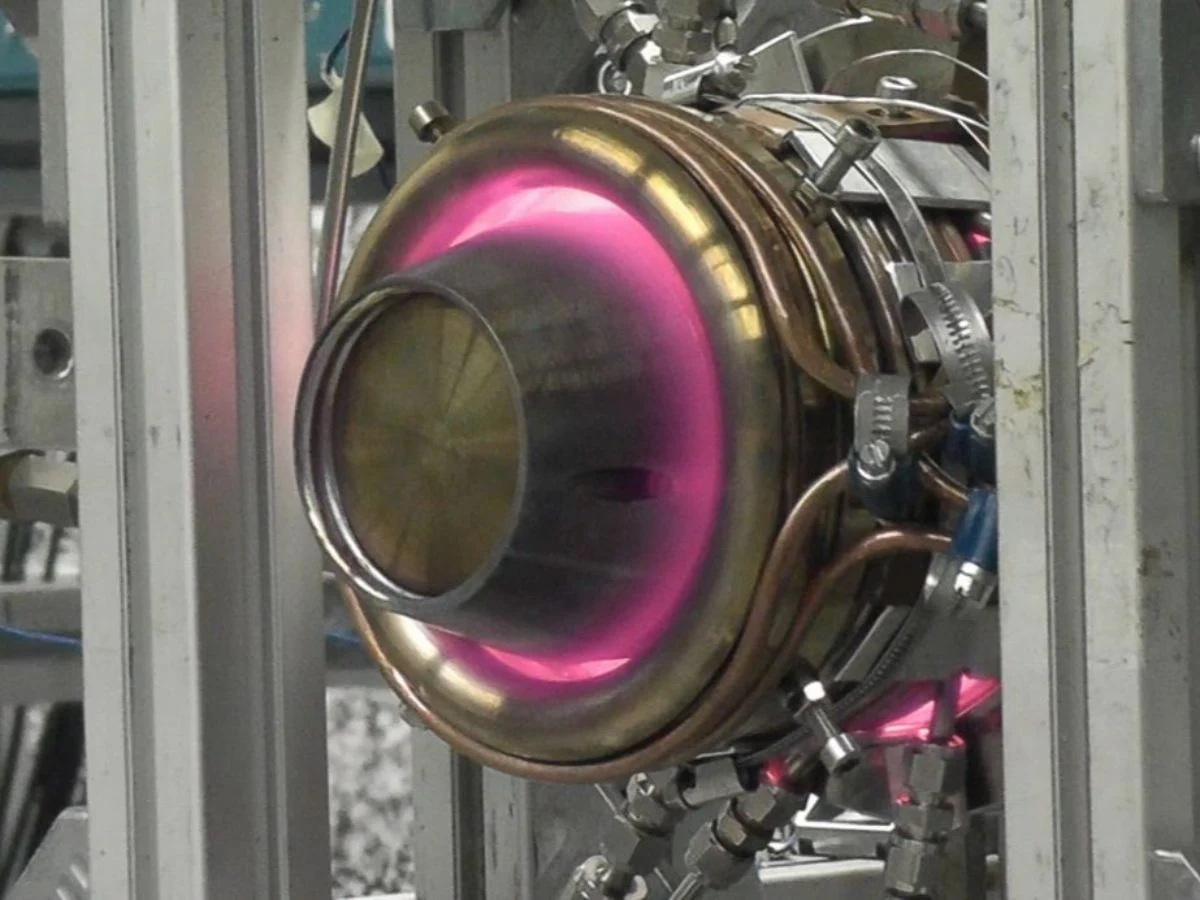
Researchers at the Karlsruhe Institute of Technology (KIT) have reached a significant achievement in renewable energy by establishing a new operational benchmark with a hydrogen gas turbine that does not use a compressor. This groundbreaking system operated continuously for 303 seconds, surpassing NASA’s previous record of 250 seconds. By achieving a runtime of over five minutes, the team has proven that this technology is practical for actual power generation.
Energy Efficiency Breakthrough
Conventional gas turbines, commonly found in power plants or jet engines, waste nearly half of their produced energy just to mechanically compress the air for ignition. The new system avoids this energy loss by using a method known as pressure-gain combustion. Instead of depending on moving parts to compress air, this technique creates the required high pressure through natural swirling air patterns and internal shockwaves within the combustion chamber.
Innovative Energy Transfer
Along with setting the new runtime record, the engineering group is the first to successfully utilize this rapid combustion process to rotate a turbine and produce electricity. Previously, transferring energy from such a dynamic environment was regarded as a significant technical challenge.
Although the technology can work with different fuels, the researchers pointed out that hydrogen is particularly ideal for this engine because it reacts very quickly and generates stable pressure increases. This compressorless design could pave the way for lighter, cheaper, and significantly more efficient power plants, with potential future uses in the aviation sector. The prototype is set to be presented to the public at the Hannover Messe industrial exhibition in April 2026.
Karlsruhe Institute of Technology.
Source:
Link