Tag: Onyx

  • Onyx Boox P6 Pro Series: 5G and Color E Ink with Stylus Support

    Onyx Boox P6 Pro Series: 5G and Color E Ink with Stylus Support

    Key Takeaways

    1. New Models: Onyx has launched the Boox P6 Pro series, including the P6 Pro and P6 Pro Color, featuring different E Ink displays.

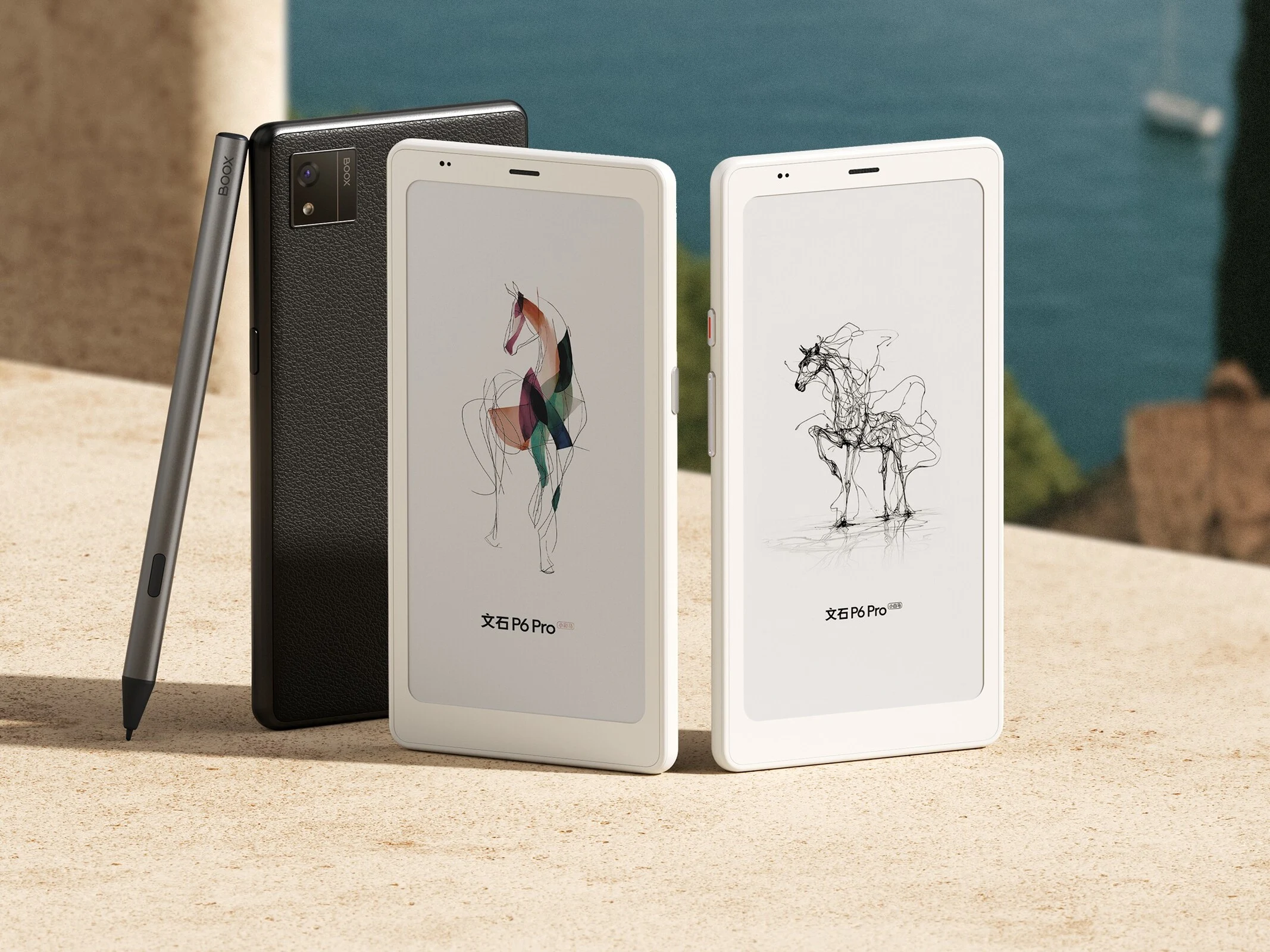
    2. Design Updates: The P6 Pro series has a new square camera design, repositioned volume button, and comes in Black and White color options.

    3. Display Enhancements: The P6 Pro offers a Carta 1300 display for better contrast, while the P6 Pro Color features a Kaleido 3 Color display with stylus support.

    4. Performance Specs: Both models are powered by an eight-core Qualcomm processor, with the P6 Pro having 6GB RAM and the P6 Pro Color having 8GB RAM.

    5. Connectivity Improvements: The series introduces 5G SIM support, dual-band Wi-Fi, Bluetooth 5.0, and a MicroSD card slot for expanded storage.


    Onyx has unveiled the Boox P6 Pro series after teasing it earlier this week. This series comes in two models: one featuring a Carta 1300 E Ink display, and the other equipped with a Kaleido 3 Color E Ink display. Both devices are expected to be globally released under the Boox Palma branding.

    Device Names and Features

    The new models are named the P6 Pro Little White Horse and the P6 Pro Little Colored Horse. To keep things straightforward, we will call them the P6 Pro and the P6 Pro Color.

    Design Changes

    When we look at the Boox P6 Pro in comparison to the Boox Palma 2, there are noticeable design modifications. For example, the camera on the back is now in a square shape rather than a long rectangle. The volume button has been shifted to the left side and is situated below a new button known as the Smart Key. The device still has wide bezels and a textured back for improved grip. Customers can choose between Black and White color options.

    Display and Functionality

    The Boox P6 Pro features a 6.13-inch display with a resolution of 1684 × 824 (300 ppi) that is protected by etched glass to minimize glare. The new Carta 1300 display offers quicker refresh rates and superior contrast compared to the Carta 1200 found in the Boox Palma 2, which is currently selling on Amazon for $269.99.

    In contrast, the P6 Pro Color also offers a 6.13-inch display but uses a Kaleido 3 Color display with 300 ppi for Black and White and 150 ppi for color. It comes with stylus support for note-taking and document annotation. Both devices include adjustable front lighting, allowing users to switch between cold and warm light based on the time of day.

    Performance and Specs

    The P6 Pro series is driven by an unspecified Qualcomm processor featuring eight cores. The P6 Pro has 6GB of RAM and 128GB of storage, while the P6 Pro Color has 8GB of RAM and the same storage capacity. Both models come with a 16MP camera with LED flash, useful for scanning documents and codes.

    Connectivity Features

    A significant upgrade in the Boox P6 Pro series is the addition of SIM support. Now, there is a SIM slot that supports 5G, enabling users to access the internet while traveling or when Wi-Fi is not available. Additionally, the SIM card tray can also hold a MicroSD card.

    Additional Specifications

    Other specifications include dual-band Wi-Fi, Bluetooth 5.0, dual speakers, dual microphones, a 3,950mAh battery, and support for 15W charging. Both devices come pre-installed with Boox OS 4.1, which is based on Android 13.

    Pricing and Comparison

    The Boox P6 Pro is priced at CNY 2799 (~$393/€339), while the P6 Pro Color is available for CNY 3299 (~$463/€399). Onyx appears to be offering a launch discount, reducing prices to CNY 2516 (~$353/€304) for the P6 Pro and CNY 2991 (~$420/€362) for the Color variant.

    Despite the discount, the Boox P6 Pro Color remains pricier than the $399 Bigme HiBreak Pro Color, which lacks stylus support but offers 5G (dual SIM support), 256GB of storage, a larger 4,500mAh battery with 18W fast charging, NFC, a fingerprint scanner, and runs on Android 14.

    The announcement was made via Onyx’s Weibo account.

    Source:
    Link


  • Onyx BOOX Note Max: Carta 1300 Display Priced at $650

    Onyx BOOX Note Max: Carta 1300 Display Priced at $650

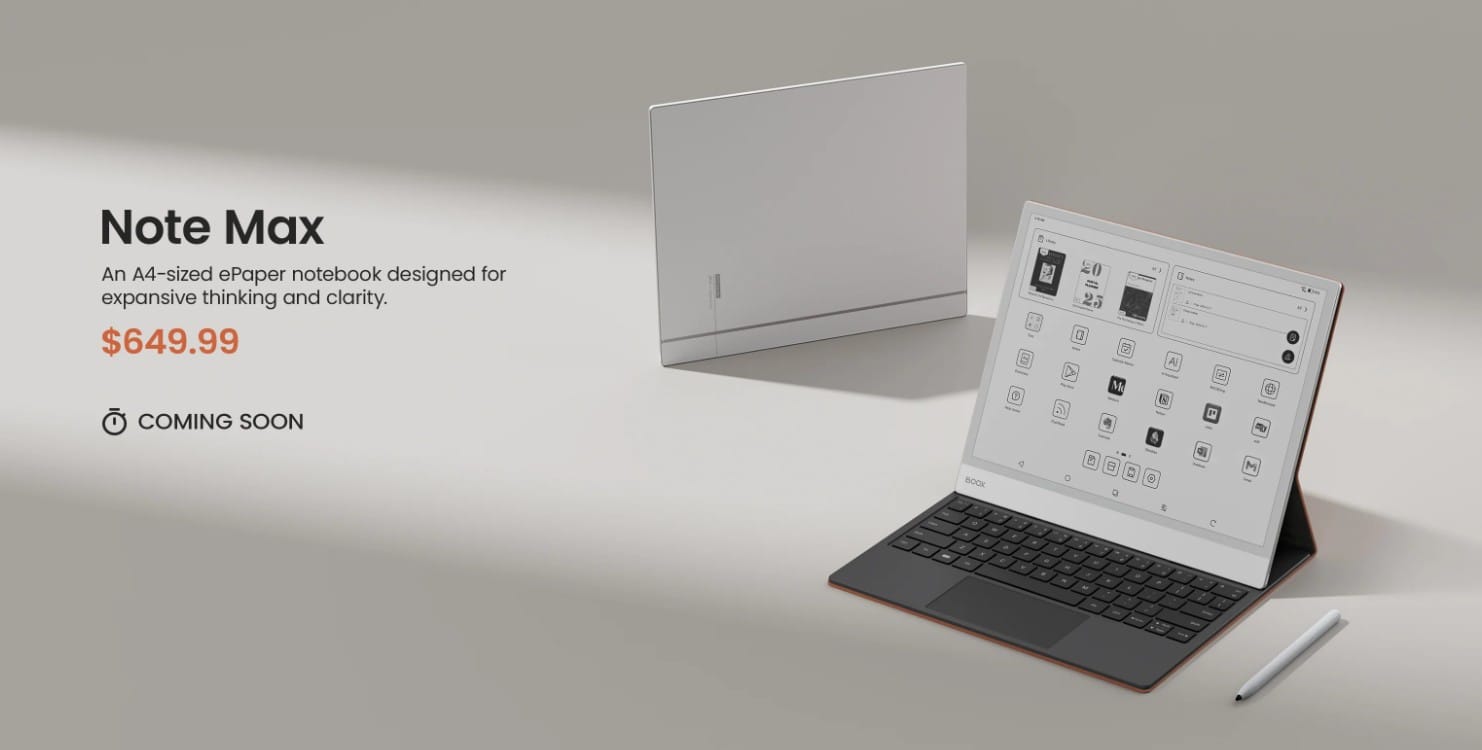
    In addition to the BOOX Note Air4 C and BOOX Palma 2, Onyx has hinted at a fourth device, the BOOX Note Max. This new gadget will be a part of the Note series and is described by Onyx as an A4-sized ePaper notebook.

    Larger Display

    The BOOX Note Max features a larger display than the Note Air4 C, offering a 13.3-inch screen. Interestingly, this display size matches that of the BOOX Tab X, which is currently available on Amazon for $799.99. However, there is a key difference: while the Tab X utilizes a Carta 1250 screen, the Note Max is equipped with a Carta 1300 E Ink display, similar to the Viwoods AiPaper.

    Powerful Performance

    Under the hood, the BOOX Note Max is powered by a 2.8GHz octa-core processor, complemented by 6GB of RAM and 128GB of storage. There isn’t any information about the version of Android it will run on, but the E Ink tablet is set to offer split-screen capabilities and advanced PDF tools to enhance workflow efficiency.

    Sleek Design

    Onyx claims that the BOOX Note Max is quite slim, measuring just 4.6mm thick, and will be available in a light gray color. While it doesn’t include a rear camera, it does support a stylus and comes with a magnetic keyboard featuring a trackpad. Currently, it is listed as "coming soon" on the BOOX store, with a price tag of $649.99 in the US and €699.99 in Europe.


    Image 1
  • Onyx BOOX Tab10C Pro and Note Air3 C: A Deep Dive into Android’s Color E-ink Tablets

    Onyx BOOX Tab10C Pro and Note Air3 C: A Deep Dive into Android’s Color E-ink Tablets

    The electronic paper technology landscape welcomes two new entrants from Onyx – the BOOX Tab10C Pro and BOOX Note Air3 C. As e-ink technology evolves, these two devices mark a significant stride, offering a blend of performance, display quality, and user-friendly features.

    Onyx BOOX Tab10C Pro: A Blend of Performance and Display Quality

    The BOOX Tab10C Pro, recently launched in China, comes with a price tag starting at 4699 yuan ($642)​1​. This device is an upgrade from the previous Tab10C model introduced in May 2023. At its core, the Tab10C Pro houses a robust 7nm 8-core 2.8GHz Qualcomm processor coupled with 6GB of RAM and 128GB storage capacity, ensuring smooth multitasking and ample space for your files and apps.

    The highlight is its 10.3-inch Kaleido3 display boasting a high pixel density of 300ppi for black and white content, and 150ppi for color, guaranteeing sharp text and vibrant images. This tablet also includes a unique 16-megapixel scanning camera with OCR recognition, easing text scanning and conversion processes. The Pen2 stylus, known for its high-pressure sensitivity with 4096 gradations, enhances the interactive experience, requiring no charging and offering magnetic attachment.

    Moreover, the Tab10C Pro promises an improved reading experience with its next-generation Kaleido3 color E-Ink screen designed to reduce blue light exposure by 60% and a 24% drop in Blue Light Damage Factor (BLDF), catering to eye comfort with its TÜV Rheinland certification​1​.


    Onyx BOOX Note Air3 C: A Budget-Friendly E-Reader Alternative


    On the other hand, the BOOX Note Air3 C debuts as a more affordable alternative in the US and Europe, priced at US$499.99 or €549.99. This model offers a similar 10.3-inch Kaleido 3 E-ink display with 300 PPI in black and white mode and 150 PPI in color mode. It is powered by an octa-core CPU operating at up to 2.8 GHz, paired with 4GB of RAM and 64GB of storage, expandable via a MicroSD card. This model runs on Android 12, featuring a 3,700 mAh battery for extended usage​2​.

    Both models reflect Onyx’s ongoing commitment to evolving E-ink technology, providing users with Android-based tablets that do not compromise on performance, display quality, or user-friendly features, all while keeping eye comfort a priority.


    Sources: