
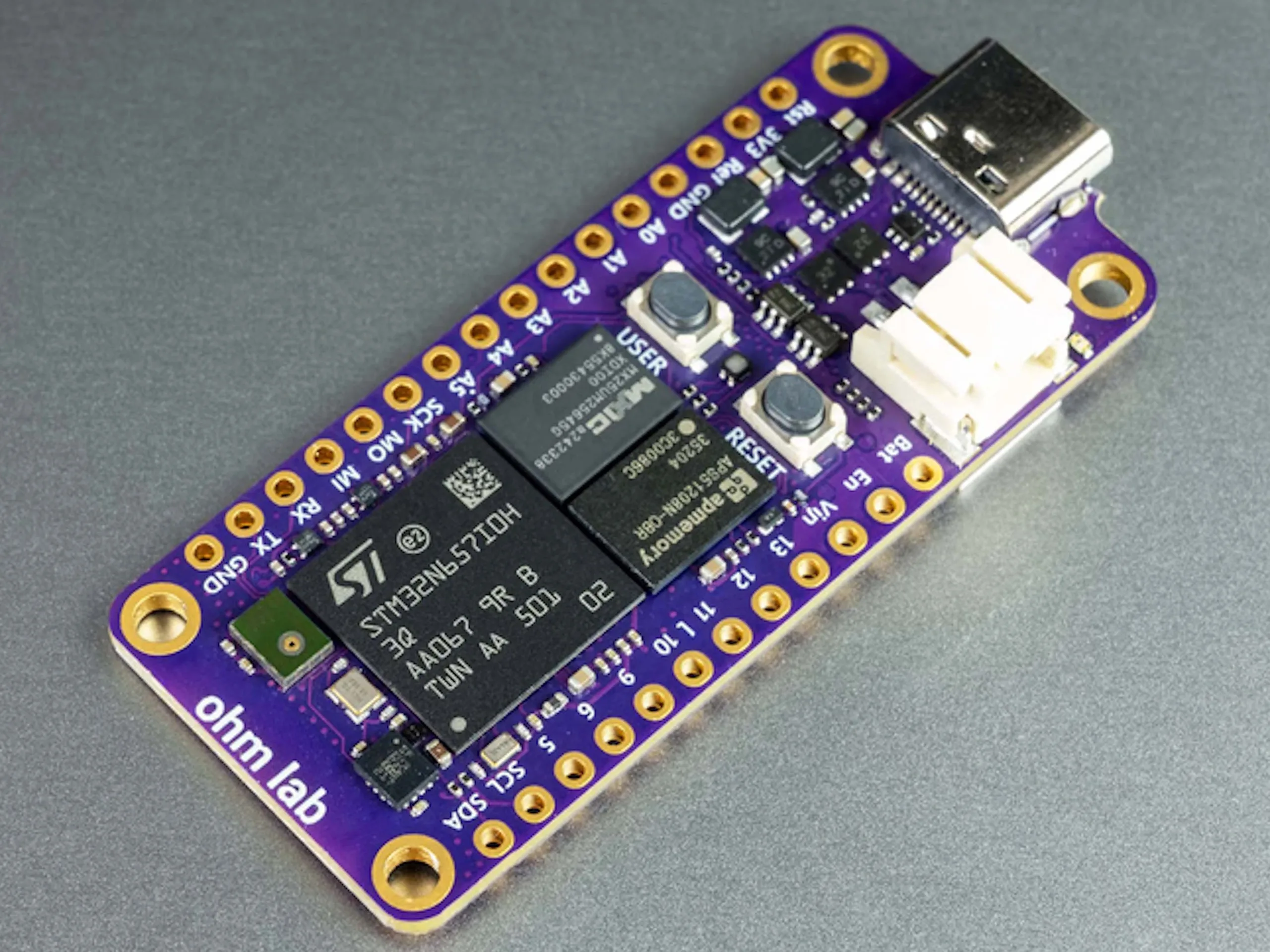
1. The Neuro N6 is designed for image recognition with limited computing power, lacking an NPU for large language model acceleration.
2. It features the ST Neural-ART Accelerator with 600 GOPS (0.6 TOPS), suitable for object recognition tasks.
3. The board is compact (2.09 x 0.90 x 0.35 inches), supports Arduino IDE programming, and can be used in Feather mode.
4. It supports camera integration up to 5MP via MIPI-CSI, with options for controlling sensors and actuators.
5. Currently available through crowdfunding at a starting price of $92, with delivery expected in November.
Introduction to Neuro N6 Development Board
The Neuro N6 is an innovative development board tailored mainly to image recognition tasks. But, gotta say, it doesn’t pack a punch in general processing power, like it doesn’t have a dedicated NPU for doing complex AI tasks locally. Instead, it features the ST Neural-ART Accelerator, which provides about 600 GOPS or 0.6 TOPS — enough for recognizing objects like detecting missing PPE through camera feeds, for instance. The company, Ohmlab LTD, mentions this as an example use case. Users aren’t necessarily required to be programming experts since there are pre-made projects that can be used straight away.
Physical Size and Programming Environment
The physical dimensions are 2.09 inches by 0.90 inches by 0.35 inches, making it pretty small and easy to integrate into tiny projects. Programming is done via the Arduino IDE which many people already know, covering a wide array of options and plenty of documentation. The device can be set to Feather mode, meaning it should follow Adafruit Feather’s standards, making it compatible with different accessories. You can easily control sensors or actuators—think sensors detecting motion or activate alarms or sirens if needed.
Connectivity and Power Options
It supports connecting a camera with up to 5MP resolution through MIPI-CSI, which is perfect for image processing. Power and programming are both managed through a USB Type-C port, but there’s also the flexibility to connect a battery if portability is needed. The pricing during its crowdfunding campaign starts at around $92 plus shipping, and there are optional extras like different cameras. Keep in mind, though, that shipping isn’t expected until November, and crowdfunding always has some risks involved like delays or project changes.