
Key Takeaways
1. The BepiColombo mission consists of three main components: ESA’s Mercury Planetary Orbiter (MPO), JAXA’s Mercury Magnetospheric Orbiter (MMO or Mio), and the Mercury Transfer Module (MTM) for propulsion.
2. Since its launch in October 2018, BepiColombo has performed multiple flybys around Mercury, Venus, and Earth, collecting valuable data and images of these planets.
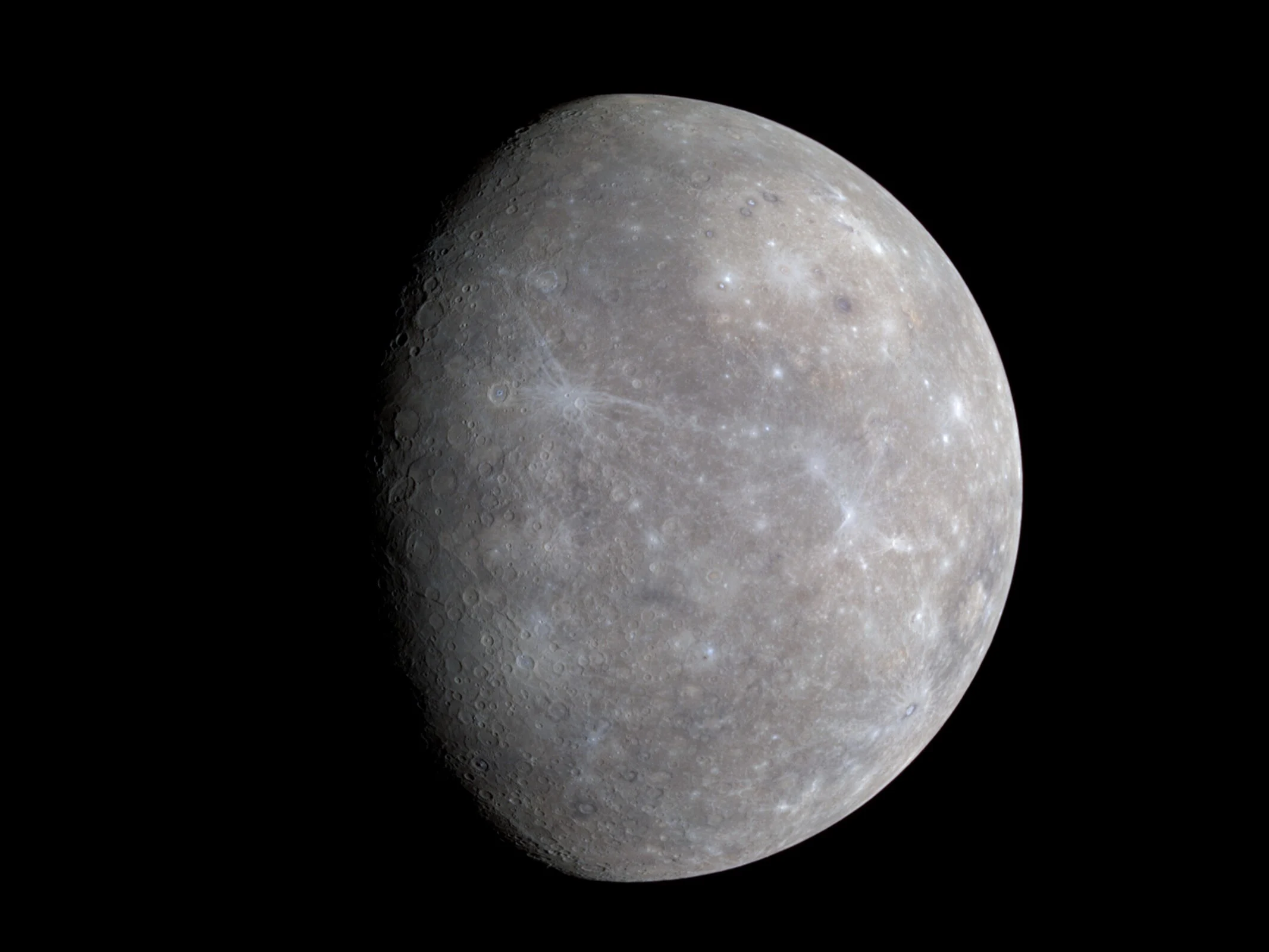
3. The MTM’s monitoring cameras (M-CAMs) captured high-resolution images of Mercury’s surface features, including craters, volcanoes, and plains.
4. The main scientific measurements will begin in November 2026, with enhanced instruments on both MPO and Mio for detailed analysis of Mercury’s environment and materials.
5. The mission aims to provide a comprehensive understanding of Mercury’s composition, including the detection of water, through high-resolution imaging and surface measurements.
The ESA/JAXA BepiColombo mission, which took off in October 2018, consists of three main components: the ESA’s Mercury Planetary Orbiter (MPO), JAXA’s Mercury Magnetospheric Orbiter (MMO or Mio), and the Mercury Transfer Module (MTM). The MTM acts as the main engine, pushing the entire mission towards Mercury. The actual science phase of BepiColombo will commence once it reaches and enters Mercury’s orbit, allowing the MPO and Mio to separate.
Flybys and Data Collection
Since its launch, BepiColombo has successfully performed multiple flybys, including six around Mercury, two around Venus, and one around Earth. During its Mercury flybys, it collected valuable data on the planet’s magnetic environment. The MTM’s monitoring cameras (M-CAMs) took hundreds of pictures, each with a resolution of 1024×1024 pixels, capturing stunning images of Earth, Venus, and Mercury. The photos of Mercury reveal its surface features, including craters, volcanoes, and vast plains.
Future Measurements
The significant measurements and imaging work will kick off in November 2026. The magnetometers and particle detectors on both Mio and MPO are set to be more sensitive than before. Mio will utilize its sodium imager and dust detector to analyze materials present near Mercury.
Meanwhile, MPO will focus on obtaining high-resolution images of Mercury’s surface across X-rays, visible light, and near-infrared light. It will also employ the BepiColombo Laser Altimeter (BELA) to accurately measure the height and shape of Mercury’s surface. In the end, this mission aims to provide a comprehensive understanding of Mercury’s composition, including the presence of water.
Source:
Link