
Key Takeaways
1. The Moon was formed about 4.45 billion years ago after a collision between Earth and a protoplanet named Theia.
2. Theia is theorized to have been about the size of Mars, but its origins remain uncertain.
3. Recent studies suggest that Theia may have formed relatively close to Earth within the solar system.
4. Similarities in rock composition between the Moon and Earth support the idea that Theia originated nearby.
5. Ongoing research is necessary to better understand Theia’s exact origins and resolve remaining questions.
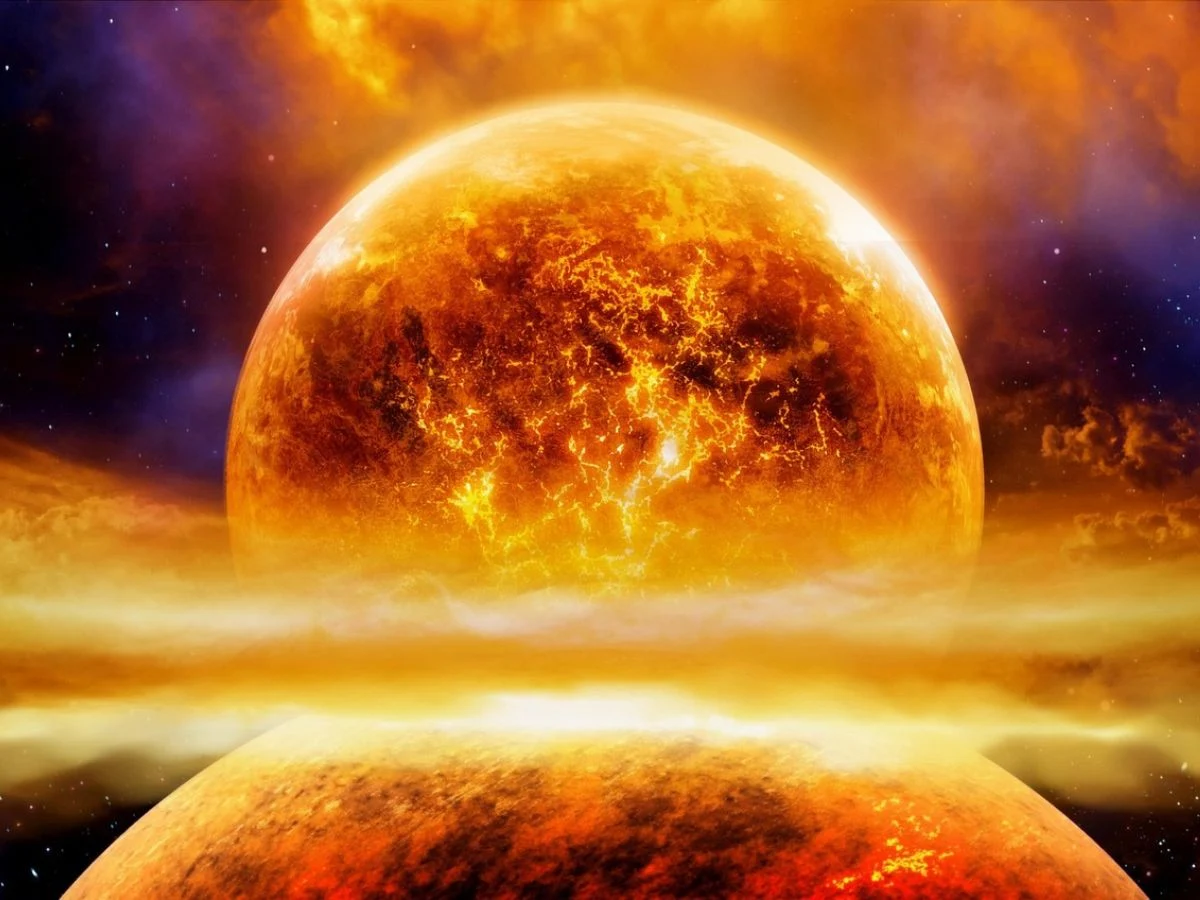
If the Moon serves as Earth’s natural satellite, it hasn’t always been that way. Roughly 4.45 billion years ago, our planet was hit by a theoretical protoplanet called Theia. The collision was so intense that it scattered numerous rocks into space, which eventually led to the formation of the Moon millions of years later.
The Mystery of Theia
While we might have a grasp on how the Moon originated, Theia’s origins are still shrouded in uncertainty. This celestial body was said to be about the size of Mars, and it carries with it many unanswered questions. Over the years, various theories have been proposed by scientists. Some believe it might have come from outside our solar system, while others propose alternative beginnings.
New Findings
A recent study featured in the journal Science suggests that Theia actually formed relatively close to Earth. The researchers focused on the composition of rocks from both the Moon and Earth, noting numerous similarities between them.
Additionally, by examining the iron isotopes found in meteorites, lunar rocks, and Earth rocks, they found evidence that Theia could have originated within the solar system, not far from the Sun.
Ongoing Research Needed
Nonetheless, pinpointing Theia’s exact origins remains a challenge, as many questions still linger. Thus, it’s clear that more research needs to be done in the future to possibly unveil the reality behind this enigmatic planet.
Source:
Link