
Tag: Monash University

  • New Zinc-Air Battery Provides 3,570 Charges in 74 Days

    New Zinc-Air Battery Provides 3,570 Charges in 74 Days

    Key Takeaways

    1. Researchers from Monash University developed a rechargeable zinc battery with a lifespan of 74 days and over 3,500 cycles.
    2. The battery features an energy density of 997 Wh/kg, significantly higher than traditional zinc-air batteries (around 400 Wh/kg).
    3. A unique heat treatment process created ultra-thin carbon sheets with cobalt and iron atoms, enhancing battery speed and efficiency.
    4. The battery’s design safely manages dendrite formation, making recharging reliable.
    5. The advancements may lead to sustainable energy solutions in various clean energy sectors, including fuel cells and CO₂ conversion.


    Researchers from Monash University in Melbourne, Australia, have created a rechargeable zinc battery that provides steady energy for 74 days and can go through over 3,500 cycles. With an impressive energy density of 997 Wh per kilogram, this breakthrough establishes new benchmarks in zinc-air technology.

    Innovative Heat Treatment Process

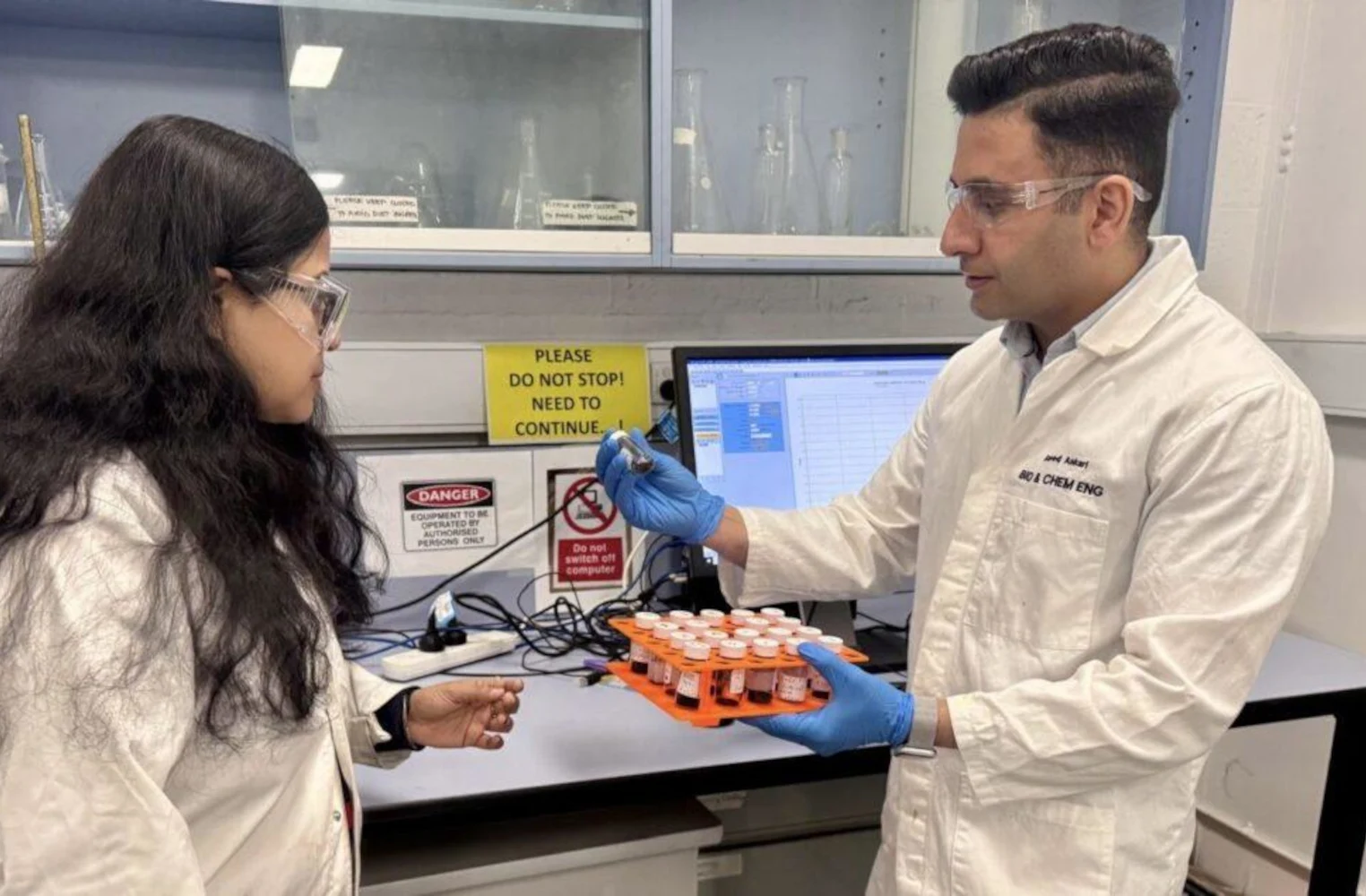
    The research team applied a unique heat treatment to convert 3D materials into ultra-thin carbon sheets, integrating individual cobalt and iron atoms. This process resulted in a catalyst that significantly enhances the battery’s speed and efficiency. According to Saeed Askari, one of the study’s authors:

    “By structuring cobalt and iron as solitary atoms on a carbon framework, we reached unprecedented performance levels in zinc-air batteries, demonstrating the potential of catalysts meticulously designed at the atomic level.”

    Enhanced Energy Density

    Boasting an energy density of 997 Wh/kg, this rechargeable zinc battery surpasses traditional zinc-air batteries, which usually only reach around 400 Wh/kg. It also outperforms many lithium-ion batteries in terms of energy density. The effective management of dendrite formation ensures that recharging is both safe and dependable.

    “The ability to run a rechargeable zinc-air battery for over two months straight is a significant achievement in this area,” comments Paramana Banerjee, a co-author of the study. She also mentioned that the concepts behind this design could be utilized in other clean energy technologies, including fuel cells, water splitting, and CO₂ conversion.

    Future Applications

    Monash University’s advancements in battery technology may pave the way for more sustainable energy solutions. By refining the methods used in this research, scientists hope to make a positive impact on various clean energy sectors, demonstrating the broad potential of innovative battery designs.

    Source:
    Link


  • First Synthetic Protein Fights Resistant Bacteria in AI Drug Design

    First Synthetic Protein Fights Resistant Bacteria in AI Drug Design

    Key Takeaways

    1. Monash University achieved a fully digital drug development cycle, from molecular modeling to lab testing.
    2. The designed protein targets E. coli’s iron uptake, leading to bacterial cell death.
    3. Potential future applications include new antibiotics, diagnostic tools, and vaccines, but clinical trials are not yet underway.
    4. There are risks associated with AI tools in drug development, including possible misuse and unforeseen effects on humans.
    5. The project aims to enhance research accessibility by providing free tools for global scientists.


    For the first time, scientists at Monash University in Australia have successfully completed a fully digital cycle of drug development, starting from molecular modeling all the way to lab testing. This significant achievement was published on July 9 in Nature Communications, representing a big leap in the field of computer-aided drug design. The protein was developed through the Monash AI Protein Design Program based in Melbourne, which merges deep learning with de novo protein design techniques. The project was spearheaded by Dr. Rhys Grinter together with A/Prof. Gavin Knott.

    Innovative Mechanism of Action

    The designed protein employs a very precise mechanism: it attaches to a specific site on E. coli that plays an important role in iron uptake. As iron is essential for the survival and reproduction of these bacteria, blocking this pathway results in cell death. Laboratory experiments using fluorescent markers validated the effectiveness of the protein.

    Future Medical Applications

    The researchers believe there is great potential for medical applications, such as creating new antibiotics, diagnostic tools, or even vaccines. Nevertheless, the process is still in the experimental phase. Clinical trials to evaluate safety and efficacy in humans have not yet commenced. There are also potential risks, including the misuse of AI tools that are accessible to the public or unforeseen effects in the human body, which require further analysis.

    Enhancing Research Accessibility

    One of the main objectives of the project is to enhance accessibility in research. All the tools utilized are available for free, allowing scientists globally to implement similar design methods in their research activities.

    Source:
    Link