Key Takeaways
1. Upcoming features for melonDS include high-resolution dual-screen 3D graphics and complete support for texture filtering in 3D.
2. The dual-screen 3D emulation issue has caused flickering between high-res and low-res graphics due to limitations in the original Nintendo DS hardware.
3. Arisotura’s current solution involves shifting more compositing tasks to the GPU to achieve high-resolution output while maintaining sync with emulated VRAM.
4. The transfer of the entire 2D renderer to the GPU is planned, which will enhance the emulation experience for users.
5. Improved emulation will benefit the market for DS-inspired handheld gaming PCs and consoles like AYN Thor and Anbernic RG DS.
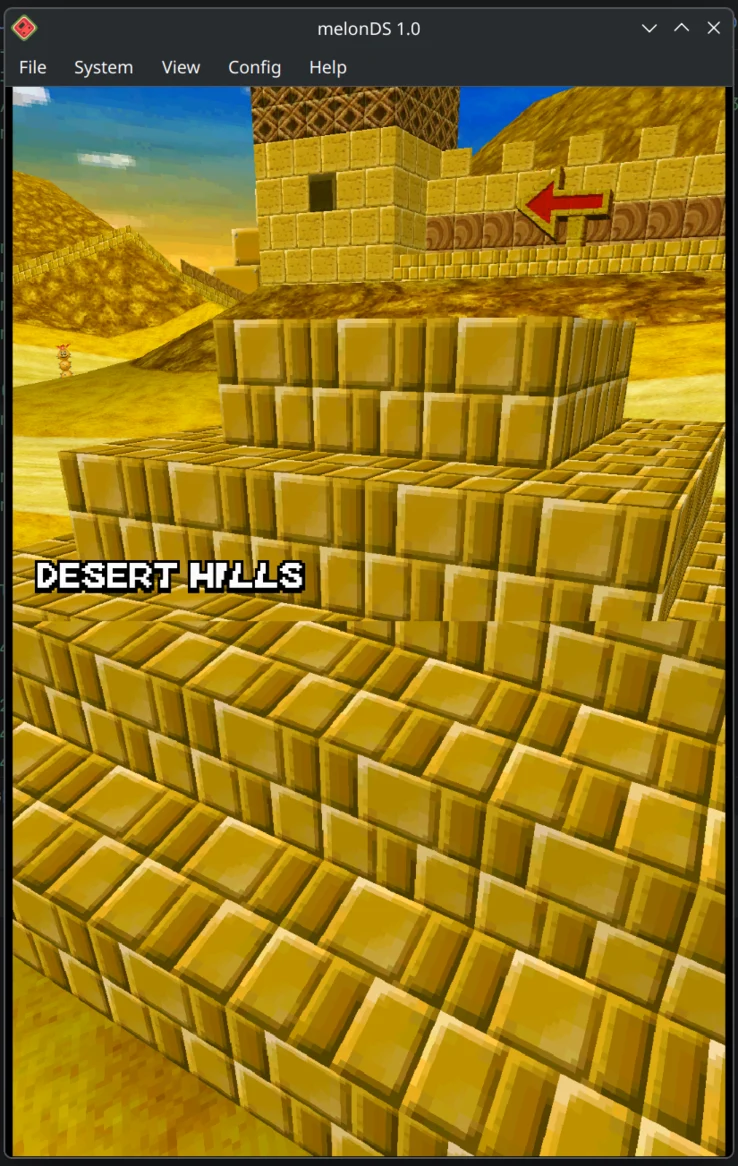
Arisotura, the main creator of the well-known high-precision Nintendo DS emulator melonDS, recently shared some details on Reddit about upcoming features for the emulator. He mentioned enhancements like properly working high-resolution dual-screen 3D graphics, and in the future, there will be complete support for texture filtering in 3D, as well as “2D layer/sprite filtering, hi-res rotation/scale” and anti-aliasing.
Dual-Screen 3D Issues
Even though Nintendo DS and 3DS emulators have had the ability to increase internal rendering resolutions for a long time, emulating dual-screen 3D on the Nintendo DS has been a challenge. As Arisotura points out, this dual-screen 3D issue has been a known problem with melonDS, leading to each screen flickering between high-res and low-res graphics or, in some cases, not functioning at all.
The cause of this problem lies in the limitations of the original Nintendo DS hardware and its VRAM, particularly its “display capture” feature, which is responsible for various effects like dual-screen 3D and also for ensuring the console is operating correctly. This means that captured frames need to remain at the original native resolution of 256×192 and fit into the emulated VRAM, leading to the flickering and crashes. For an accuracy-focused emulator like melonDS, finding a solution is quite challenging, as this isn’t a feature that can simply be turned off.
Current Solutions and Future Prospects
Arisotura’s approach right now involves creating a copy of the 2D renderer for OpenGL and shifting more compositing tasks to the GPU. This will enable high-resolution output to be achieved while still keeping everything in sync with the emulated VRAM. As the developer explains, “There’s a lot of cleanup and refining to do (and some missing features),” but in the long term, this should pave the way for the entire 2D renderer to be transferred to the GPU.
Once this is completed, the full range of features previously mentioned should be accessible to melonDS users. This will result in cleaner high-resolution emulation of the Nintendo DS than ever before and will be especially beneficial for the growing market of DS-inspired handheld gaming PCs and consoles, such as the AYN Thor, Ayaneo Pocket DS, and Anbernic RG DS.
Source:
Link