Tag: MediaTek Dimensity 8400 Ultra

  • Xiaomi 15T Launches Worldwide with Key Upgrades from 14T

    Xiaomi 15T Launches Worldwide with Key Upgrades from 14T

    Key Takeaways

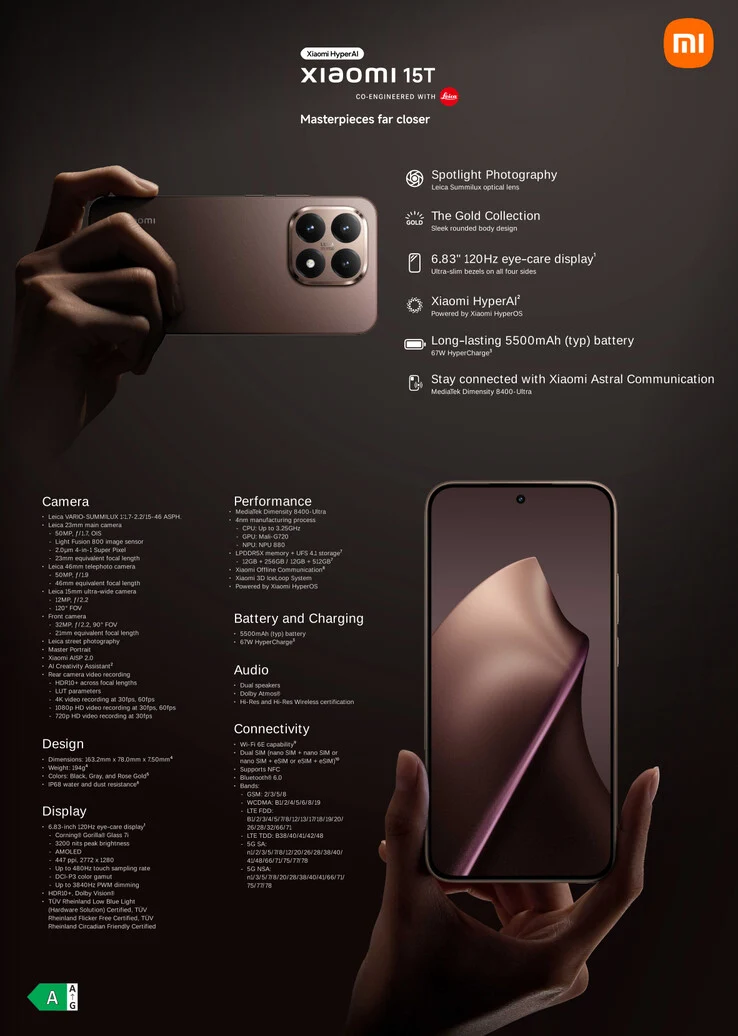
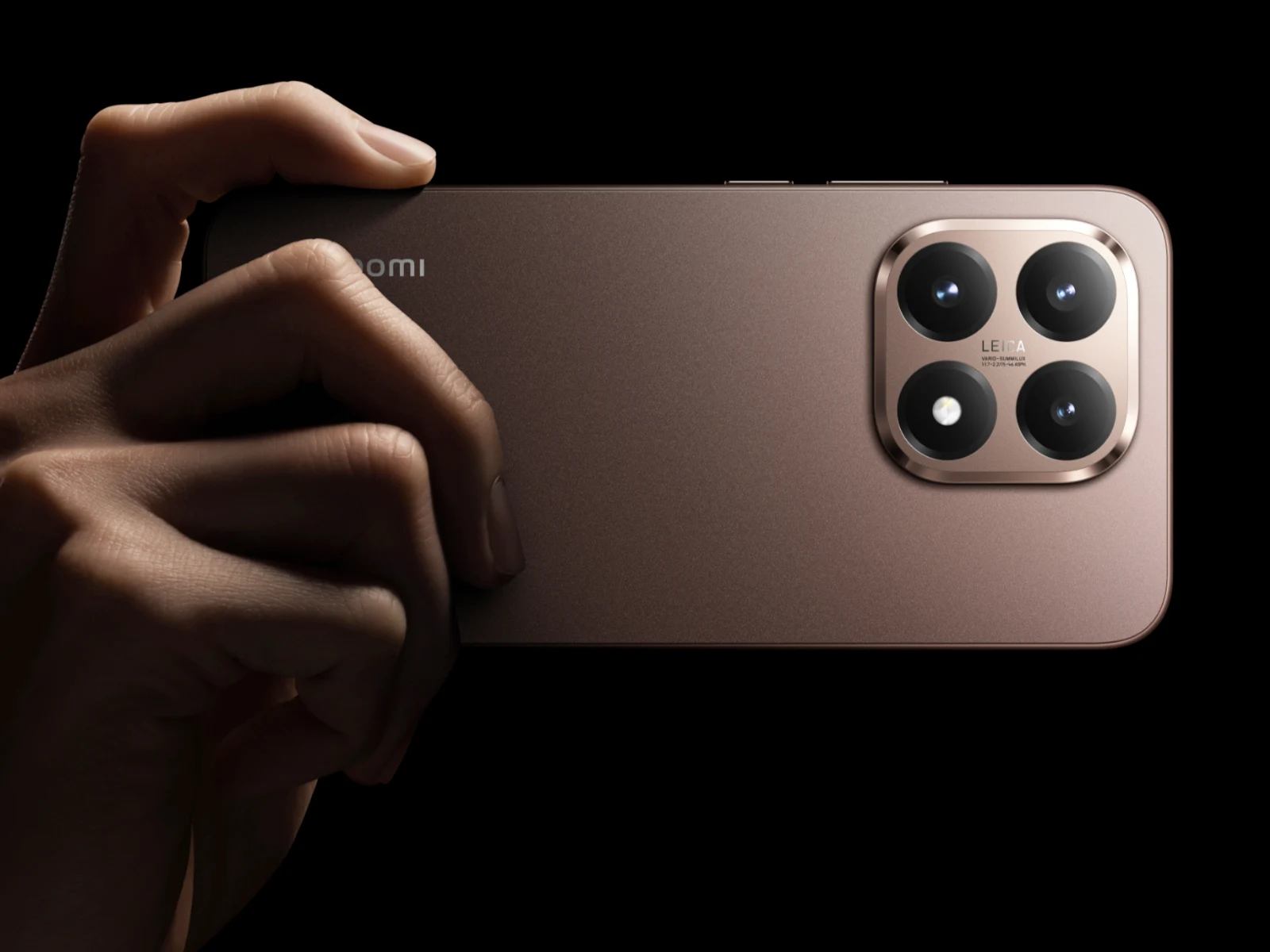
    1. New Design: The Xiaomi 15T features a fresh design with a rounded camera arrangement compared to the Xiaomi 14T.

    2. Camera Improvements: The device includes a 50 MP Light Fusion 800 sensor, a new telephoto lens at 46 mm, and an upgraded 32 MP front camera.

    3. Powerful Specs: It is powered by a 5,500 mAh battery and the MediaTek Dimensity 8400 Ultra chipset, with UFS 4.1 flash storage and LPDDR5X RAM.

    4. Display Quality: The smartphone has a 6.83-inch AMOLED display with a resolution of 2,772 x 1,280 pixels, a 120 Hz refresh rate, and peak brightness of 3,200 nits.

    5. Pricing and Updates: The Xiaomi 15T is priced at €649.90 (12 GB RAM, 512 GB storage) until October 10, after which storage will drop to 256 GB at the same price. It will receive four major Android updates and six years of security patches.


    Xiaomi has unveiled the Xiaomi 15T, one of the many devices that this brand has launched in a global event today. As hinted in leaks and teasers before the official reveal, the Xiaomi 15T features a fresh design compared to its predecessor, the Xiaomi 14T (currently priced at $479 on Amazon).

    Camera Upgrades

    For this year’s model, Xiaomi opted for a more rounded camera arrangement, though it might still have the same 12 MP, 15 mm, f/2.2 ultra-wide-angle camera with a 120° field of view as seen in the Xiaomi 14T. However, instead of the Sony IMX906, the Xiaomi 15T now uses the Light Fusion 800, which is a 50 MP sensor measuring 1/1.55 inches, previously found in the Poco F6 Pro.

    Enhanced Features

    The Xiaomi 15T also boasts a new telephoto lens at 46 mm, maintaining the same 50 MP output with an f/1.9 aperture as the 50 mm option on the Xiaomi 14T. The front camera has upgraded to a 21 mm equivalent focal length while keeping a 32 MP native output, an f/2.2 aperture, and a 90° field of view.

    In addition to these impressive camera features, the smartphone is powered by a 5,500 mAh battery and the MediaTek Dimensity 8400 Ultra, a 4 nm chipset that shows only slight improvements over the Dimensity 8400 we previously tested in the Poco X7 Pro. The Dimensity 8400 Ultra appears to switch from UFS 4 to UFS 4.1 flash storage, paired with LPDDR5X RAM.

    Display and Pricing

    Furthermore, the Xiaomi 15T sports a 6.83-inch AMOLED display with a resolution of 2,772 x 1,280 pixels, offering a refresh rate of 120 Hz and a peak brightness of 3,200 nits. The overall dimensions of the device are 163.2 x 78 x 7.5 mm, and it weighs 194 grams. The Xiaomi 15T is set to receive four major Android updates and six years of security patches. Up until October 10, the Xiaomi 15T with 12 GB of RAM and 512 GB of storage is priced at €649.90, which includes a complimentary Sound Party speaker. After this date, the price will remain the same, but the storage will drop to 256 GB. Alternatively, consumers can purchase the device for €699 with 512 GB of storage.

    Source:
    Link


  • Is the Poco X7 Pro Upgrade Worth It? Key Features and Benefits

    Is the Poco X7 Pro Upgrade Worth It? Key Features and Benefits

    Poco continues to impress with its latest smartphone release, the Poco X7 Pro. This device is packed with premium features such as a 120Hz OLED display, a robust MediaTek Dimensity 8400 Ultra processor, and a large 6550mAh battery, making it a fierce player in the mid-range smartphone arena.

    Is It Time to Upgrade?

    If you currently own an older Poco model or another phone that falls within the same price bracket, you might be wondering if the upgrade to the X7 Pro is justified. Let’s take a closer look.

    Display and Design

    The Poco X7 Pro (review) boasts a 6.67-inch 1.5K LTPS OLED screen with a refresh rate of 120Hz, offering smooth navigation and vibrant colors. It shines with a peak brightness of 3200 nits, ensuring you can see it well even in bright sunlight. Plus, the display supports both HDR10+ and Dolby Vision to enhance your viewing experience. For added protection, it features Corning Gorilla Glass 7i, which makes it more durable compared to previous models.

    When it comes to aesthetics, the X7 Pro is available in three striking colors: Poco Yellow, Nebula Green, and Obsidian Black. The yellow variant has a vegan leather finish that gives it a touch of luxury. On top of that, the device also has IP66 + IP68 + IP69 ratings, providing excellent dust and water resistance, a rarity in this price range.

  • Dimensity 8400-Ultra vs Snapdragon 8s Gen 3: Performance Showdown

    Dimensity 8400-Ultra vs Snapdragon 8s Gen 3: Performance Showdown

    MediaTek has launched the Dimensity 8400-Ultra, which proudly features a complete set of big-core configurations for its CPU. This makes it the first upper mid-range System on Chip (SoC) to showcase such a design. MediaTek previously set the bar by introducing the Dimensity 9300, a flagship Android chip with all big CPU cores.

    The First Device to Feature Dimensity 8400-Ultra

    The Redmi Turbo 4 is the initial device to come equipped with the Dimensity 8400-Ultra. This new chip is essentially an enhanced version of the Dimensity 8400, tailored by Xiaomi. The performance benchmarks are impressive, positioning it as a strong contender against the well-known Snapdragon 7+ Gen 3 and Snapdragon 8s Gen 3.

    Comparing Dimensity 8400-Ultra and Snapdragon 8s Gen 3

    MediaTek asserts significant improvements with the Dimensity 8400-Ultra compared to the previous model, but is that enough to outshine the Snapdragon 8s Gen 3? Let’s take a look at how these two chips compare.

    The manufacturing process for both the Dimensity 8400-Ultra and Snapdragon 8s Gen 3 is done by TSMC using the 4nm technology. Nevertheless, the architecture of their CPUs shows some distinct differences. The Dimensity 8400-Ultra utilizes all Cortex-A725 cores, with one core running at 3.25GHz, three at 3GHz, and the last four at 2.1GHz. On the other hand, the Snapdragon 8s Gen 3 has a different setup: one Cortex-X4 core at 3GHz, four Cortex-A720 cores clocked at 2.8GHz, and three Cortex-A520 cores running at 2GHz.

    GPU and Connectivity Features

    The Cortex-X4 in the Dimensity 8400-Ultra is more potent than the Cortex-A725, but it operates at a lower speed. However, the remaining cores in the Dimensity chip are superior in terms of both power and efficiency, running at better clock speeds compared to those in the Snapdragon 8s Gen 3.

    Both chips come equipped with high-performance GPUs to cater to gaming enthusiasts. The Dimensity 8400-Ultra features a Mali-G720 MP7 GPU, while the Snapdragon 8s Gen 3 is fitted with an Adreno 735 GPU. We conducted various benchmarks and the results are detailed below for clearer insights into performance.

    AI Capabilities and Connectivity

    These two SoCs can manage on-device AI tasks, thanks to a hexagon NPU in the Snapdragon 8s Gen 3 and a MediaTek NPU 980 integrated within the Dimensity 8400. They both support LPDDR5X and UFS 4.0 and include all essential connectivity features, although there are some distinctions. For instance, the Dimensity 8400-Ultra supports Wi-Fi 6, whereas the Snapdragon 8s Gen 3 is compatible with the newer Wi-Fi 7 standard. Conversely, in terms of Bluetooth, the 8s Gen 3 uses v5.4 while the Dimensity 8400-Ultra utilizes v6.

    The Dimensity chip can achieve a peak download speed of 5.1Gbps, while the Snapdragon chip can reach up to 6.5Gbps. They also differ in camera capabilities, with the Snapdragon chip supporting a maximum resolution of 200MP, while the Dimensity 8400-Ultra can handle up to 320MP.

    Benchmark Results

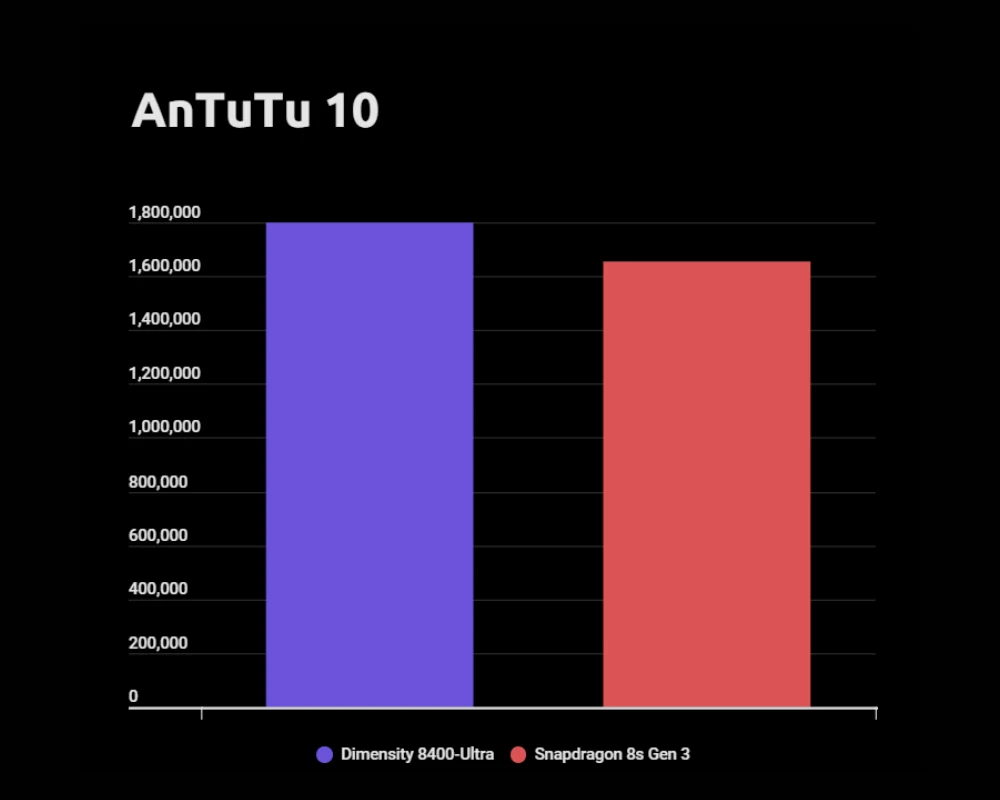
    When it comes to the AnTuTu test, the Dimensity 8400-Ultra takes the lead over the Snapdragon 8s Gen 3. It scored 1.79 million points while the latter managed only 1.65 million.

    • AnTuTu score
      • Dimensity 8400-Ultra: 1,799,330
      • Snapdragon 8s Gen 3: 1,654,675

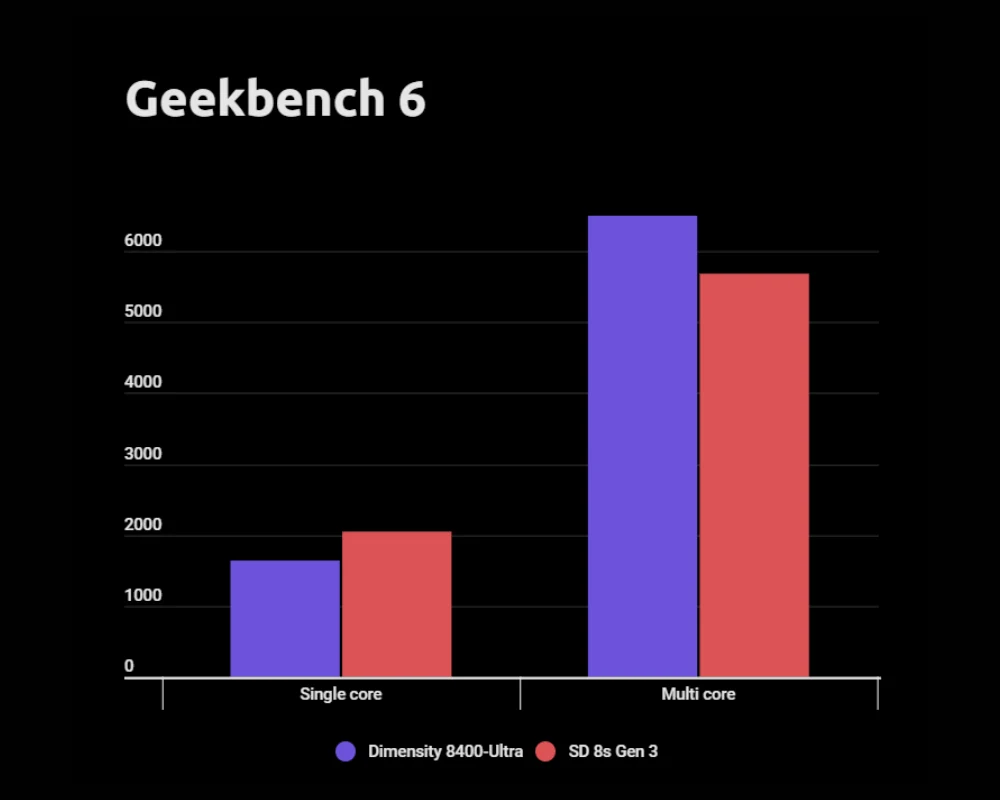
    In the Geekbench test, the Dimensity 8400-Ultra falls short in single-core performance but surprisingly excels in multi-core performance.

    • Single-core:
      • Dimensity 8400-Ultra: 1,639
      • Snapdragon 8s Gen 3: 2,048
    • Multi-core:
      • Dimensity 8400-Ultra: 6,500
      • Snapdragon 8s Gen 3: 5,684

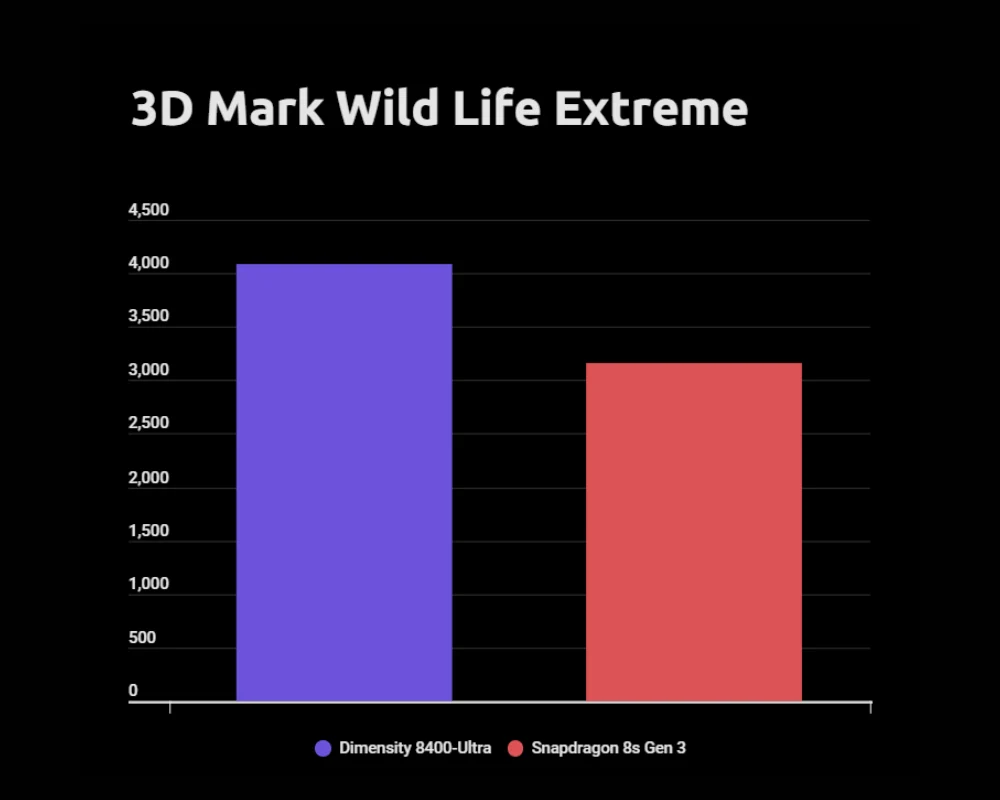
    The Dimensity 8400-Ultra also shines in the 3D Mark Wild Life Extreme test, scoring 4,086 points, in contrast to the Snapdragon 8s Gen 3’s score of only 3,161.

    • Wild Life Extreme
      • Dimensity 8400-Ultra: 4,086
      • Snapdragon 8s Gen 3: 3,161

    Final Verdict: Which Chip Reigns Supreme?

    Both the Dimensity 8400-Ultra and the Snapdragon 8s Gen 3 are top-notch smartphone processors. They both efficiently handle a range of tasks, from daily activities to casual gaming. However, if you need to choose one, the Dimensity 8400-Ultra clearly outshines the Snapdragon 8s Gen 3 in multiple benchmark tests.


    Image 1
    Image 1
    Image 1