
Key Takeaways
1. RMIT University developed the “Electronic Dolphin,” a robotic device to address oil spills in oceans safely.
2. The robot features an eco-friendly filter inspired by sea urchins, avoiding harmful chemicals used in traditional cleanup methods.
3. The prototype can skim oil at 2 milliliters per minute with over 95% purity and is resistant to saltwater corrosion.
4. The current battery lasts about 15 minutes, but future versions may become fully autonomous for continuous operation.
5. The “Electronic Dolphin” represents a significant advancement in environmental recovery technology.
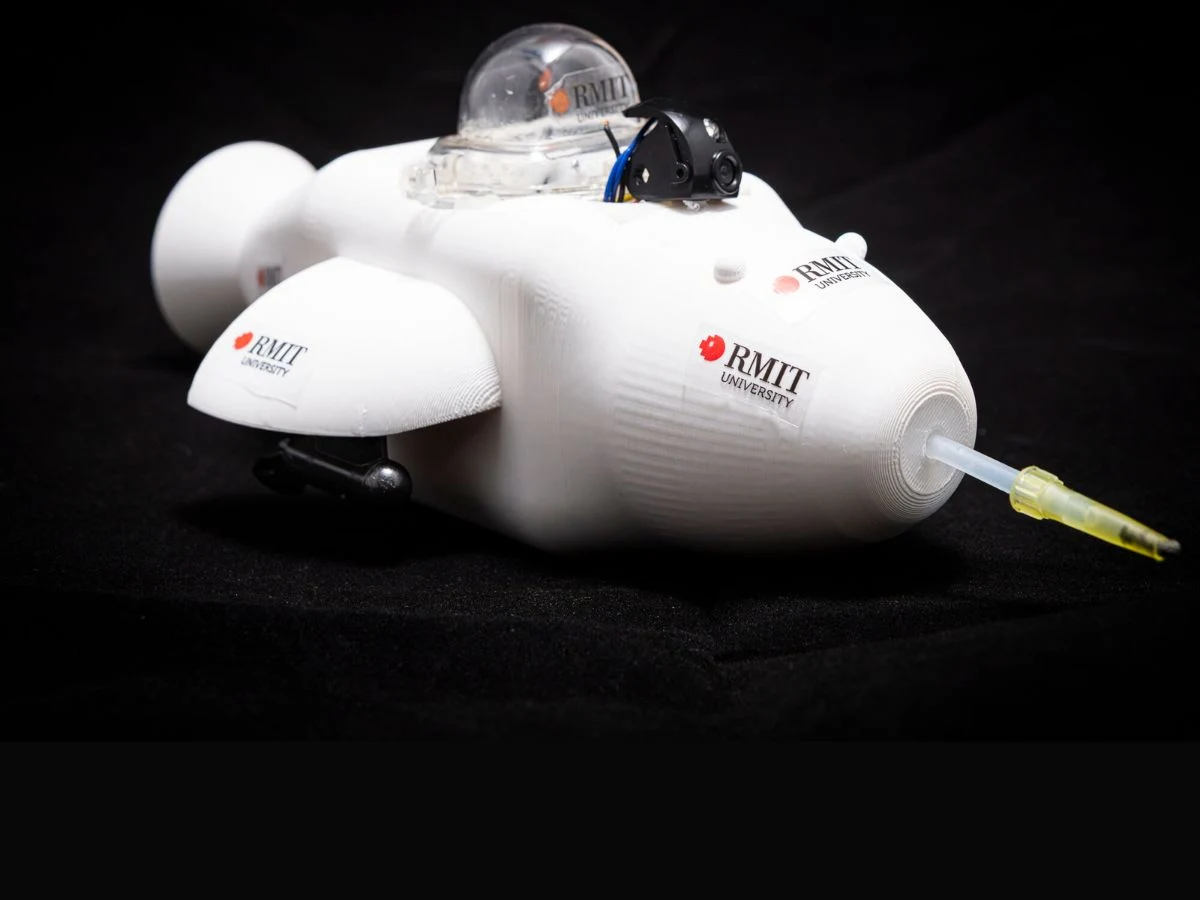
Engineers at RMIT University in Australia has made a small robotic device, called the “Electronic Dolphin,” to help with the big environmental issues caused by oil spills in the ocean. This mini robot, which can be controlled through Wi-Fi, is described in the journal Small. It provides a way to clean polluted waters without putting human workers in dangerous situations.
Innovative Eco-Friendly Filter
The heart of this device is a new, environmentally safe filter that takes inspiration from the tiny structure of sea urchins. Unlike traditional cleanup methods that use harmful chemicals like PFAS, the team created a special composite made of unique carbon layers and modified barium carbonate. This unique mix produces tiny, spine-like features that trap small bubbles of air. This design results in a strong water-repelling effect, causing water to roll off easily while oil adheres and gets absorbed.
Efficient Oil Skimming
At the front of the robot, the specially coated filter collaborates with a small pump to suck in the oil. In tests, the prototype managed to skim oil at about two milliliters per minute, achieving more than 95% purity. The system is also resistant to corrosion in saltwater and can be used many times before needing to be replaced.
Although the current battery lasts roughly 15 minutes, the researchers see the potential to expand this technology. Upcoming versions might create fully autonomous robots, about the size of dolphins, that can work continuously. These robots could vacuum up oil, return to their base to unload, and recharge on their own until the entire spill is cleaned up.
RMIT University’s research team is excited about the possibilities that the “Electronic Dolphin” brings to environmental recovery efforts.
Source:
Link