
Key Takeaways
1. TRAPPIST-1 d shows no evidence of water, methane, or carbon dioxide, removing it from Earth-like candidates.
2. The planet orbits its red dwarf star in the temperate zone but faces high-energy radiation risks.
3. The lack of atmosphere might explain the absence of detectable elements on TRAPPIST-1 d.
4. Future research will focus on other planets in the TRAPPIST-1 system, which may still have atmospheres.
5. There is potential for water and atmospheric elements on the outer planets of the TRAPPIST-1 system.
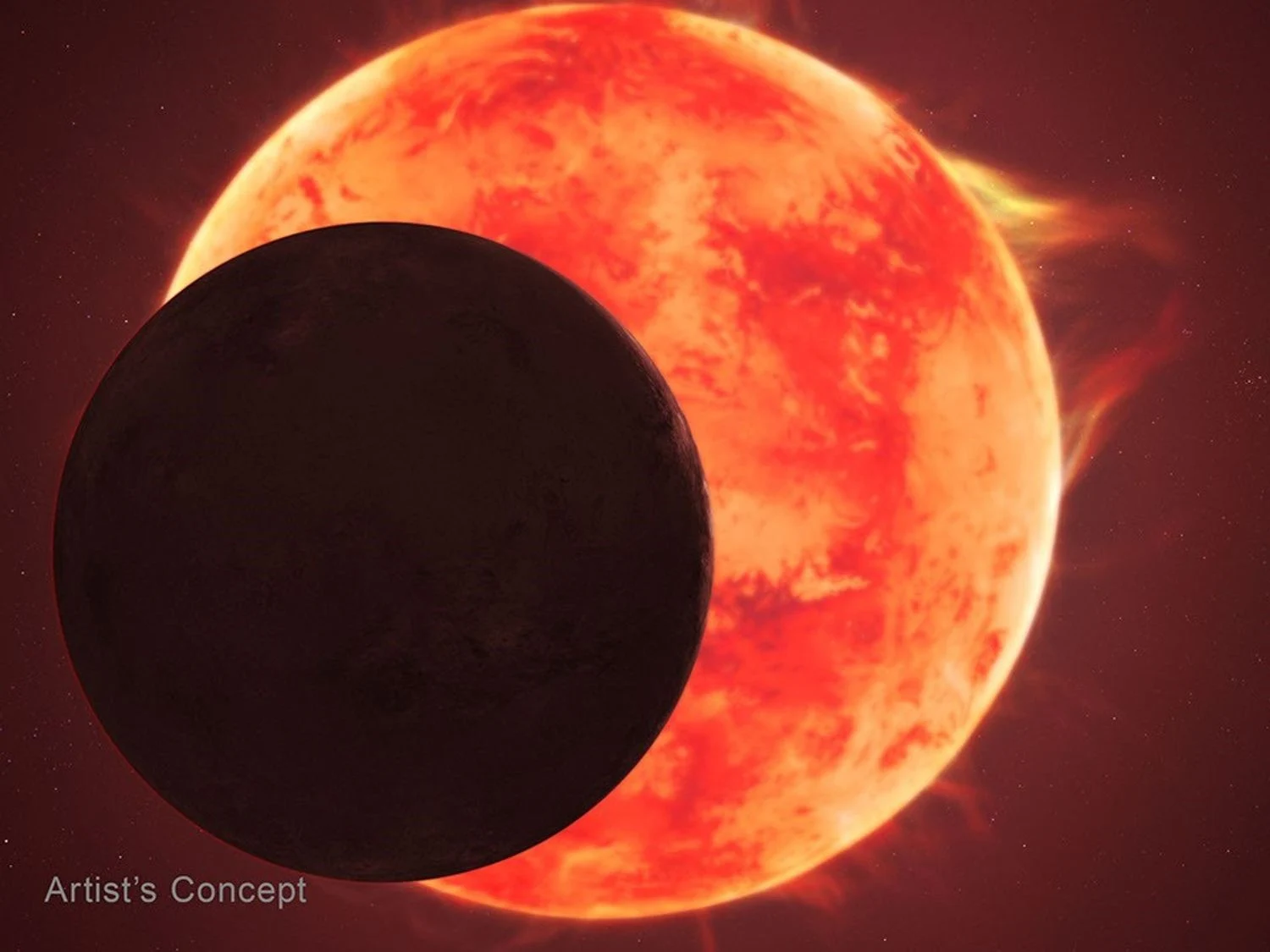
Recent findings about TRAPPIST-1 d using the NIRSpec (Near-Infrared Spectrograph) from James Webb showed no evidence of water, methane, or carbon dioxide on the planet, removing it from the list of candidates for an Earth-like world. TRAPPIST-1 d, which is rocky and about the same size as Earth, is the third planet orbiting its star and has captured the attention of astronomers.
Possible Liquid Water
Due to its distance from the star, scientists thought it might be able to support liquid water, which added to the hope that it could host life. It lies in the temperate region of its star, completing an orbit in just four days as measured on Earth.
Advantages and Disadvantages
Though being close to its star offers some benefits that might support life, it also brings disadvantages. TRAPPIST-1 is a red dwarf star, known for its instability and tendency to emit high-energy radiation. Such flares could strip away a planet’s atmosphere. If this is true for TRAPPIST-1 d, it could explain the findings from the Webb telescope.
The main author of the study, Caroline Piaulet-Ghorayeb, suggested that a lack of atmosphere could be a reason for the results from Webb. She also mentioned two other possibilities: an atmosphere that is too thin to be detected or thick clouds high in the atmosphere blocking the view.
Future Research
With TRAPPIST-1 d ruled out, the researchers think that the other planets in the TRAPPIST-1 system might still have atmospheres.
Even though we didn’t discover a strong atmospheric signature on planet d, there’s still a chance that the outer planets could have a lot of water and other atmospheric elements, according to Piaulet-Ghorayeb.
Source:
Link
