Tag: iPhone 17 Air

  • iPhone 17 Dummies in Black and White Spotted: What to Expect

    iPhone 17 Dummies in Black and White Spotted: What to Expect

    Key Takeaways

    1. Dummy models of the iPhone 17 series (iPhone 17, 17 Air, 17 Pro, 17 Pro Max) have surfaced, showcasing their design.
    2. The iPhone 17 Air is expected to be very slim at 5.65mm and features a 6.7-inch display and a single rear camera.
    3. The series is rumored to include a new A19 chip, with Pro models featuring an A19 Pro chip and advanced camera capabilities.
    4. The iPhone 17 series is set to launch in September 2025, generating anticipation for innovative design and performance.
    5. Further information about the iPhone 17 lineup is expected to be released as the launch date approaches.


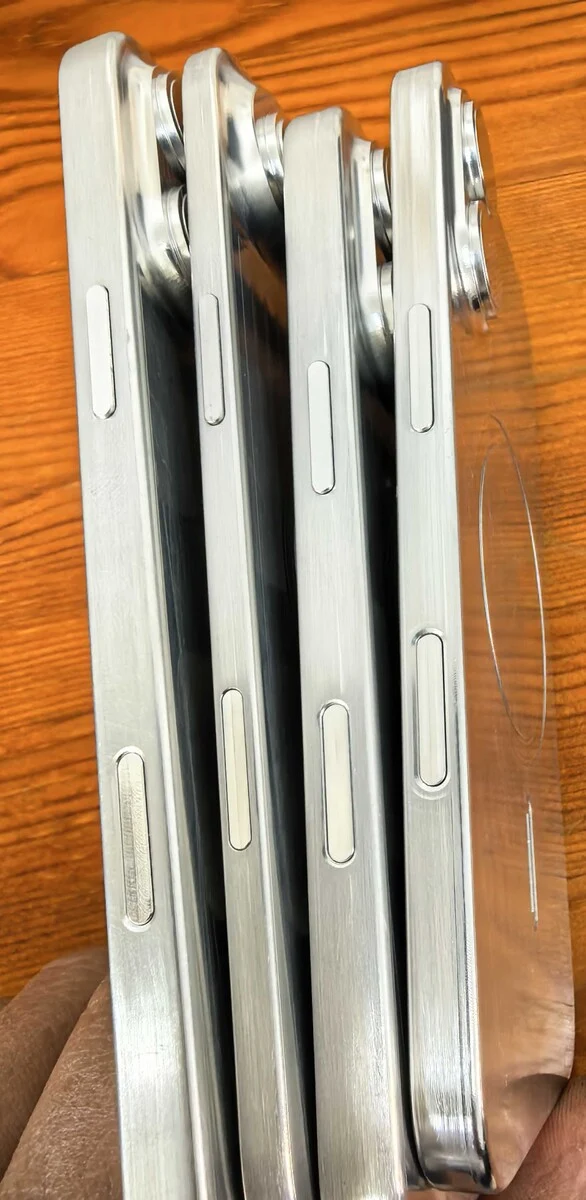
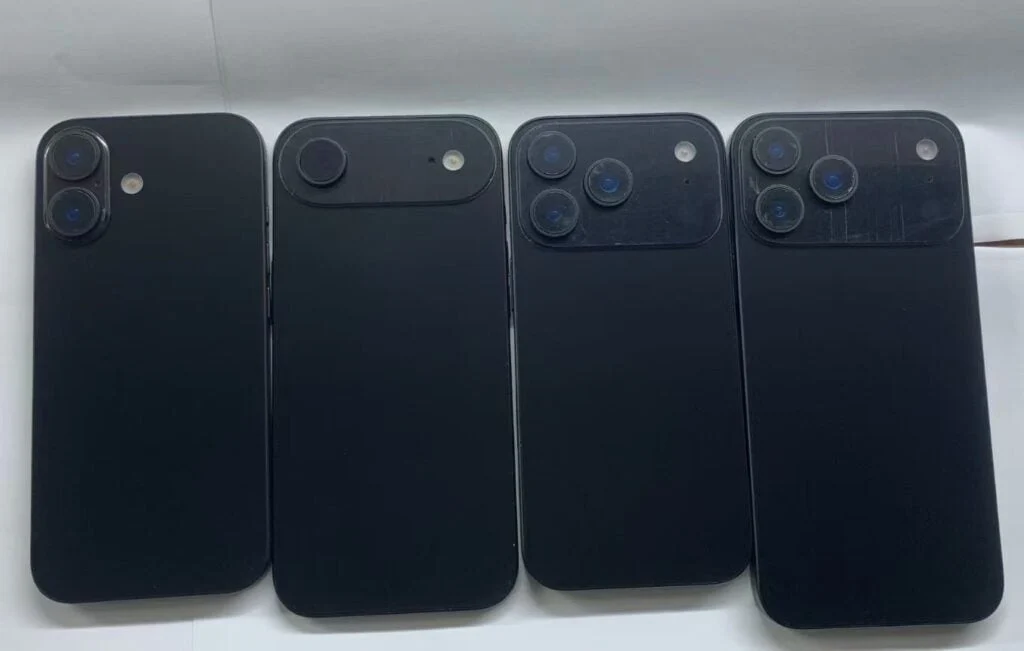
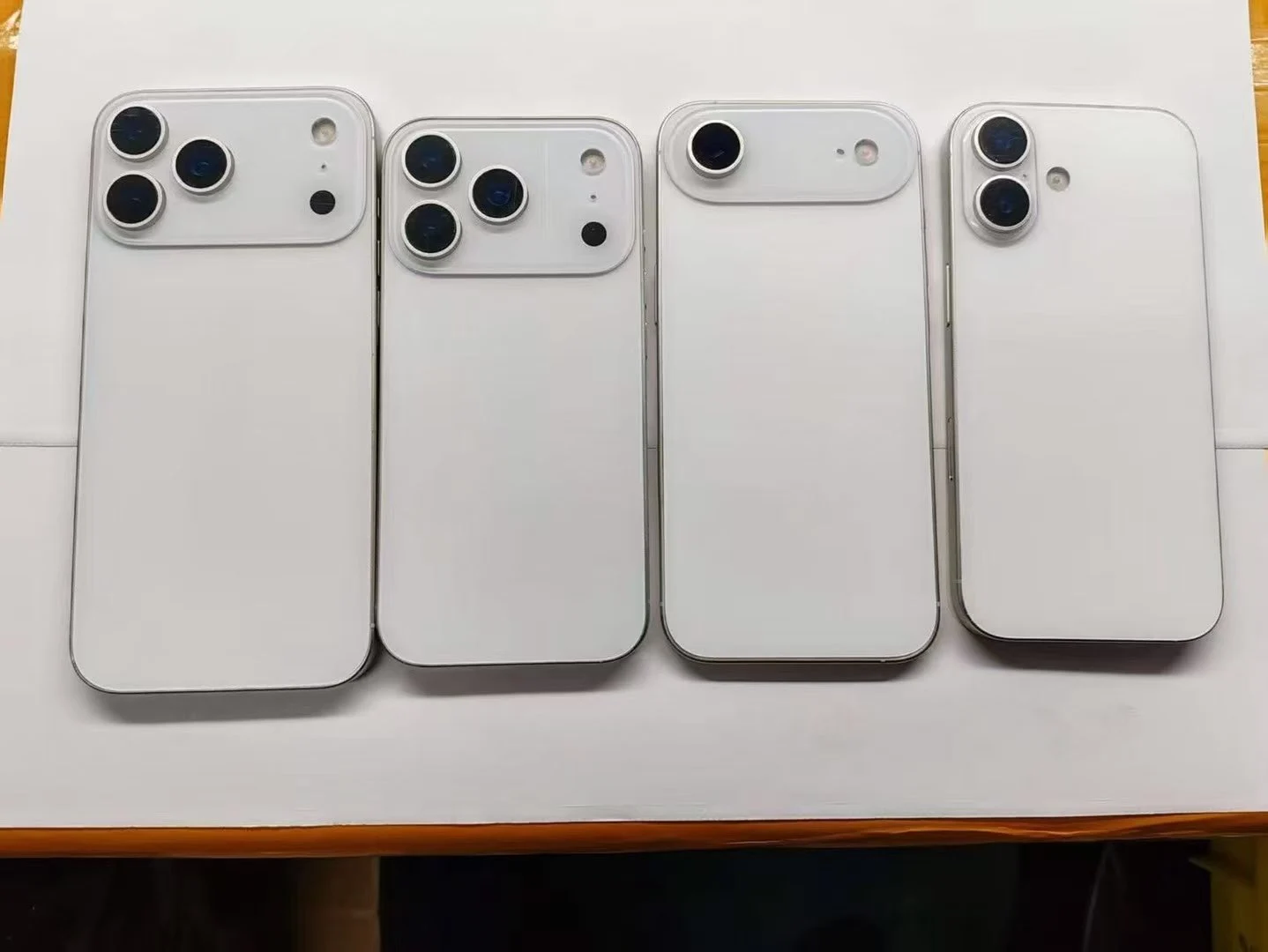
    Apple’s iPhone 17 series is already grabbing attention, as dummy models of the complete range — iPhone 17, 17 Air, 17 Pro, and 17 Pro Max — appear together in group snapshots. This comes after the metal molds for the entire series were shown off last month, along with a lifelike dummy of the Air model that emerged just a few days ago.

    Dummy Units in Two Colors

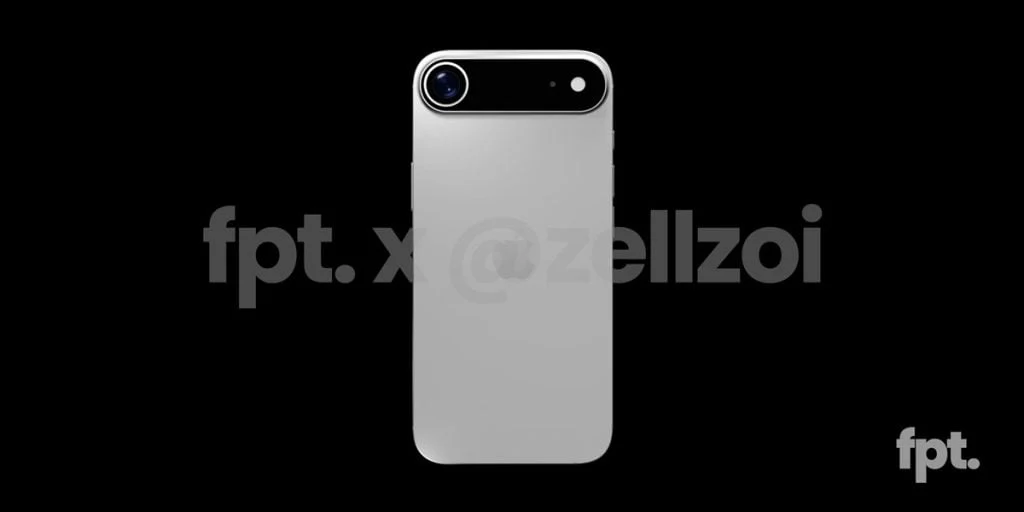
    Just after a video that displayed the mold of the iPhone 17 Air, which is rumored to be only 5.65mm thick, photos of the dummy units for the entire iPhone 17 collection have surfaced. The black set features the iPhone 17 on the left, followed by the 17 Air, then 17 Pro, and lastly the 17 Pro Max on the right. Conversely, the white units reverse the order, starting with the 17 Pro Max, then 17 Pro, 17 Air, and finishing with the 17. The table below illustrates the lineup.

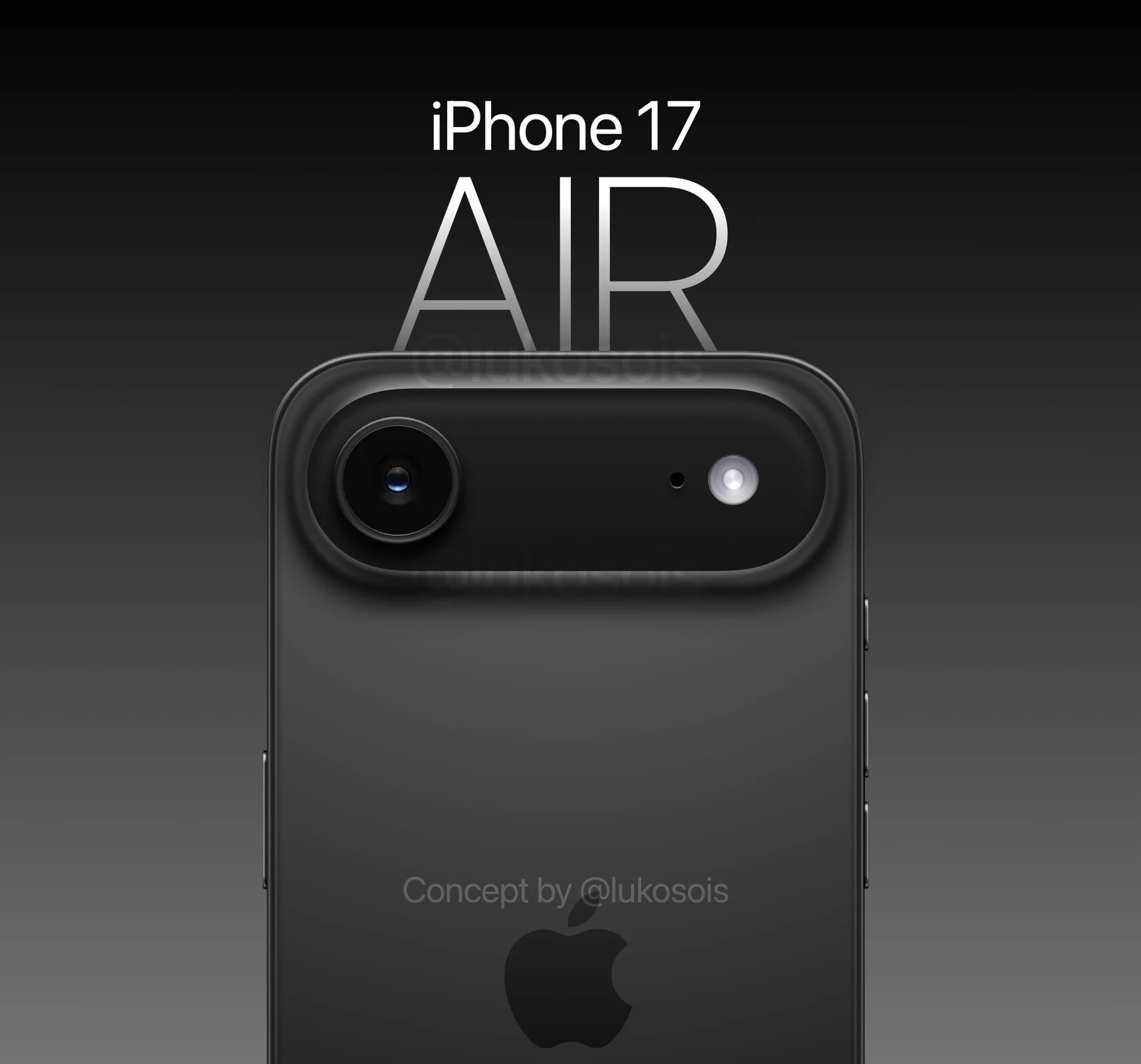
    These dummy models, probably utilized for designing cases or initial tests, suggest a common design language for the series. The 17 Air is particularly notable for its slim profile. Although specifications remain undisclosed, rumors suggest a 6.7-inch display for the Air, a single rear camera, and a new A19 chip across the lineup, with Pro models expected to include an A19 Pro chip and advanced periscope telephoto lenses.

    Anticipation for Launch

    Scheduled for release in September 2025, the iPhone 17 series seems ready to merge innovative design with performance. The lightweight nature of the Air could revolutionize the market, but we’re still awaiting further information. For now, these images provide an exciting glimpse into what Apple has in store for its next major release.

    All of the significant enhancements made known so far for the iPhone 17 lineup have been discussed — you can find more details about them through our previous posts. Keep your eyes peeled, as additional information is likely to emerge as we approach the launch date.

    Source:
    Link


  • iPhone 17 Air Model Now Available for Preview in Apple Store

    iPhone 17 Air Model Now Available for Preview in Apple Store

    Key Takeaways

    1. The iPhone 17 Air will feature a unique design that differs from the iPhone 17 series, confirmed by leaked CAD models.
    2. Dummies of the iPhone 17 Air have been spotted in a Chinese Apple Store, showcasing its design compared to the iPhone 16 Pro Max.
    3. The iPhone 17 Air is expected to be ultra-slim, measuring around 5.5 mm in thickness.
    4. The display of pre-release models in an Apple Store suggests unusual behavior, possibly due to a rogue employee.
    5. The camera bump of the iPhone 17 Air is expected to be thicker than the body, resembling the Google Pixel camera design, with a potential thickness of up to 8.5 mm.


    It was earlier disclosed that the new ultra-slim iPhone 17 Air will not only be a fresh addition to Apple’s smartphone range, but it will also feature a design that stands out from the iPhone 17 series. This design was hinted at through leaked CAD models by smartphone insider MajinBu, yet there were still some doubts about its authenticity. However, it appears that an Apple Store located in China is now supporting the validity of these design leak.

    New Designs Unveiled

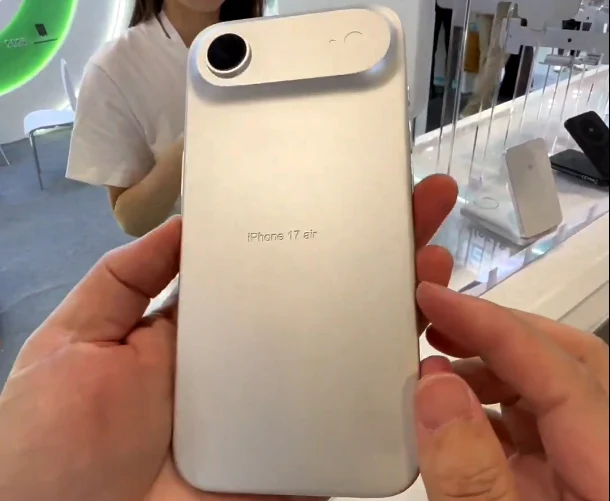
    A recent clip shared by the same leaker shows what seems to be dummies that were CNC machined based on those CAD designs, appearing in a Chinese Apple Store. Employees were seen using these models to showcase to clients what the forthcoming iPhone might look like. In the footage posted on X, the iPhone 17 Air is directly contrasted with what seems to be an iPhone 16 Pro Max. This side-by-side comparison emphasizes the significant distinction between the existing iPhone models and the upcoming Air version, which is expected to measure as thin as 5.5 mm in its main body.

    Unusual Apple Behavior

    Even though the video was captured inside an Apple Store, displaying a pre-release design goes against Apple’s usual practices. This hints that it might be a “rogue” employee who has deviated from the company’s standard protocol, although the motive behind showcasing the new design remains uncertain.

    Camera Bump Insights

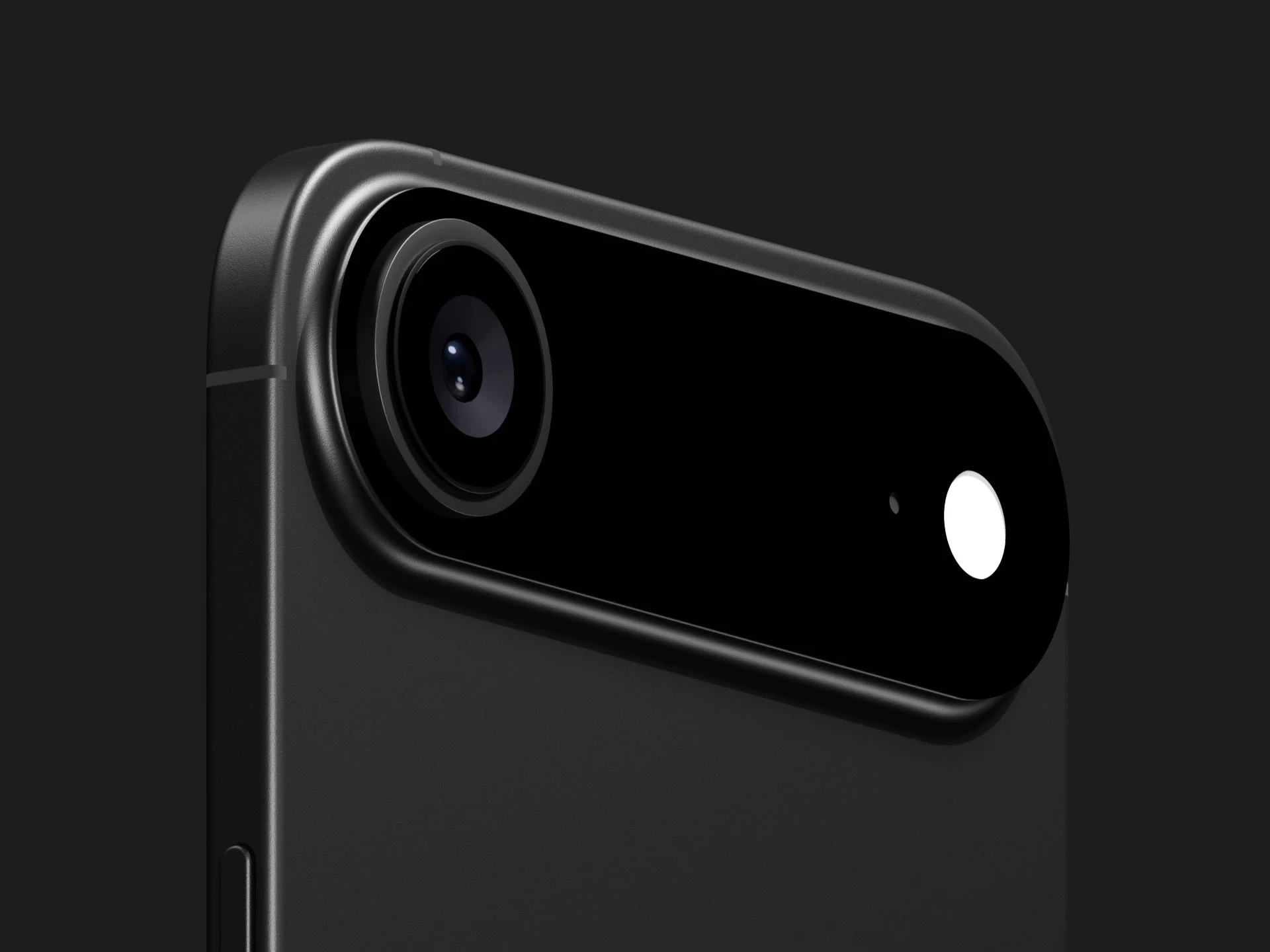
    The video also reveals details about the camera bump that is reportedly coming with the iPhone 17 Air. This bump resembles the Google Pixel camera bar design (excluding the $499 Pixel 9a, of course) and is notably thicker than the rest of the phone’s body, with prior leaks suggesting it could be up to 8.5 mm thick. The launch of the iPhone 17 Air, along with the entire iPhone 17 series, is anticipated in September 2025, so keep an eye out for a wave of new leaks and speculation leading up to that date.

    Source:
    Link

  • Apple iPhone 17 Series: Key Upgrades and Changes to Expect

    Apple iPhone 17 Series: Key Upgrades and Changes to Expect

    Key Takeaways

    1. New iPhone Models: The iPhone 17 series will introduce four models: iPhone 17, iPhone 17 Air, iPhone 17 Pro, and iPhone 17 Pro Max, with the Air replacing the Plus model.

    2. Bold Redesign: The series features a significant redesign, including a thinner iPhone 17 Air and a new horizontally aligned camera module.

    3. ProMotion Technology for All: All models will include ProMotion technology with 120Hz refresh rates and a more durable screen coating.

    4. Enhanced Performance: The iPhone 17 Pro models will have the A19 Pro chip, while the standard and Air models will use the A19 chip, with improved RAM and thermal management.

    5. Camera and Connectivity Upgrades: All models will receive camera improvements, including 24-megapixel front cameras, and the iPhone 17 Air will feature Apple’s own 5G modem, with support for Wi-Fi 7.


    Apple’s iPhone 17 series is gearing up for a September release this year, featuring important changes in its four models: the standard iPhone 17, the slender iPhone 17 Air, and the premium iPhone 17 Pro and Pro Max. The standout addition is the iPhone 17 Air, which takes the place of the underwhelming Plus model with a modern and streamlined design. Different from prior Plus models, the Air will fit between the base and Pro versions in both size and pricing, starting at about $899.

    Ambitious Redesign and New Look

    According to sources, the iPhone 17 series shows Apple’s boldest redesign in years, merging state-of-the-art technology with a vibrant new look. Ranging from the ultra-slim Air to the powerful Pro Max, the 2025 lineup is rumored to showcase a new horizontally aligned camera module. Notably, the iPhone 17 Air is expected to be the thinnest iPhone ever at approximately 5.5 to 6mm thick.

    ProMotion Technology for All Models

    A major enhancement across the series is the rollout of ProMotion technology to every model, introducing 120Hz refresh rates to non-Pro iPhones for the first time. This feature is made possible by LTPO OLED displays, which also offer always-on capability, although it remains uncertain if this feature will be available for models outside of the Pro range. Additionally, Apple is said to be implementing a more durable, anti-reflective screen coating to boost scratch and drop resistance, replacing the existing Ceramic Shield.

    Enhanced Performance with A19 and A19 Pro Chips

    Inside, the iPhone 17 Pro models will include the A19 Pro chip, manufactured using TSMC’s cutting-edge 3nm N3P process for improved efficiency and performance. The standard iPhone 17 and Air will be powered by the A19 chip, with RAM options ranging between 8GB and 12GB. Thermal management will also see improvements with vapor chamber cooling expected in the Pro models to help prevent overheating during demanding tasks.

    Camera Improvements Across the Board

    Camera enhancements are another key feature. The Pro Max is expected to keep the 48-megapixel telephoto lens, complementing its already high-resolution wide and ultra-wide cameras, while the Air will house a single 48-megapixel rear camera due to its slim design. All models are likely to come with a 24-megapixel front camera, a significant upgrade from the current 12-megapixel sensor. There’s speculation that Pro models may offer support for 8K video recording.

    Next-Generation Connectivity and Apple’s 5G Modem Launch

    Connectivity will see significant updates, with reports suggesting that Apple will launch its own in-house 5G modem in the iPhone 17 Air, while Qualcomm modems will still be used in other models. Wi-Fi 7 support through an internal Wi-Fi chip will be standard across the lineup, along with Bluetooth 5.3. The SIM tray might also be phased out in more areas, furthering Apple’s move towards eSIM usage.

    Battery Life and Charging Updates

    Battery longevity and charging speeds are predicted to stay mostly the same, with wired charging at 35W and enhancements in battery replacement options. The iPhone 17 Pro models could feature a hybrid aluminum-glass back for enhanced durability while maintaining MagSafe compatibility.

    Pricing and Anticipated Launch Date

    Prices are expected to start at $799 for the base model, $899 for the Air, and $999 for the Pro, with a likely launch in September 2025.

  • EU Approves Portless iPhone: Type-C on iPhone May Be Short-Lived

    EU Approves Portless iPhone: Type-C on iPhone May Be Short-Lived

    Key Takeaways

    1. EU Compliance: An iPhone without any ports would still meet EU regulations, allowing for a fully wireless device.
    2. Wireless Charging Future: EU laws only require USB-C for devices with wired charging, paving the way for Apple to adopt a portless iPhone that relies solely on wireless charging.
    3. Qi2 Standard: The Qi2 standard, inspired by Apple’s MagSafe, is expected to become the primary wireless charging standard, supporting the EU’s goal for interoperability.
    4. Impact on Android Market: The shift to a portless design could influence Android manufacturers, who are developing charging systems similar to MagSafe but face challenges with compatibility and user experience.
    5. Focus on Wireless Charging: The potential for a portless iPhone may push Android brands to enhance their wireless charging technologies to keep up with evolving consumer expectations.


    Apple’s move to USB-C on iPhones might not last long. The European Union (EU) has made it clear that an iPhone without any ports would still meet their rules. Mark Gurman from Bloomberg reported that Apple thought about making the iPhone 17 Air the first device without ports but decided to keep USB-C because they were worried about EU regulations.

    Wireless Charging Compliance

    The European Commission’s press officer, Federica Miccoli, shared with 9to5Mac that devices that charge only through wireless methods are in complete compliance with EU laws. If there’s no wired charging involved, then a Type-C port is unnecessary. Apple’s AirDrop already does a great job transferring data wirelessly, making the need for a port even less critical.

    Future of Charging Standards

    According to EU regulations, USB-C is only required for devices that allow wired charging. Since a portless iPhone would rely solely on wireless charging, it wouldn’t need a USB-C port. This situation could pave the way for Apple to fully embrace a wireless future for its gadgets. The EU aims to get rid of conflicting wired charging standards and is now also advocating for the standardization of wireless charging tech to avoid market confusion.

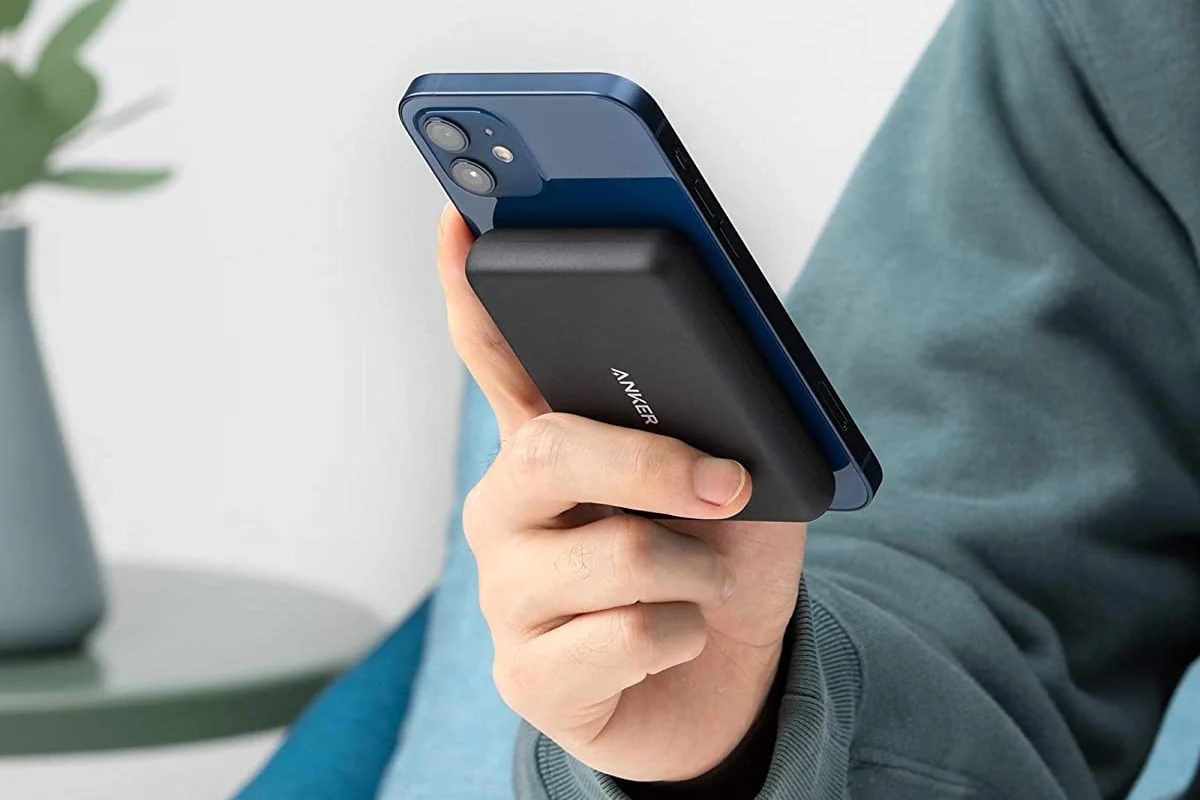
    The Qi2 standard, backed by the Wireless Power Consortium and compatible with the original Qi, takes inspiration from Apple’s MagSafe and is expected to become the main wireless charging standard. This aligns well with the EU’s goal of fostering interoperability in wireless charging solutions.

    The Impact on Android

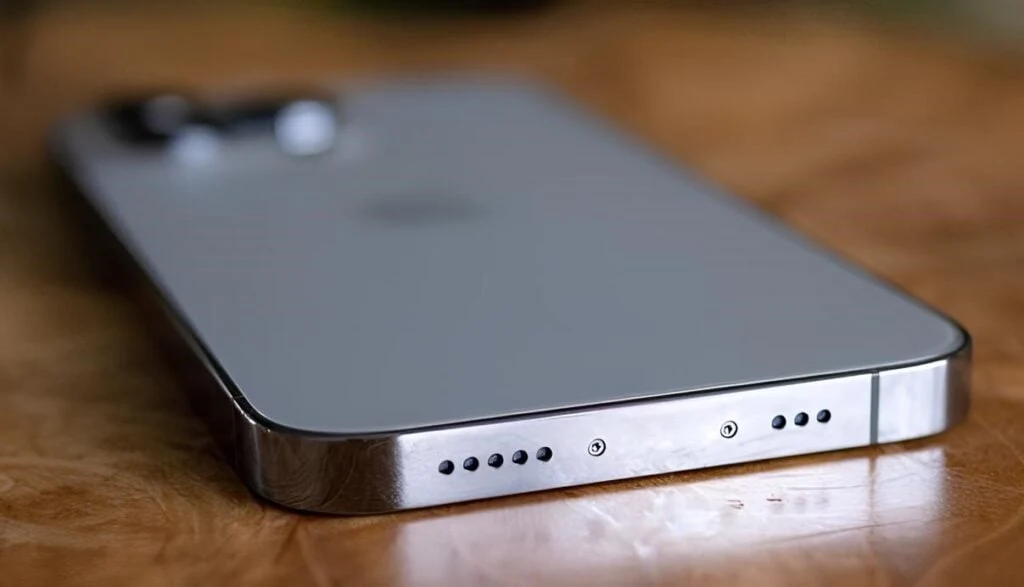
    While the iPhone 17 Air is expected to have a USB-C port, we might see completely portless iPhones sooner than we think. Although Apple has not yet improved iPhone charging speeds, this potential shift to a portless design and total reliance on wireless charging could also affect the Android market. Some Android manufacturers are already developing charging systems similar to MagSafe, but many devices lack built-in magnets. Official magnetic cases can work, but they don’t provide the same smooth experience as Apple’s MagSafe. Users may wish to charge their devices without cases for better heat dissipation, but doing so can lead to losing essential features. Furthermore, a lot of Android devices do not even support wireless charging at all.

    Overall, we are not just hoping for a portless iPhone soon but also looking for Android manufacturers to put more focus on enhancing wireless charging capabilities.

    Source:
    Link


  • Apple iPhone 17 Air Case Leaked: Resembles Google Pixel Design

    Apple iPhone 17 Air Case Leaked: Resembles Google Pixel Design

    Key Takeaways

    1. Apple is expected to launch four new iPhones in September, including a redesigned slim model likely called the “iPhone 17 Air.”
    2. The iPhone 17 Air will be very thin at 5.5 mm, featuring a 6.6-inch display, replacing the iPhone 16 Plus.
    3. The base model of the iPhone 17 will retain the design of the iPhone 16 but will have improvements, especially in the front camera.
    4. Leaked images of protective cases reveal a design for the iPhone 17 Air that resembles a Google Pixel phone, featuring a prominent camera bar.
    5. This design shift may take some getting used to for Apple fans, as it marks a significant departure from previous iPhone aesthetics.


    Google – oh wait, I mean Apple – is anticipated to reveal four new iPhones this September, as per tradition. Nevertheless, there’s a significant twist: the new models might appear quite different from the existing iPhone 16 series. Following a hands-on report with all four iPhone 17 prototypes, it’s evident that the two Pro variants and the newly introduced slim model, likely dubbed the “iPhone 17 Air,” have seen a substantial redesign.

    New Design Features

    This new gadget is said to be a mere 5.5 mm (0.21 in) thin, and according to a reliable leak from analyst Mark Gurman, it will boast a 6.6-inch display to take the place of the iPhone 16 Plus. Similar to the earlier “Mini” versions, the iPhone 16 Plus didn’t perform as well in sales compared to its counterparts from the same series. The base model is expected to be the only iPhone 17 retaining the design style of the iPhone 16, although it will likely receive some enhancements, including a considerably improved front camera.

    Protective Case Insights

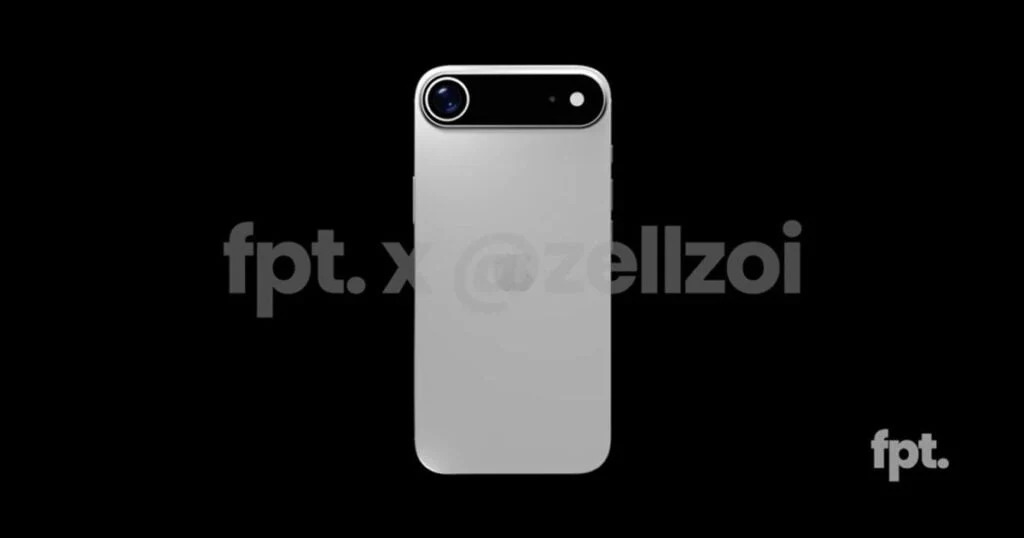
    A few weeks ago, case designs for the iPhone 17 Pro Max were leaked, but now, an actual image of the first protective case for the Air model has emerged, about six months before the iPhone 17 series is expected to launch. The design of the iPhone 17 Air notably resembles that of a Google Pixel phone, featuring a prominent camera bar that stretches across the entire back. However, the Pixel’s camera visor isn’t positioned all the way at the top. It seems that leaker Sonny Dickson isn’t the only one sensing the Pixel resemblance from this case – a design shift that Apple enthusiasts may need to get used to.

    Source:
    Link


  • Apple iPhone 17 Air Thicker Than iPhone 17 and 17 Pro in Key Area

    Apple iPhone 17 Air Thicker Than iPhone 17 and 17 Pro in Key Area

    Key Takeaways

    1. Accessory makers are preparing for the iPhone 17 series launch, six months ahead of time.
    2. Four models expected: iPhone 17, iPhone 17 Air, iPhone 17 Pro, and iPhone 17 Pro Max.
    3. The iPhone 17 Air is anticipated to be about 30% thinner than the iPhone 16, with a thickness of 5.5 mm to 5.65 mm.
    4. The camera housing on the iPhone 17 Air appears thicker than on other models, affecting overall slimness.
    5. There is a potential change in the positioning of Face ID and the front camera on the iPhone 17 Air compared to other models.


    The iPhone 17 series is still about six months from its launch, but it appears that accessory makers are already gearing up for the new devices. While there’s no solid proof to confirm this, Sonny Dickson has acquired images of metal dummies that are commonly used for designing third-party cases.

    Design Insights

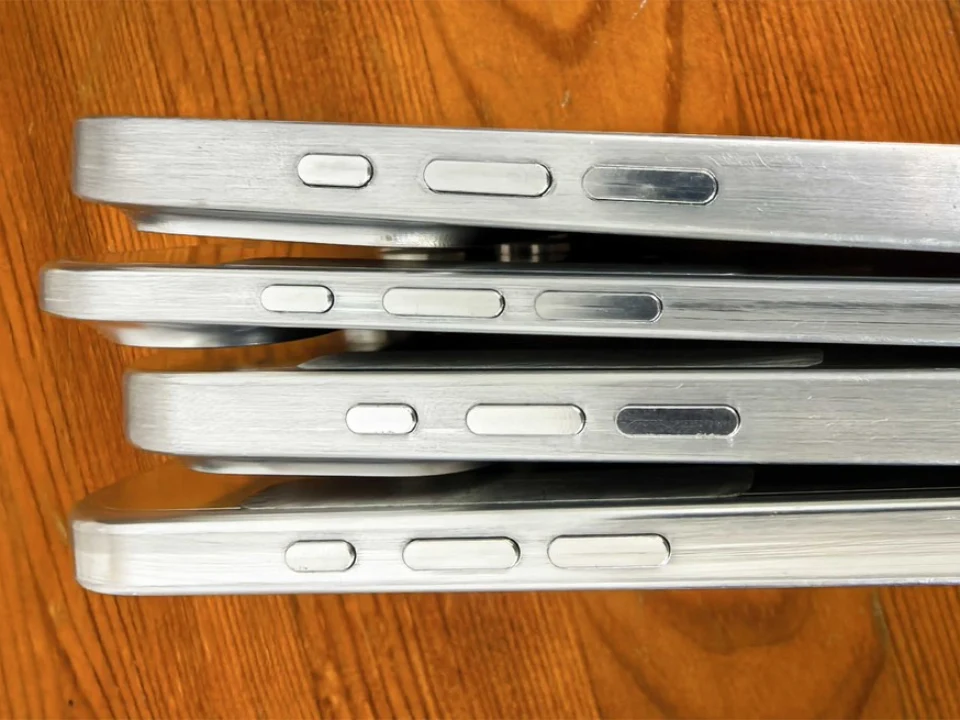
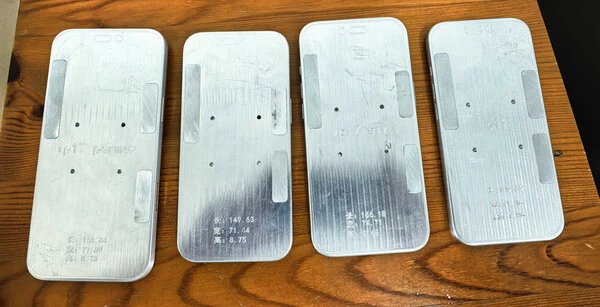
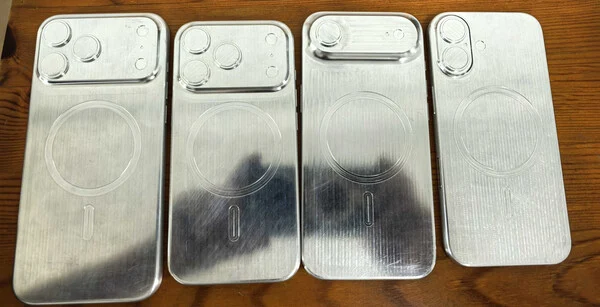
    In the photos shared by Dickson, we can see four different models expected to be released: the iPhone 17, iPhone 17 Air, iPhone 17 Pro, and iPhone 17 Pro Max. Previous dummy units have been seen online, but these latest images clearly show how much sleeker the iPhone 17 Air is going to be compared to the other models. For context, the iPhone 17 Air is anticipated to be around 30% thinner than the current iPhone 16, which is priced at $687.50 for a renewed version on Amazon.

    Thinness vs. Functionality

    The iPhone 17 Air is reported to have a thickness of just 5.5 mm to 5.65 mm. However, it seems that Apple might have used a clever design approach to reach this extremely slim profile. From the pictures, it’s evident that the camera housing looks at least a third thicker than the ones on Apple’s other top-tier models. This suggests that the overall thickness, including the camera, might not be as slim as it appears. Interestingly, the images also indicate a swap in the positioning of the Face ID and the front camera, although this change does not apply to the other models in the series. The following dimensions can also be noted:

    Source:
    Link


  • Apple iPhone 17 Air May Hint at Future Portless iPhone

    Apple iPhone 17 Air May Hint at Future Portless iPhone

    Key Takeaways

    1. The iPhone 17 Air will debut this fall alongside the iPhone 16 series and will be between the sizes of the iPhone 17 Pro and Pro Max, with a slim profile of 5.5 mm.
    2. It features a 6.6-inch display, although Apple initially planned for a larger 6.9-inch screen from the iPhone 16 Pro Max.
    3. Early prototypes of the iPhone 17 Air did not include a physical charging port and relied on MagSafe technology for charging and cloud-based file transfers.
    4. The potential for a portless iPhone is still alive, depending on the success of the Air model and ongoing discussions about charging standardization.
    5. The iPhone 17 Air is expected to maintain strong battery performance and will likely be priced around $899, comparable to the iPhone 16 Plus.


    Bloomberg analyst Mark Gurman has provided some fresh details regarding the iPhone 17 Air, which is set to debut this fall alongside the new versions of the iPhone 16, iPhone 16 Pro, and iPhone 16 Pro Max. From the latest leaks and gossip, it appears that Apple’s inaugural ‘Air’ styled iPhone will be positioned in size between the iPhone 17 Pro and iPhone 17 Pro Max, all while featuring a slim profile of only 5.5 mm thick.

    Features and Expectations

    According to Gurman, the iPhone 17 Air will come equipped with a 6.6-inch screen. However, he points out that Apple initially intended to use a larger 6.9-inch display, likely the same one as the iPhone 16 Pro Max. Additionally, Gurman mentions that the early ‘D23’ prototypes did not include a physical charging port. Instead, they utilized MagSafe technology, with all file transfers conducted solely through the cloud.

    Potential Changes Ahead

    This concept has been put on hold for now, especially considering Apple’s ongoing issues with the European Commission about standardizing charging ports. Gurman speculates that the long-awaited portless iPhone might still make a comeback, but only if a new ultra-slim model proves successful. In the near future, higher-end Pro models could take advantage of the innovations introduced with the Air if it becomes well-received within a generation or two.

    Pricing and Performance Insights

    Furthermore, the analyst asserts that advancements in display, battery life, iOS, and modem technologies will ensure that the iPhone 17 Air does not sacrifice battery performance, even with a 120 Hz ProMotion display. Additionally, Gurman anticipates that the iPhone 17 Air will be priced comparably to the iPhone 16 Plus (currently $729.95 – renewed on Amazon). If this prediction holds true, it would mean that Apple’s first ‘Air’ iPhone could launch at around $899.

    Source:
    Link

  • Apple’s iPhone 17 Air: Original Plan for a Portless Design

    Apple’s iPhone 17 Air: Original Plan for a Portless Design

    Key Takeaways

    1. The iPhone 17 Air is expected to be one of Apple’s slimmest smartphones, with a thickness of 5.5mm.
    2. Apple considered eliminating the USB-C port but retained it due to EU regulations.
    3. Key features include a 6.6-inch display with Dynamic Island and a Camera Control button.
    4. The design hints at a possible future transition to fully wireless devices without charging ports.
    5. High-density Si/C batteries and a titanium frame are part of the design to ensure both sleekness and structural integrity.


    Apple’s next iPhone 17 Air is anticipated to be among the slimmest smartphones ever and will set a new record for the thinnest device in Apple’s lineup, as noted by analyst Mark Gurman.

    A Portless Future Almost Realized

    In his “Power On” newsletter for Bloomberg, Gurman shared that Apple leaders had considered eliminating the USB-C port completely. However, they had to abandon this idea to adhere to EU regulations, which were instrumental in pushing Apple toward adopting the USB-C port.

    Key Features of the iPhone 17 Air

    The iPhone 17 Air is said to come with a 6.6-inch display featuring Dynamic Island, a Camera Control button, and battery life similar to existing iPhones. Gurman, however, hints that this new model could “foreshadow a move to slimmer models without charging ports,” indicating a possible transition to a fully wireless approach for Apple’s mobile devices. It remains to be seen if Android manufacturers will take notice of this potential shift.

    The expected thickness of the iPhone 17 Air is 5.5mm, which still provides space for the USB-C port. For comparison, the newly released Oppo Find N5 is only 4.2 mm thick and still includes a USB-C port. It’s also highly unlikely that this design will compromise structural integrity since the port is located on the bottom of the device rather than the sides, where it could create a bending weak point.

    Some fans may feel let down by the decision to keep the USB-C port, as they were hoping for a more daring design. Regardless, it’s clear that Apple has already started the trend of making thinner phones. With the introduction of high-density Si/C batteries and titanium in the frame, creating a practical yet sleek smartphone seems more achievable than ever.

    Source:
    Link

  • iPhone 17 Air Thickness: 9.5mm with 5.5mm Body Design

    iPhone 17 Air Thickness: 9.5mm with 5.5mm Body Design

    Key Takeaways

    1. The iPhone 17 Air is expected to replace the ‘Plus’ series and feature a sleek design, potentially under 6mm thick.
    2. The camera bump will increase the overall thickness to about 9.5mm, with the bump itself around 4mm thick.
    3. Reports suggest the body of the phone could be as thin as 5.5mm, making it one of Apple’s slimmest devices.
    4. The design will include a Camera Control capacitive button, a new C1 modem, and a USB Type-C port, along with a 6.7-inch display.
    5. Apple has not officially confirmed details about the iPhone 17 Air or its launch alongside other iPhone models.


    The iPhone 17 Air is anticipated to be a sleek new smartphone that will take the place of the ‘Plus’ series, at least for this generation. There have been discussions about its thinness, with indications that it could measure less than 6mm in thickness. However, recent rumors indicate that the camera bump will significantly increase the overall thickness of the iPhone 17 Air. It might reach around 9.5mm when you include the camera bump, while still keeping its ultra-slim profile.

    Camera Bump Details

    The popular leaker Ice Universe revealed on Weibo, a Chinese social media site, that the camera bump on the iPhone 17 Air will be around 4mm thick. He also mentioned that the overall thickness of the phone near the camera bump would be 9.5mm, which suggests the body itself could be just 5.5mm thick. The camera bar is expected to include a single camera, an LED flash, and a microphone. It is likely that the camera will be similar to the one used in the iPhone 16e.

    Design Expectations

    Various reports have indicated that the phone could be 6mm or even thinner, but this latest leak hints at an even more streamlined design. Industry analyst Ming-Chi Kuo has also weighed in, stating it might indeed be 5.5mm thin. This would make the iPhone 17 Air one of the slimmest devices Apple has created, although it would not surpass the iPad Pro OLED models, which measure only 5.1mm and 5.3mm thick.

    Additional Features

    In terms of the overall design, the rest of the phone is expected to follow the typical iPhone aesthetic, featuring a Camera Control capacitive button. It will be equipped with the new C1 modem and a USB Type-C port. Given that it is set to replace the ‘Plus’ model, the iPhone 17 Air may also boast a sizable 6.7-inch display.

    It’s important to point out that Apple has yet to provide any official details regarding the rumored iPhone 17 Air or confirm whether it will be launched alongside the next set of iPhone models.

    Source:
    Link

  • iPhone 17 Air: Ultra-Thin Design with Advanced Battery Technology

    iPhone 17 Air: Ultra-Thin Design with Advanced Battery Technology

    Key Takeaways

    1. The iPhone 17 Air is expected to be unveiled in September with a thickness of less than 6mm.
    2. Apple may introduce silicon-carbon batteries in the iPhone 17 Air, which could enhance battery performance.
    3. Silicon-carbon batteries offer higher energy density, leading to improved battery capacity compared to traditional batteries.
    4. The iPhone 17 Air may have a larger battery due to its single rear camera design, potentially rivaling previous model capacities.
    5. More information about the iPhone 17 Air’s battery is expected to be released soon.


    The iPhone 17 Air is anticipated to be unveiled in September, alongside other models from the iPhone 17 series. Current details suggest that the device may have a thickness of less than 6mm. Typically, such a slim design could compromise battery life, but recent reports suggest that this might not be the case.

    New Battery Technology

    According to sources on Weibo, Apple might introduce silicon-carbon batteries in the iPhone 17 Air. It’s believed that both the iPhone 17 Air and the foldable iPhone expected next year could utilize this advanced battery technology.

    Enhanced Energy Density

    While this development might not sound groundbreaking at first glance, silicon-carbon batteries are known for their much higher energy density. Manufacturers such as Xiaomi, Honor, OPPO, and OnePlus have started using this tech, leading to significant improvements in battery capacity. For instance, the Xiaomi 15 was launched in China with a 5400 mAh battery, a considerable increase from the 4610 mAh battery of the Xiaomi 14 (available on Amazon).

    Space for Improvement

    Given that the iPhone 17 Air is likely to have just one rear camera, there will be additional room for a larger battery. The potential transition to silicon-carbon technology could allow for a battery that rivals that of the iPhone 16 (3561 mAh) or even the newer iPhone 16e (4005 mAh). While this is still speculation, more detailed information regarding the battery of the 17 Air should be coming soon.

    Source:
    Link