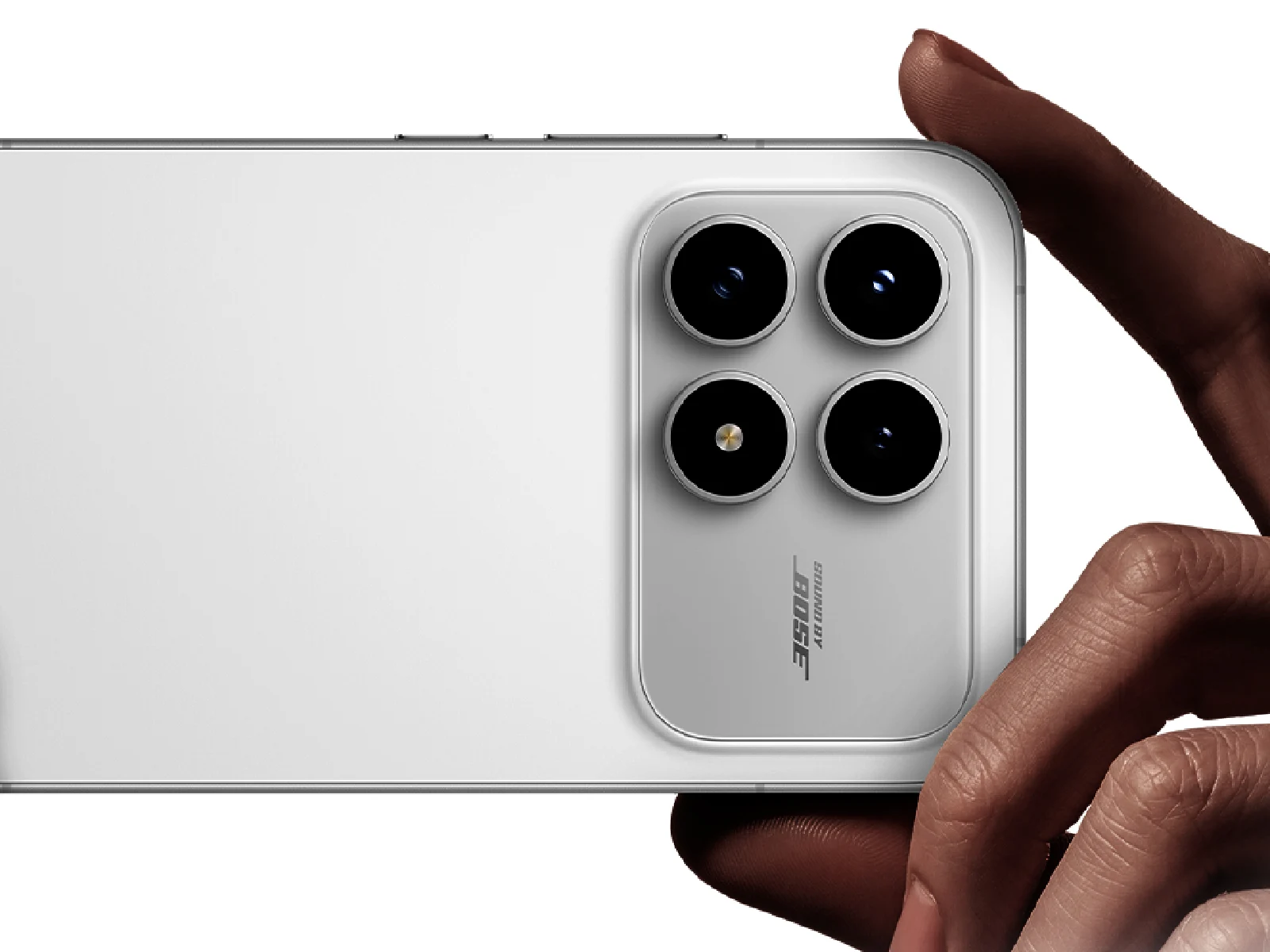
Tag: HyperOS 3

  • Xiaomi Poco F8 Pro: Battery and Charging Details Revealed

    Xiaomi Poco F8 Pro: Battery and Charging Details Revealed

    Key Takeaways

    1. The Poco F8 Pro is expected to be the international version of the Redmi K90.
    2. The Poco F8 Pro will have a 6,210 mAh battery, a 3.5% increase from the Poco F7 Pro.
    3. Charging speed for the Poco F8 Pro is expected to upgrade from 90 W to 100 W wired.
    4. The Poco F8 Pro will not feature the larger 7,100 mAh battery found in the Redmi K90.
    5. More details about the Poco F8 series are anticipated as the launch date approaches in early 2026.


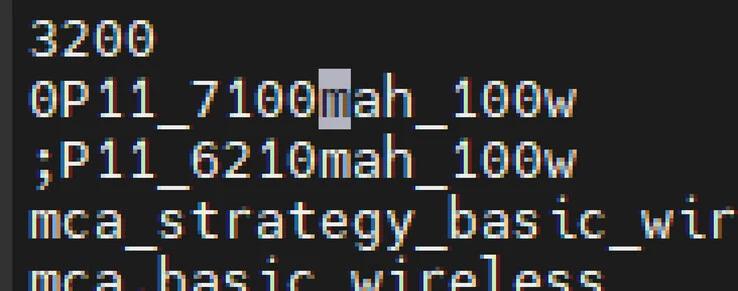
    Nonetheless, it seems that HyperOS 3 is already revealing hints about the Poco F8 series. Just yesterday, information about the battery and charging capabilities of the Poco F8 Ultra appeared online. Now, the focus shifts to the Poco F8 Pro, which is thought to be the international version of the Redmi K90. According to the details shared by Skrzypek, the Poco F8 Pro won’t be equipped with the 7,100 mAh battery that the Redmi K90 has.

    Battery Capacity Insights

    Similar to its predecessor, the Poco F7 Pro, the Poco F8 Pro will have a lower battery capacity compared to the Chinese version. More specifically, HyperOS 3 suggests that Xiaomi plans to include a 6,210 mAh battery in the Poco F8 Pro, which is a slight increase of 3.5% and 210 mAh from this year’s model. Along with this new battery, there’s an expected upgrade in charging speed from 90 W wired to 100 W wired. For more information on what to expect from the Poco F8 Pro before it launches in early 2026, check out our article on the Redmi K90 launch.

    Additional Details from Skrzypek

    Kacper Skrzypek has provided key insights into the upcoming devices, shedding light on the specifications that consumers can anticipate. As we wait for more news, it’s clear that the Poco F8 series is shaping up to be an exciting addition to the smartphone market. Keep an eye out for more updates as the launch date approaches!


  • Stable HyperOS 3 Update Released for Six Xiaomi and Redmi Phones

    Stable HyperOS 3 Update Released for Six Xiaomi and Redmi Phones

    Key Takeaways

    1. Xiaomi has launched stable versions of HyperOS 3, based on Android 16, for select smartphones including the Xiaomi 15 series and Redmi K80 range.
    2. The OTA update will initially roll out to a limited number of devices, with broader availability expected in the coming weeks.
    3. The update size is between 7.5GB and 8GB, introducing features like Xiaomi Hyperland, performance enhancements, and AI-driven tools.
    4. Key improvements include better notification grouping, Live Updates, a predictive back gesture, and enhanced security features.
    5. Global users will receive stable updates for over 15 Xiaomi and Redmi models from October to November, including popular series like Redmi Note 14 and POCO F7.


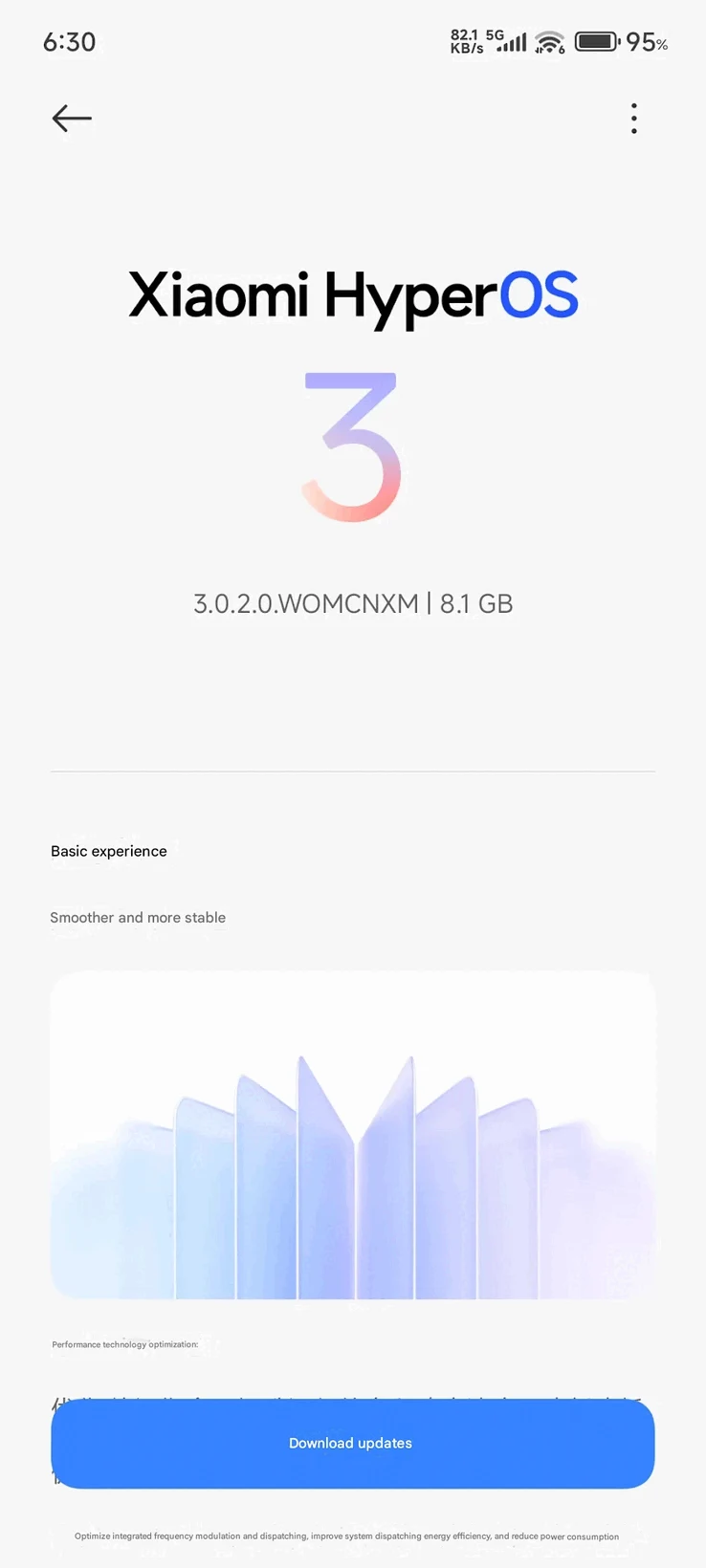
    After several weeks of testing in beta, Xiaomi has at last launched the stable versions of HyperOS 3, which is based on Android 16, for its initial set of smartphones. This includes six flagship models from the Xiaomi 15 series and the Redmi K80 range. The release is first targeting Chinese variants, with international versions expected to follow later this month.

    OTA Update for Users

    If you own a Xiaomi 15, Xiaomi 15 Pro, 15S Pro, 15 Ultra, or a Redmi K80 Pro or Ultra with a Chinese ROM, be on the lookout for an OTA update arriving in the next few days. This update is being rolled out in phases, meaning that only a limited number of devices will get the update at first. If everything goes as planned, the update will be expanded to include more devices in the upcoming weeks.

    Update Details

    The update size ranges from 7.5GB to 8GB, and you can see the build numbers below (thanks to XiaomiTime):

    HyperOS 3 introduces a range of new features and improvements. Notably, it has a version of the iPhone’s Dynamic Island called Xiaomi Hyperland, along with an iOS 16-like lockscreen. Xiaomi is also claiming significant performance enhancements with optimizations to the kernel and graphics rendering pipeline. For devices that support it, the new software includes AI-driven writing tools, voice recognition, and smart translation capabilities. Additionally, users can expect enhancements specific to Android 16, such as improved notification grouping, Live Updates, the predictive back gesture, and security features like Trade-in Mode and Advanced Protection.

    Timely Rollout

    Xiaomi had assured users that a stable update would be available for these devices by October 15, and the HyperOS 3 rollout seems to be right on target. Global users won’t have to wait long either, as the company plans to release the stable update for over 15 Xiaomi and Redmi models between October and November. This will include well-liked devices such as the Redmi Note 14 series, POCO F7 series, and POCO X7 / X7 Pro.

    Source:
    Link


  • HyperOS 3: 20 Xiaomi Devices Not Supported in New Release

    HyperOS 3: 20 Xiaomi Devices Not Supported in New Release

    Key Takeaways

    1. Xiaomi is launching HyperOS 3 globally in three phases from this month until March 2026.
    2. Some older smartphones, like the Xiaomi 11T series, will not receive the HyperOS 3 update.
    3. Certain eligible devices, such as the Redmi Note 14 Pro Plus, will lack features like Hyper Island.
    4. The Poco X5 Pro 5G will reach its end-of-life by February 2026 and is not included in the HyperOS 3 rollout.
    5. Many Poco, Redmi, and Xiaomi devices are excluded from the HyperOS 3 plans and are nearing their end-of-life this year.


    Xiaomi has officially shared its global launch plans for HyperOS 3, marking a significant update to its operating system. To summarize, the HyperOS 3 rollout is organized into three phases that will take place from this month until March 2026. Recently, Xiaomi also released a similar update for China, which featured devices tailored for that specific market, including the Mix Fold foldables and the Redmi K series.

    Device Updates and Exclusions

    As mentioned earlier, some of the older smartphones, such as those from the Xiaomi 11T series, have already received their last updates. Therefore, these devices will not be upgraded to HyperOS 3. Nevertheless, certain devices eligible for HyperOS 3 will still lack some features like Hyper Island; an example of this is the Redmi Note 14 Pro Plus, which is currently priced at $415 on Amazon.

    Clarity on HyperOS 3 Rollout

    With the HyperOS 3 rollout timeline now established until spring, it has become evident which devices are excluded from Xiaomi’s plans. For instance, the Poco X5 Pro 5G is set to reach its end-of-life by February 2026, which is also when it will receive its final security update. Consequently, Xiaomi has not listed this model among the devices eligible for HyperOS 3. Presently, several Poco, Redmi, and Xiaomi devices are not included in the official rollout plans for HyperOS 3 and are also nearing their end-of-life this year.

    Xiaomi via XiaomiTime

    Source:
    Link


  • HyperOS 3 Stable Update Coming Soon for Xiaomi and Redmi Devices

    HyperOS 3 Stable Update Coming Soon for Xiaomi and Redmi Devices

    Key Takeaways

    1. Xiaomi is set to launch HyperOS 3, based on Android 16, with a clear roadmap for updates for various models.
    2. New “stable beta” versions of HyperOS 3 have been identified for at least 14 devices, indicating readiness for the final update.
    3. Users in the beta program can expect the stable beta update soon; public rollout notifications will follow for others.
    4. Currently, stable beta builds are available for three global devices, with more models expected to receive updates shortly.
    5. The stable HyperOS 3 update is projected to roll out for additional devices between October and November.


    When a company holds one of the largest and most varied smartphone line-ups in the market, providing Android updates becomes quite a challenge. Nevertheless, Xiaomi has done a great job keeping us informed about its upcoming HyperOS 3, the latest software release based on Android 16. The Chinese manufacturer has already released a complete roadmap showing which models—both in China and worldwide—will receive the update, and it looks like the official stable version might be just around the corner for the first set of phones and tablets.

    New Builds for Various Devices

    Recently, new “stable beta” HyperOS 3 versions have been identified for at least 14 devices, which includes the Xiaomi 15 series, Xiaomi Pad 7 Pro, Redmi K80, and Redmi Turbo 4 Pro. The term stable beta usually suggests that the software has achieved a satisfactory level of stability. If no significant problems are discovered, this same version could be made public as the final update, which XiaomiTime believes might occur as soon as next week.

    Upcoming Updates for Users

    For those who have already signed up for the beta program, the stable beta update should arrive shortly. If you haven’t joined yet, keep an eye out for an OTA notification in the next few weeks, since the public rollout is likely imminent.

    More Devices to Come

    Currently, stable beta builds have only been seen for three global devices: the Xiaomi 15 Ultra, Xiaomi 15, and Redmi Pad 7 Pro. However, it is anticipated that more devices will soon follow, including the Redmi Note 14 series, Xiaomi Mix Flip, POCO F7 series, POCO X7 lineup, and Xiaomi Pad Mini. All these devices are confirmed to receive the stable HyperOS 3 update sometime between October and November.

    Source:
    Link


  • Xiaomi Blocks New HyperOS 3 Feature for Redmi Note Smartphones

    Xiaomi Blocks New HyperOS 3 Feature for Redmi Note Smartphones

    Key Takeaways

    – Xiaomi has launched HyperOS 3 and introduced a Beta Program for user feedback before the stable release.
    – The company has clearly outlined its rollout plans for HyperOS 3, unlike competitors like Samsung.
    – A range of devices, including the Xiaomi 15T and 15T Pro, will support HyperOS 3, but some older and budget models may not.
    – Certain features of HyperOS 3, such as Hyper Island, may be limited to higher-end devices.
    – The Redmi Note 14 series is expected to receive HyperOS 3 globally next month, while the older Redmi Note 13 series may have to wait until early next year.


    Xiaomi has officially unveiled HyperOS 3 to the world after first presenting it in China last month. Similar to competitors such as Apple, Google, and Samsung, Xiaomi has launched a Beta Program, inviting enthusiastic users to test and provide feedback on HyperOS 3 ahead of its complete stable release.

    Clear Release Plans

    In contrast to Samsung, which often keeps its users uncertain about the One UI updates, Xiaomi has proactively shared its rollout plans for HyperOS 3, both in China and globally. As previously mentioned, a variety of devices will be supported across both OS platforms, including newer models like the Xiaomi 15T and Xiaomi 15T Pro. Sadly, it appears that some older and budget-friendly models will not benefit from a key feature of HyperOS 3 that Xiaomi is promoting heavily.

    Feature Limitations

    According to PaperKing13 on X, even devices such as the Redmi Note 14 Pro Plus (currently priced at $416 on Amazon) might not officially support Xiaomi’s new Hyper Island feature. It seems that not every version of HyperOS 3 is made the same. At this stage, it is still unclear whether Xiaomi will limit some of HyperOS 3’s new functionalities exclusively to higher-end devices. For further details on this issue, one can visit HyperCeiler’s GitHub page. Presently, the Redmi Note 14 series is anticipated to begin receiving HyperOS 3 globally next month in Xiaomi’s initial batch of eligible models. In contrast, users with the older Redmi Note 13 series may have to wait until early next year to access Xiaomi’s latest mobile operating system.

    Source:
    Link


  • HyperOS 3 Beta Now Available for 12 More Xiaomi and Redmi Phones

    HyperOS 3 Beta Now Available for 12 More Xiaomi and Redmi Phones

    Key Takeaways

    1. Xiaomi has launched the HyperOS 3 beta program for select Xiaomi and Redmi devices, inviting users to test the software ahead of its official release.
    2. Eligible devices include the Xiaomi 14 series, MIX Flip, Redmi K70 series, and Xiaomi Pad 6S Pro, currently limited to Chinese models.
    3. Users can apply for the beta program through the Xiaomi Community app, with testers divided into two groups for access timing.
    4. The stable version of HyperOS 3 is expected to be released in November for various devices in China and globally.
    5. Participants are advised to back up their devices completely and follow instructions before applying for the beta program.


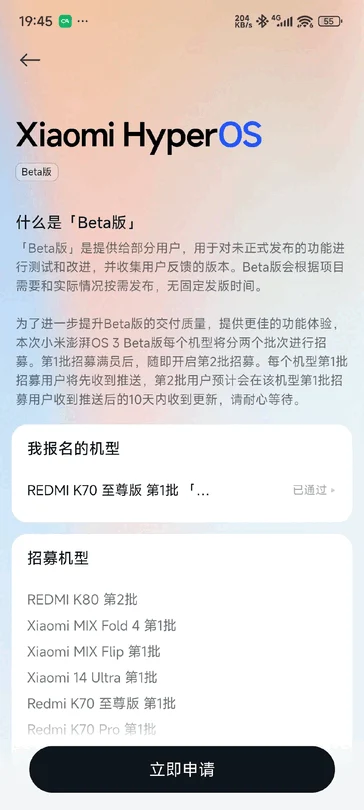
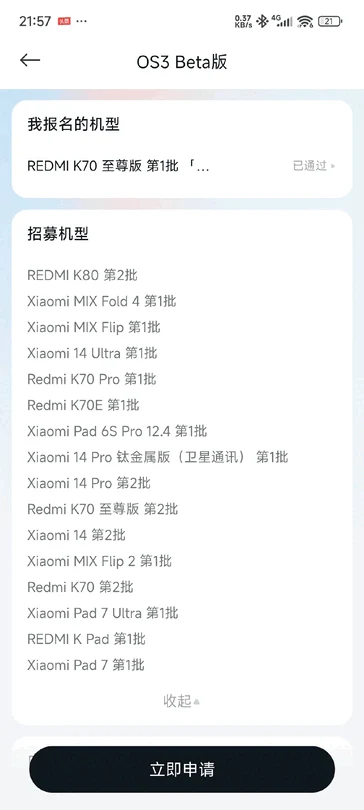
    Xiaomi has just launched the HyperOS 3 beta program for a new group of Xiaomi and Redmi devices, giving some users the chance to test the latest software ahead of its official release. This time, the company is inviting users who own the Xiaomi 14 series, MIX Flip, Redmi K70 series, and Xiaomi Pad 6S Pro to experience an early version of HyperOS 3, which is based on Android 16. Participants will help the development team fix any major glitches or problems before the stable version is rolled out.

    Devices Eligible for Testing

    The current closed beta is limited to Chinese models, but it will likely expand to global versions soon. Xiaomi has already begun beta tests for international models, including the Xiaomi 14 Ultra, Xiaomi 14T, POCO F7, Redmi 15C, and POCO C85, suggesting that a broader release is on the horizon.

    If you own one of the devices mentioned above with a China ROM and are interested in HyperOS 3, you will need to apply for a spot in the program through the Xiaomi Community app. Testers will be selected in two groups for each device; those in the first group will gain immediate access to the update, while second group testers may have to wait for up to 10 days. It’s important to follow the provided instructions and back up your device completely before proceeding.

    Stable Release Timeline

    The stable version of HyperOS 3 is expected to be released in November for the Xiaomi 14 series, MIX Fold 4, MIX Flip, and Redmi K70 devices in China. For global models, including the Xiaomi 14 family, the POCO F6 Pro (which is a rebranded Redmi K70), the POCO X6 Pro (a rebadged Redmi K70E), and the Xiaomi Pad 6S Pro 12.4, the rollout will also take place in November, with the full deployment expected to continue into December.

    Source:
    Link


  • Xiaomi 17: Compact Flagship with Snapdragon 8 Elite, 50MP Quad Cam

    Xiaomi 17: Compact Flagship with Snapdragon 8 Elite, 50MP Quad Cam

    Key Takeaways

    1. The Xiaomi 17 features the Qualcomm Snapdragon 8 Elite Gen 5 chipset, outperforming its predecessor.
    2. The phone has a compact design, measuring 151.1 x 71.8 x 8.06 mm and weighing around 191 g.
    3. It includes a 6.3-inch LTPO AMOLED display with a resolution of 2,656 x 1,220 pixels and a 120 Hz refresh rate.
    4. The battery capacity has increased to 7,000 mAh with 100 W wired and 50 W wireless fast charging support.
    5. The device runs on HyperOS 3 and offers pre-order prices starting at CNY 4,499 (~$632) in China, with various RAM and storage options.


    Xiaomi has officially unveiled the Xiaomi 17 in China, taking the place of the Xiaomi 15 (currently priced at $890 on Amazon). As anticipated, the Xiaomi 17 outperforms its earlier model in nearly every aspect, not just thanks to Qualcomm’s latest Snapdragon 8 Elite Gen 5 chipset. Notably, the Xiaomi 17 is even more compact than last year’s version, measuring at 151.1 x 71.8 x 8.06 mm.

    Compact Yet Powerful Design

    The weight of this year’s smallest flagship remains around 191 g. However, the compact flagship now features a 6.3-inch display, boasting a resolution of 2,656 x 1,220 pixels, a 120 Hz refresh rate, and an impressive 3,500-nit LTPO AMOLED panel. Furthermore, the battery capacity has seen a significant increase, moving from 5,400 mAh to 7,000 mAh, and it supports fast charging with 100 W wired and 50 W wireless capabilities.

    Enhanced Software and Camera Features

    Additionally, the Xiaomi 17 will come with HyperOS 3 pre-installed. Interestingly, the Xiaomi 15T and Xiaomi 15T Pro were the pioneers in running this newest mobile operating system. Moreover, Xiaomi has equipped the phone with an array of advanced cameras.

    The Xiaomi 17 is ready for pre-order starting today in China, with prices beginning at CNY 4,499 (~$632) for the variant featuring 12 GB of RAM and 256 GB of storage. Alternatively, customers can choose a version with 512 GB of storage and either 12 GB or 16 GB of RAM, priced at CNY 4,799 (~$674) and CNY 4,999 (~$702) respectively, available in a selection of four colors. However, Xiaomi has not yet confirmed when it will launch this new compact flagship in international markets.

    Source:
    Link


  • Xiaomi Launches Stable HyperOS 3 Global Rollout for Smartphones

    Xiaomi Launches Stable HyperOS 3 Global Rollout for Smartphones

    Key Takeaways

    1. Xiaomi has launched HyperOS 3 worldwide after its initial release in China last month.
    2. Over 20 devices will receive stable updates for HyperOS 3 by the end of October.
    3. The Xiaomi 15T and 15T Pro will come with HyperOS 3 pre-installed in the global market.
    4. More than a dozen Poco, Redmi, and Xiaomi devices will receive stable updates by the end of November.
    5. Older models like the Xiaomi 14 and Poco F6 series will be upgraded to HyperOS 3 in November and December.


    Xiaomi has launched HyperOS 3 worldwide after revealing its new OS update in China just last month. To give you an idea, there are more than a dozen devices that can access the HyperOS 3 beta software in China, such as the Xiaomi 15, Pad 7, and Pad 7 Pro (currently priced at $633 on Amazon).

    Upcoming Updates

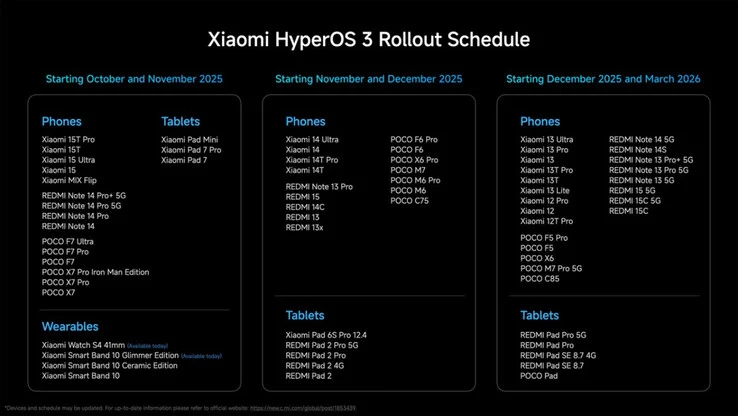
    In addition, Xiaomi has announced that over 20 devices will begin receiving stable updates for HyperOS 3 by the end of October. The company has now shared similar plans for its global users, which will also be starting in October.

    Global Rollout

    As illustrated in the image above, Xiaomi has included the Xiaomi 15T and Xiaomi 15T Pro in its global update timeline. Both of these devices are expected to come with HyperOS 3 pre-installed. Furthermore, the new Watch S4 41 mm, Smart Band 10 Glimmer Edition, the Redmi Pad 2 Pro series, and the Xiaomi Pad Mini will also be part of this update. In essence, HyperOS 3 will not be ‘rolling out’ to any of these devices.

    Future Plans

    Despite that, more than a dozen Poco, Redmi, and Xiaomi devices are set to get stable updates for HyperOS 3 by the end of November. Following that, in November and December, older models like the Xiaomi 14 and Poco F6 series will also be upgraded to HyperOS 3. Lastly, the third group of devices will extend back to the Xiaomi 12 series and most of the Redmi Note 13 series. For additional details, please refer to the image above.

    Source:
    Link


  • Xiaomi 15T Pro Launches: 5x Periscope Camera & Dimensity 9400 Plus

    Xiaomi 15T Pro Launches: 5x Periscope Camera & Dimensity 9400 Plus

    Key Takeaways

    1. Xiaomi has launched the 15T Pro in Europe, enhancing its sub-flagship smartphone lineup.
    2. The device features a periscope telephoto camera for the first time in the series.
    3. It includes the MediaTek Dimensity 9400 Plus chipset, offering significant performance improvements.
    4. The battery capacity is increased to 5,500 mAh, but wired charging is limited to 90 W.
    5. Pricing starts at €799 for the 12 GB RAM and 256 GB storage model, with free speaker promotion until October 10.


    Xiaomi has launched the new Xiaomi 15T Pro, enhancing its sub-flagship smartphone lineup. This device is now available for purchase in Europe starting today. Notably, the Xiaomi 15T Pro is the first model in the series to come equipped with a periscope telephoto camera. It also provides significant upgrades over the Xiaomi 14T Pro, such as an extended five years of OS updates with HyperOS 3, plus an additional sixth year for Android security patches.

    Performance Boost

    This year’s upgrade features the MediaTek Dimensity 9400 Plus chipset. This chipset is also included in the Galaxy Tab S11 Ultra and the compact Galaxy Tab S11 (currently priced at $859.99 on Amazon). The Dimensity 9400 Plus shows a substantial performance improvement over the Dimensity 9300 Plus in various CPU and GPU tests. In addition, the Xiaomi 15T Pro boasts a battery that is 10% bigger than the one in its predecessor, totaling 5,500 mAh. However, it’s worth mentioning that Xiaomi opted for a slower 90 W wired charging option for this model.

    Display and Camera Features

    Moreover, the Xiaomi 15T Pro features a 6.83-inch AMOLED screen, providing a refresh rate of 144 Hz, a peak brightness of 3,200 nits, a resolution of 2,772 x 1,280 pixels, and a pixel density of 447 PPI. On the camera front, the Xiaomi 15T Pro is outfitted with impressive hardware components.

    The starting price for the Xiaomi 15T Pro is €799 for the version with 12 GB of RAM and 256 GB of storage. There’s also an option for €899, which includes 12 GB of RAM and either 512 GB or 1 TB of storage, available after October 10. Customers who order between now and October 10 will receive a free Sound Party speaker. After the pre-order phase, the price for the Xiaomi 15T Pro will increase to as much as €999 for the 1 TB storage configuration.

    Source:
    Link


  • HyperOS 3 with Android 15 Found on 16 Xiaomi and Redmi Devices

    HyperOS 3 with Android 15 Found on 16 Xiaomi and Redmi Devices

    Key Takeaways

    1. Xiaomi is beta-testing its HyperOS 3 update on various devices, targeting a stable release by the end of October for top models like the Xiaomi 15 series and Redmi K80 Pro.
    2. Internal tests for Android 15-based builds of HyperOS 3 are underway for at least 16 additional Xiaomi and Redmi smartphones, including the Redmi K50 Ultra and Xiaomi 12.
    3. The internal test builds are based on Android 15, which may disappoint some users since newer devices have Android 16 betas, but major improvements are related to the custom HyperOS skin.
    4. No public beta programs have been launched for the newly tested models yet, but access to the new software is expected soon.
    5. The official roadmap states that HyperOS 3 will be available for the Xiaomi 12 series and other models in January 2026.


    Xiaomi has been actively beta-testing its HyperOS 3 update on many devices, aiming to roll out the stable version for its newest and top-tier models by the end of October. Users who own the Xiaomi 15 series, Redmi K80 Pro, and Xiaomi Pad 7 Pro can already experience an early version of the HyperOS 3 skin, which is based on Android 16. Now, even more devices are on the verge of joining this testing phase.

    New Devices in Testing

    XiaomiTime reports that Xiaomi is conducting internal tests of Android 15–based builds of HyperOS 3 for a new wave of Xiaomi and Redmi smartphones. At least 16 models have been identified running the internal firmware OS3.0.250923, which includes well-known devices such as the Redmi K50 Ultra, Xiaomi 12, Redmi Note 13 5G, and POCO F5 Pro.

    What’s Inside the Update?

    These internal test builds are said to be built on Android 15, which might be a letdown for some, since newer Xiaomi gadgets have already received HyperOS 3 betas based on Android 16. However, this shouldn’t concern most users too much, as the significant changes and enhancements are mostly connected to Xiaomi’s custom skin, HyperOS, anyway.

    Looking Ahead

    Xiaomi has not yet launched any public beta programs for these particular models, but since internal testing is ongoing, users will likely not have to wait too long before they can access the new software.

    And if you’re curious about when the stable update will arrive, Xiaomi’s official roadmap indicates that HyperOS 3 is set to be available for the Xiaomi 12 series, MIX Fold 2, Redmi Note 12T Pro, and Redmi K50 Ultra in January 2026.

    Source:
    Link