Key Takeaways
1. User Decline: Honey’s user base has dropped from 17-20 million to 12 million following serious allegations made by YouTuber MegaLag.
2. Selective Standdown System: A hidden system in Honey’s code allegedly detects testers versus regular users, manipulating commission claims based on user traits.
3. Comparison to Dieselgate: The behavior of Honey’s system is likened to the Volkswagen Dieselgate scandal, indicating intentional exploitation of testing conditions.
4. Misleading Practices: Honey is accused of inflating its coupon database with expired or non-functional codes to keep users engaged and redirect commissions.
5. Impact on Retailers: Honey’s actions reportedly undermine retailers’ marketing strategies, leading to revenue losses and pressuring them into partnerships with the company.
At the close of 2024, YouTuber MegaLag put out a video revealing a system that goes way beyond just simple commission schemes. Since then, Honey has experienced a sharp drop in its user numbers. Once boasting around 17 to 20 million users of its Chrome extension, it has now dwindled to only 12 million, according to the latest figures from the Chrome Web Store. In his recent video, MegaLag makes some grave accusations against the firm. To back up his technical claims, he enlisted the help of well-known security expert Ben Edelman, who confirmed the findings himself.
Serious Allegations
Together, they uncovered a system that is said to rival the Dieselgate scandal in its scale. The so-called SSD system (Selective Standdown) is believed to be a hidden logic in the source code that Honey uses like a digital disguise. The concept is reportedly as straightforward as it is sinister: the browser extension is said to detect specific traits to figure out if it’s being used by a tester or an ordinary user. Based on their research, four main factors are allegedly examined to spot potential testers: the age of the account, the point balance, a server-side blacklist, and the presence of cookies from professional affiliate networks like CJ or Awin. If Honey thinks an insider is monitoring, the extension purportedly acts completely above board and avoids altering third-party tracking links. However, once it identifies a regular shopper—like someone with many loyalty points and no professional cookies—it is said to switch to attack mode, injecting its own codes to claim commissions that should belong to influencers.
Comparison to Dieselgate
Edelman likens this behavior to the Volkswagen Dieselgate scandal, as the software was allegedly programmed specifically to recognize and exploit testing conditions. The evidence is claimed to be substantial, not based on speculation, but drawn directly from the extension’s configuration files and JavaScript code. This deceptive logic has reportedly been fine-tuned over the years; for instance, the point threshold needed to trigger the manipulation has increased from around 501 points in 2022 to over 65,000 points now, making it nearly impossible for casual testers to uncover. For the investigators, the intentional concealment from testers indicates that Honey was fully aware its actions breached current network regulations and took extensive measures to avoid detection. Reportedly, traces of the Selective Standdown protocol can be traced back to 2017, long before PayPal acquired a stake in the company.
Deceptive Practices
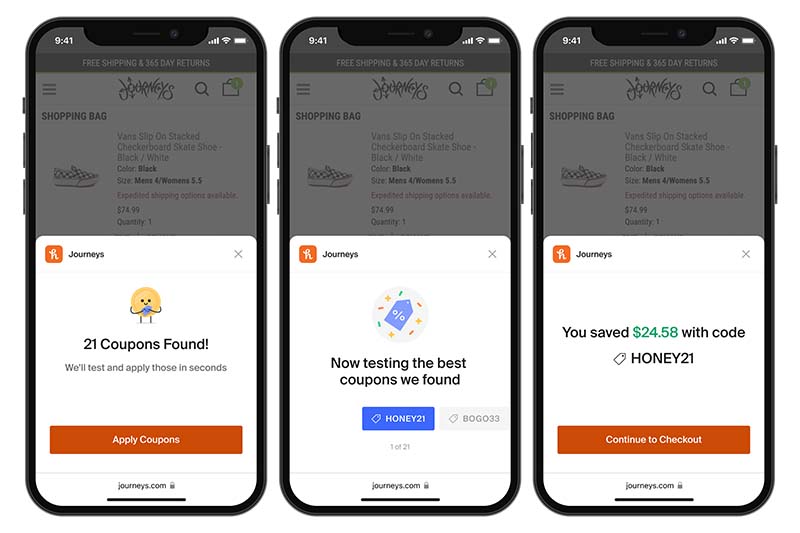
Another criticism raised in the video concerns the intentional misleading of users through an artificially inflated coupon database. MegaLag highlights that Honey frequently disguises expired or even non-functional codes as exclusive ones, just to keep users engaged with the extension. While the automated checking process is ongoing, Honey is said to insert its own affiliate cookie in the background, often overwriting links from influencers or content creators, even if no valid discount was found. This tactic reportedly ensures that the commission ultimately goes to PayPal, leaving the original intermediary with nothing. In a follow-up video, MegaLag also demonstrated that Honey allegedly collects coupons from user submissions and redistributes them to others. If shop operators attempt to take action against this, they are said to be pressured into forming a partnership with Honey. Overall, Honey’s conduct raises serious concerns. From the user’s viewpoint, the invasions of privacy are mainly bothersome. However, the most troubling consequence for retailers is likely the systematic undermining of their marketing strategies. The unauthorized release of private coupon codes is said to lead to significant revenue losses. In an effort to regain control over their discount systems, retailers are then coaxed into partnering with Honey. Companies and content creators that depend on affiliate marketing income are systematically stripped of their earnings, as Honey reportedly secures the commission for sales believed to be safe right at the point of payment.
Source:
Link