
Key Takeaways
1. Release and Unique Style: MIO: Memories in Orbit was launched on January 20, 2026, with a unique comic-book/watercolor design, setting it apart in a crowded genre.
2. Setting and Character: Players navigate “The Vessel,” a deteriorating ark in space, controlling an android named MIO through diverse environments.
3. Gameplay Mechanics: MIO features precision-focused Metroidvania mechanics, including a grappling hook and a modular “Modifier” system for enhancing abilities in combat.
4. Community Feedback: Despite a “Very Positive” rating on Steam, players criticized some design choices that penalize exploration and a plot twist that restricts resource access.
5. Performance and Accessibility: The game supports 4K and 60 FPS on mid-range PCs and is optimized for Steam Deck with specific visual adjustments for better performance.
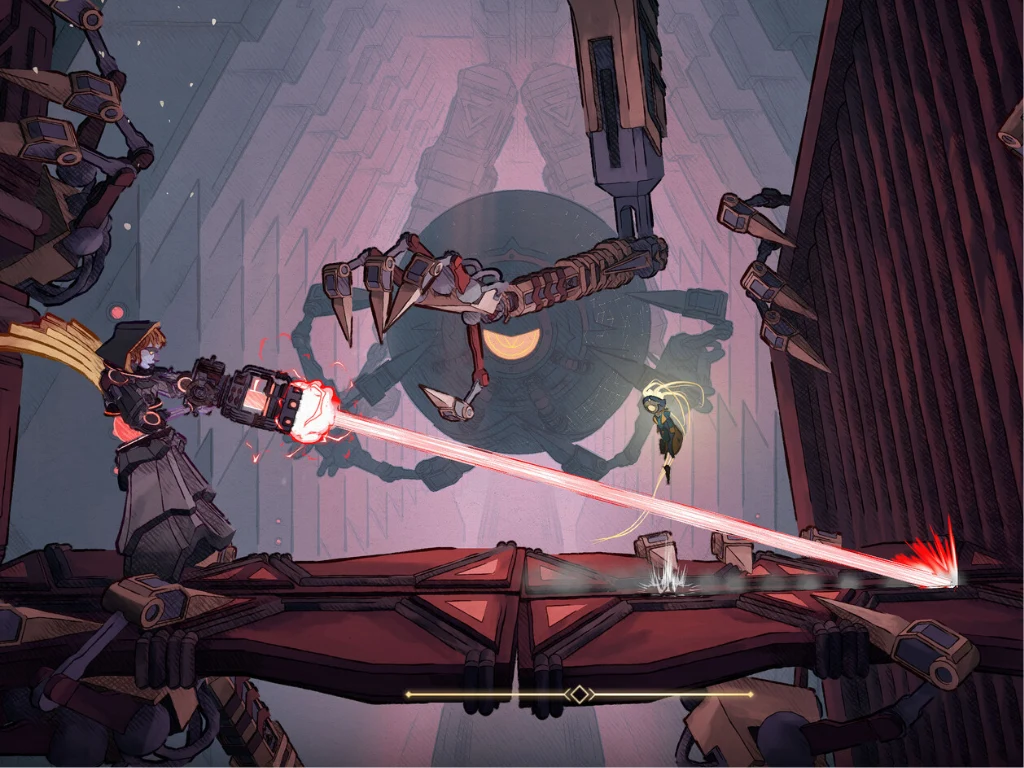
On January 20, 2026, the French independent studio Douze Dixièmes along with publisher Focus Entertainment launched MIO: Memories in Orbit on all major gaming platforms. This release came after a brief one-month delay, which was needed to finalize optimizations for the “Switch 2” and high-end PCs. Even though the genre was already crowded, MIO quickly established its own unique character thanks to its special engine that creates a design reminiscent of a “comic-book/watercolor” style, which players have shown a strong liking for.
Setting and Gameplay
The game takes place on “The Vessel,” a deteriorating technological ark that floats through the emptiness of space. Players take control of an android named MIO, who moves through interconnected environments that range from lush overgrown gardens to icy, crumbling city ruins.
Mechanics and Combat
MIO is a precision-focused Metroidvania, where movement is characterized by a “hairpin” grappling hook and wall-climbing abilities that resemble a spider’s, requiring exact timing and rhythm. Unlike typical action-platformers, MIO features a modular “Modifier” system that allows players to collect parts from enemies to enhance their abilities. For instance, players can change their grappling hook from a simple movement tool into a lethal lasso or trade shields for powerful projectiles. Combat is often described as “deliberate” and influenced by “Souls” games, but the game does offer assist features that help weaken bosses over several attempts, although it does not include a “skip” option for the hardest battles.
Community Feedback and Design Choices
Despite receiving a “Very Positive” overall rating of 87% on Steam, discussions within the community have pointed out several “cruel” design decisions in the later parts of the game. Specifically, there is some discontent over a narrative-driven mechanic that can result in the protagonist permanently losing health points in optional, high-difficulty zones. Critics argue this penalizes exploration, which is a key aspect of the genre. Furthermore, a plot twist in the late game can temporarily lock players out from shopping or using resources.
The Steam version is quite solid, boasting support for 4K resolutions and 60 FPS even on mid-range setups like the GTX 1650 and Ryzen 3 1300X. For those using a Steam Deck (currently priced at $675 on Amazon), players will find that the game is a “joy to play,” but it does require a specific manual tweak: adjusting the visual settings from “High” to “Medium” for consistent 60 FPS and to limit battery usage to under 12 W. While there are some concerns regarding “pattern-heavy” gameplay, the atmospheric depth of The Vessel alongside the precise movement mechanics has positioned MIO as a strong candidate for one of the top Metroidvanias of 2026 thus far. The game is available for $17.99 on Steam after a 10% launch discount.
Source:
Link