
Tag: GSMA

  • Samsung Galaxy S27 & Xiaomi 18: Leica Camera Shakeup

    Samsung Galaxy S27 & Xiaomi 18: Leica Camera Shakeup

    Key Takeaway

    – Samsung Galaxy S27 base model (SM-S952U) is confirmed for 2027, continuing the compact flagship lineup.
    – Xiaomi 18 global variants (model 2611FPNFAG) are in development alongside the China model, suggesting a faster global launch.
    – Xiaomi’s internal model number logic may have shifted, potentially impacting the distinction between Xiaomi 18 and Xiaomi 18 Pro.
    – IMEI digits (2611) hint at a November 2026 China launch, which would be later than previous years but earlier for global release.
    – Interpretation of model numbers carries risk, as manufacturers can change their numbering schemes at any time.


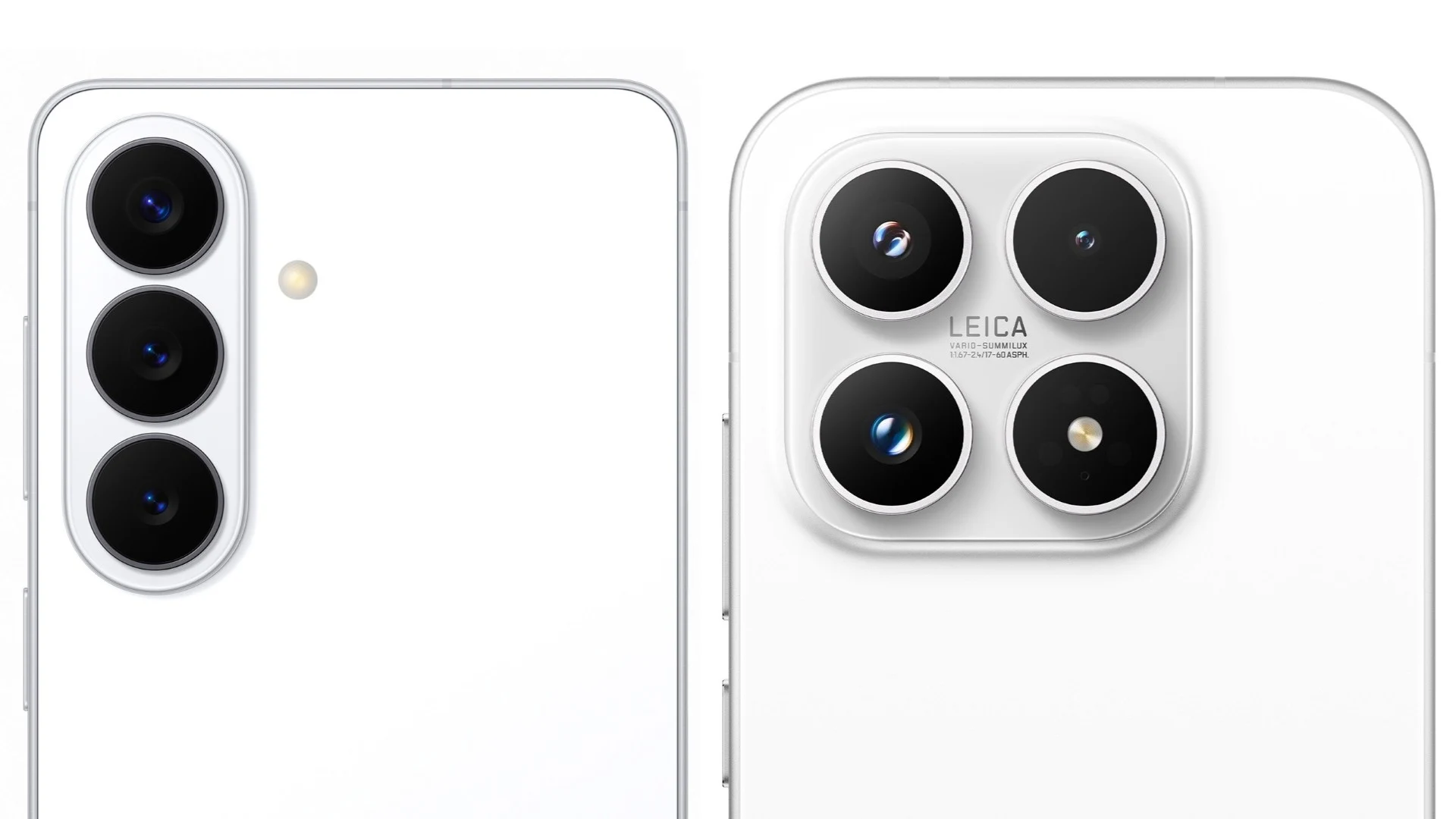
    In recent hours and days, traces of new next-generation Samsung and Xiaomi flagships have appeared in the GSMA database, better known as the IMEI database, usually one of the first concrete indications of a smartphone in development. Neither Samsung’s 2027 lineup nor the Leica camera flagships from China are fully represented in the database yet, but the Xiaomi flagships in particular are already showing the first signs of changes that are also likely to affect the global Xiaomi 18 generation.

    Samsung’s Galaxy S27 Enters the Database

    But let’s start with the successor to the 6.3-inch Galaxy S26, which identifies itself as the US version of the Galaxy S27 with the model number SM-S952U. The number 952 can clearly be identified as the successor to the Galaxy S26 base model with the number 942, so despite rumors of a Galaxy S27 Pro model, there will likely once again be a more compact entry-level model in the roughly $900 price range in 2027.

    Xiaomi’s Confusing Model Numbers

    The Xiaomi lineup is less clear, as Ximitime currently suggests. Here, too, an informative model number has been discovered in the IMEI database, namely 2611FPNFA, which has appeared in the database in multiple versions. 2611FPNFAR is the model for Japan, 2611FPNFAI is the model for India, and 2611FPNFAG is the global version. Interestingly, the China model does not use the usual C at the end but, according to the screenshot, carries the number M154FF, which the article unfortunately does not address.

    The fact that global Xiaomi 18 variants are being developed alongside the China model points to a change in launch strategy compared to recent years, something we already reported a few weeks ago. This could finally mean there will no longer be an almost six-month wait between the launch in China and the global release. A global Xiaomi 18 Pro would also be conceivable, though neither has been proven at this point.

    Codename Confusion and Launch Timing

    According to earlier indications, the Xiaomi 18 is being developed under the codename “madrid”, and in combination with a HyperOS code analysis by Ximitime, that now raises some questions. In theory, “madrid” should be assigned the abbreviation Q3, analogous to P3 for the Xiaomi 17. Instead, however, the code snippet below shows Q2, which according to the previous logic would actually point to the Xiaomi 18 Pro. Given the paused and potentially discontinued development of the Xiaomi 18 Ultra, it is conceivable that Xiaomi’s model number logic has changed, according to Ximitime. It should be noted that model number analysis always carries some risk, since the manufacturer often follows a certain structure but can also change it at any time.

    That may also apply to another conclusion that could potentially be drawn from the discovered model numbers. As many readers may know, the first four digits of the number often indicate the earliest possible launch date, in this case 2611, meaning November 2026. Compared to recent years, that would be very late for the China launch, which took place in September 2025 last year. For the global launch, however, it would be early, as Xiaomi fans in Europe previously had to wait until the end of February of the following year. We are somewhat skeptical that Xiaomi will actually wait until November to launch the Xiaomi 18, so caution is also advised when interpreting these numbers.


    Sources

  • $40 Smartphone: Rising Component Costs Impact 4G Goals

    $40 Smartphone: Rising Component Costs Impact 4G Goals

    Key Takeaways

    1. The GSMA is promoting affordable smartphones by setting minimum standards for budget 4G devices, targeting a price of around $40.
    2. Six pilot markets in Africa (DR Congo, Ethiopia, Nigeria, Rwanda, Tanzania, and Uganda) are ready for testing in 2026, potentially increasing mobile internet access for millions.
    3. Rising global memory prices and limited options for reducing manufacturing costs pose significant challenges in achieving the $30 to $40 price range.
    4. The GSMA is advocating for governments to eliminate taxes and import duties on entry-level smartphones to help lower retail prices and enhance accessibility.
    5. Achieving the target price of $40 will depend on both hardware innovation and supportive government policies, highlighting the importance of collaboration in this initiative.


    The GSMA’s push for affordable smartphones is taking shape. After setting minimum standards for budget 4G devices in October 2025, the organization announced on March 3 that six pilot markets are ready for 2026: the Democratic Republic of Congo, Ethiopia, Nigeria, Rwanda, Tanzania, and Uganda. This new agreement involves the GSMA, the G6 group of African operators, and OEM partners, all focused on creating entry-level 4G phones that could cost around $40.

    Importance of Accessibility

    This initiative is significant because it goes beyond just talking about “digital inclusion.” The GSMA highlights that the cost of handsets is still the main obstacle to mobile internet access in Sub-Saharan Africa, even for those who live within reach of broadband services. Their announcement from October 2025 noted that a $40 smartphone could provide access to mobile internet for an additional 20 million people in the region, while a $30 device could potentially increase that number to 50 million.

    Challenges Ahead

    However, the industry is facing challenges in achieving this price point at what seems to be the worst possible time. In a press release on March 3, the GSMA pointed out that rising global memory prices are making it tougher to hit the crucial $30 to $40 price range. They also mentioned that there are limited options left for reducing material and manufacturing costs in lower-end devices.

    Market Dynamics

    Research from TrendForce sheds light on why this warning is significant. In February, the firm reported that memory prices for standard smartphone configurations in early 2026 had seen a steep increase year-over-year, with the cost of memory rising from about 10 to 15 percent historically to approximately 30 to 40 percent today. TrendForce cautioned that higher retail prices are becoming increasingly unavoidable throughout the smartphone market. While this doesn’t specifically detail the component mix of a $40 phone, it reinforces the GSMA’s concern that the low end of the market is feeling the same supply-side pressures affecting the broader industry.

    The Political Angle

    The GSMA’s response is becoming as much about politics as it is about the industry. In October, they called on governments to remove taxes on entry-level smartphones priced under $100, pointing out that VAT and import duties can increase device prices by over 30 percent in certain countries. With the March 2026 pilot announcement, the group emphasized that reducing or eliminating taxes and import duties on entry-level 4G phones is now even more crucial, given the rising costs of components and memory.

    This situation is definitely one to keep an eye on. The initiative has shown clear progress since late 2025: there is now a coalition, established specifications, six designated pilot countries, and formal engagement from operators and OEMs. However, as the industry approaches the $40 retail target, it becomes increasingly clear that achieving scale will hinge on policy support just as much as on hardware innovation. Without tax relief or other interventions, the advertised price may remain more of a goal than a practical reality.

    Source:
    Link