
Key Takeaways
1. GAC Group has built its first large-capacity all-solid-state battery production line, capable of manufacturing automotive-grade batteries with over 60 Ah capacity.
2. The new solid-state battery offers nearly double the energy density of traditional lithium-ion batteries, potentially extending vehicle ranges from 500 km to over 1,000 km.
3. Solid-state batteries use solid electrolytes instead of liquid, improving heat resistance and safety, withstanding temperatures of 300-400°C compared to 200°C for conventional batteries.
4. GAC has improved manufacturing efficiency by using a “dry process” that combines multiple production steps, reducing energy use and costs.
5. Plans for small-batch vehicle testing by 2026 and gradual mass production from 2027 to 2030 align with China’s roadmap for solid-state battery adoption by 2035.
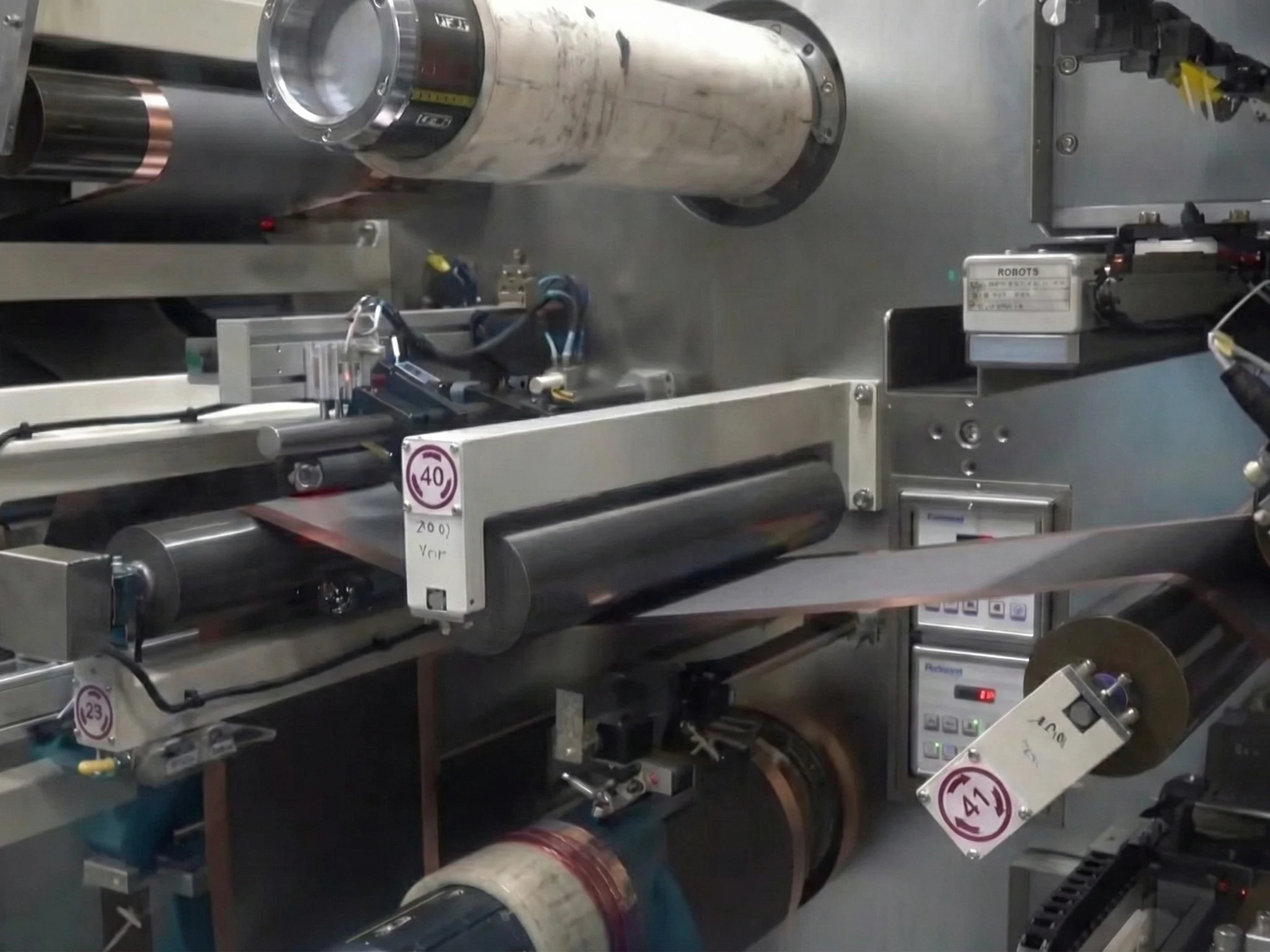
China’s GAC Group has finished building its first large-capacity all-solid-state battery production line, and the facility is now in the small-batch testing and production phase. This marks a significant milestone as it is the first plant that can manufacture automotive-grade all-solid-state batteries with a capacity of over 60 Ah (ampere-hours), positioning GAC as a leader in this sector.
Enhanced Energy Density
The new solid-state battery boasts an energy density that is almost twice that of traditional lithium-ion batteries. According to GAC’s research director, Qi Hongzhong, vehicles that currently achieve a range of 500km (310 miles) could potentially go over 1,000km (620 miles) with these advanced batteries. Moreover, GAC’s battery is said to have an areal capacity of 7.7 mAh/cm², in contrast to the less than 5 mAh/cm² found in typical batteries. This increased capacity per cell leads to a higher energy density in the overall battery packs.
Key Differences in Design
The main distinction between conventional batteries and solid-state ones lies in their electrolyte. Traditional batteries utilize liquid electrolytes, whereas solid-state batteries employ solid ones. This shift brings several advantages; the “liquid-free” design enhances heat resistance and improves safety, as the solid electrolyte can endure temperatures ranging from 300 to 400°C (about 570-750°F), unlike the ~200°C (around 390°F) limit for conventional batteries.
Manufacturing Efficiency Improvements
GAC Group has also made strides in the efficiency of its negative electrode production, utilizing a “dry process” that merges three traditionally separate steps—slurry preparation, coating, and rolling—into one. This simplification lessens energy use and boosts overall manufacturing efficiency, which also helps in cutting costs.
The official roadmap indicates that by 2026, there will be plans for small-batch vehicle integration and testing, while a gradual scale-up for mass production is expected between 2027 and 2030. However, it’s crucial to emphasize that while this represents a significant technical advancement, the commercial success will depend on supply chain dynamics and extended validation. Still, this breakthrough brings China a step closer to its “Energy-Saving and New Energy Vehicle Technology Roadmap 3.0,” which anticipates widespread adoption of solid-state batteries by the year 2035.
Source:
Link