
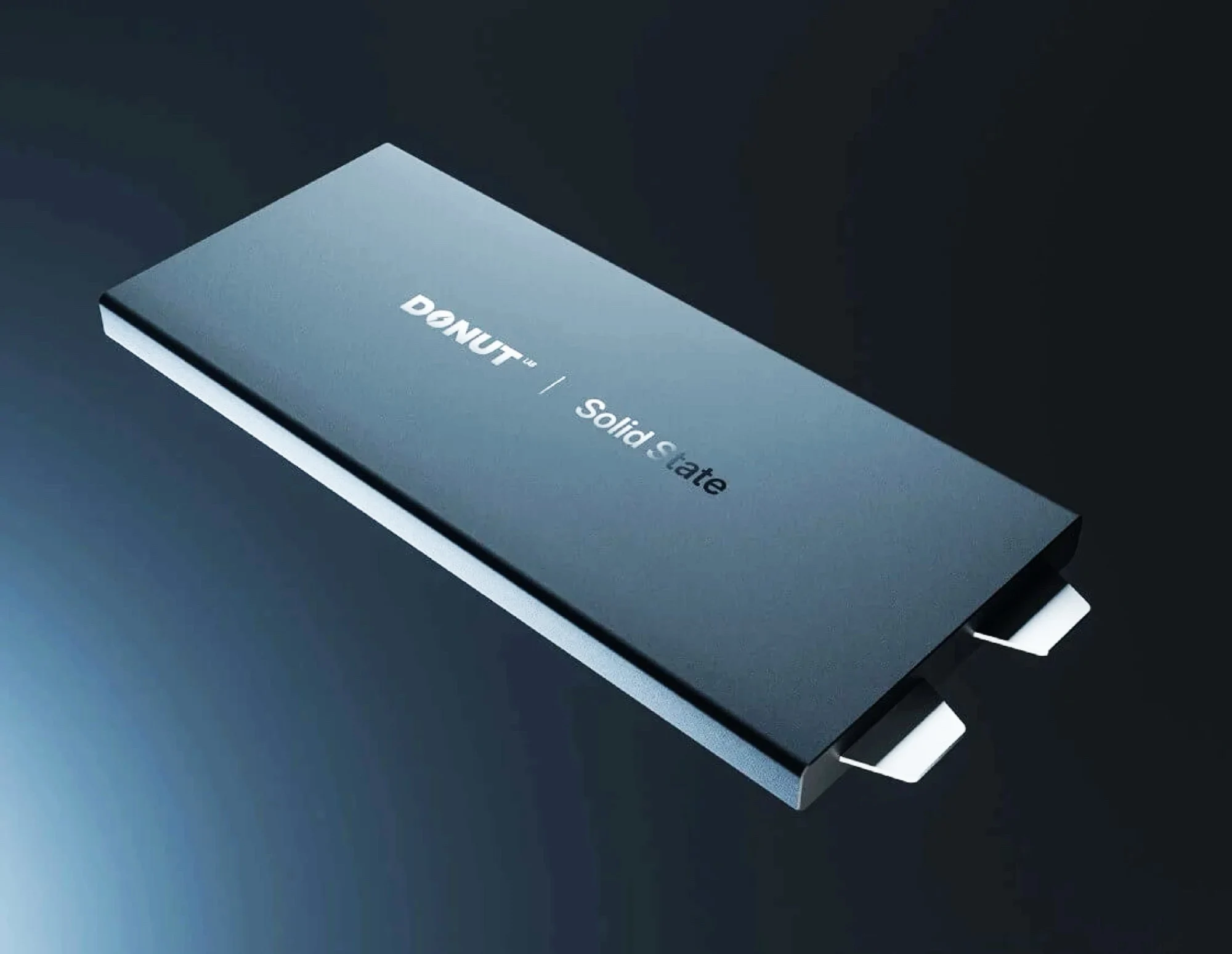
– Donut Lab’s “miracle battery” is likely a conventional lithium-ion battery, not a solid-state breakthrough.
– Over 20 independent experts, including from Fraunhofer Institute, confirmed the battery’s voltage curve and physical behavior match standard Li-ion.
– Advertised energy density of 400 Wh/kg is false; tests show only 298 Wh/kg.
– Claims of 100,000+ cycles, 5-minute charging, and lower costs are considered misleading or unsubstantiated.
– Marketing claims, such as installation in mass-produced motorcycles, are contradicted by available evidence.
The Finnish start-up Donut Lab was founded in August 2024 and already had a valuation of $1.25 billion after CES 2026. The company has so far generated around $25 million in investments, most of which come from small investors. Over the past few months, there have already been several doubts about the miracle battery because the advertised specifications simply seem too good to be true.
Promised Specs That Raise Eyebrows
Donut Lab promises an energy density of 400 Wh per kilogram, a service life of over 100,000 charging cycles, a charge from 0 to 80 percent in 5 minutes and even lower costs compared to lithium-ion batteries. Research from the YouTube channel Ziroth reveals numerous other indications that the “miracle battery” is a sham. This is because the marketing is said to be almost entirely false or misleading. For example, the battery from Donut Lab is not installed in any mass-produced motorcycle, although the manufacturer’s website still claims this.
Expert Consensus Reveals The Truth
What is particularly damning, however, is that Ziroth’s report consulted over 20 independent experts, including Julian Zanau from the Fraunhofer Institute, and they all came to the conclusion that Donut Lab’s solid-state battery is in fact just a conventional lithium-ion battery. This is because both the voltage curve and the physical changes in the battery when it is charged between 50 and 70 percent are exactly the same as a Li-ion battery.
Actual Test Results Contradict Claims
Tests are also said to have shown that the energy density is not 400 Wh / kg as advertised, but only 298 Wh / kg, as would be expected from a lithium battery with high carbon content. Exactly how Donut Lab’s battery is constructed will only become clear when it is shipped. However, there are currently many indications that the manufacturer’s marketing is not entirely accurate.