Key Takeaways
1. Samsung’s new patent introduces a self-repair system for cameras and fingerprint sensors in foldable devices.
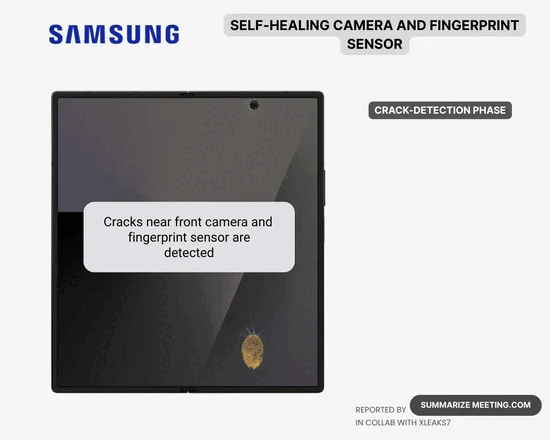
2. The system includes tiny wires and sensors that monitor for stress or cracks in the display layers.
3. Upon detecting a threat, the system activates reinforcement processes to seal and fortify affected areas.
4. This technology addresses durability issues, making in-display fingerprint sensors more reliable for future Galaxy Z Fold and Flip devices.
5. The patent is still in development, and it remains uncertain when or if this technology will be implemented in products.
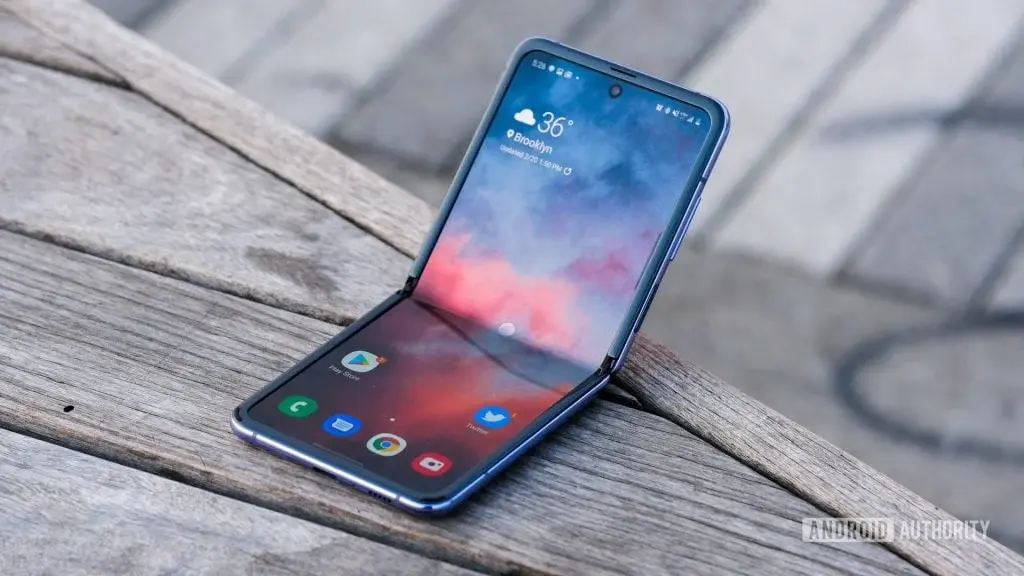
For a long time, makers of foldable phones have faced a big challenge: figuring out how to safely put things like cameras and fingerprint sensors beneath the flexible screens. If they cut a hole for these sensors, it weakens the structure of the layered display, making it vulnerable to tiny cracks and water damage. Because of this hidden flaw, devices such as the Galaxy Z series continue to use side-mounted fingerprint sensors.
Samsung’s Innovative Patent
A new patent from Samsung presents an exciting solution: a built-in protection and “self-repair” system for cameras and fingerprint sensors in foldable devices, including the new Galaxy Z Fold 7 and Z Flip 7. This technology changes the game by enhancing how the screen can protect itself, shifting from just being durable to actively monitoring itself.
How It Works
The key part of this patented system is the embedding of tiny wires and sensors—a “sensing loop”—around the display cutouts. These wires function like an immune system for the screen, promptly identifying even the tiniest stress or crack in the layers beneath.
Once a threat is detected, the system kicks off a special reinforcement process. It activates “dummy metal patterns” that automatically seal and fortify the affected area. Imagine the screen swiftly applying a small, unseen patch over the defect, preventing the crack from growing larger. Additionally, the design features unique grooves and sealants that help protect the OLED layers from moisture and oxygen.
A Solution for the Future
This three-part strategy—sensing, sealing, and reinforcing—addresses the long-standing issues with durability. By ensuring that the regions around the camera and sensors are as secure as the rest of the display, Samsung clears a major obstacle for introducing reliable in-display fingerprint sensors in upcoming Galaxy Z Fold and Flip devices.
It’s important to note that this is just a patent, so we can’t be sure when or if it will be used in products. Nonetheless, the patent indicates that Samsung is seriously exploring this area. It would be great if they could find a dependable and cost-effective way to implement this technology, as it would make foldable phones much stronger for daily use.
Source:
Link