
Key Takeaways
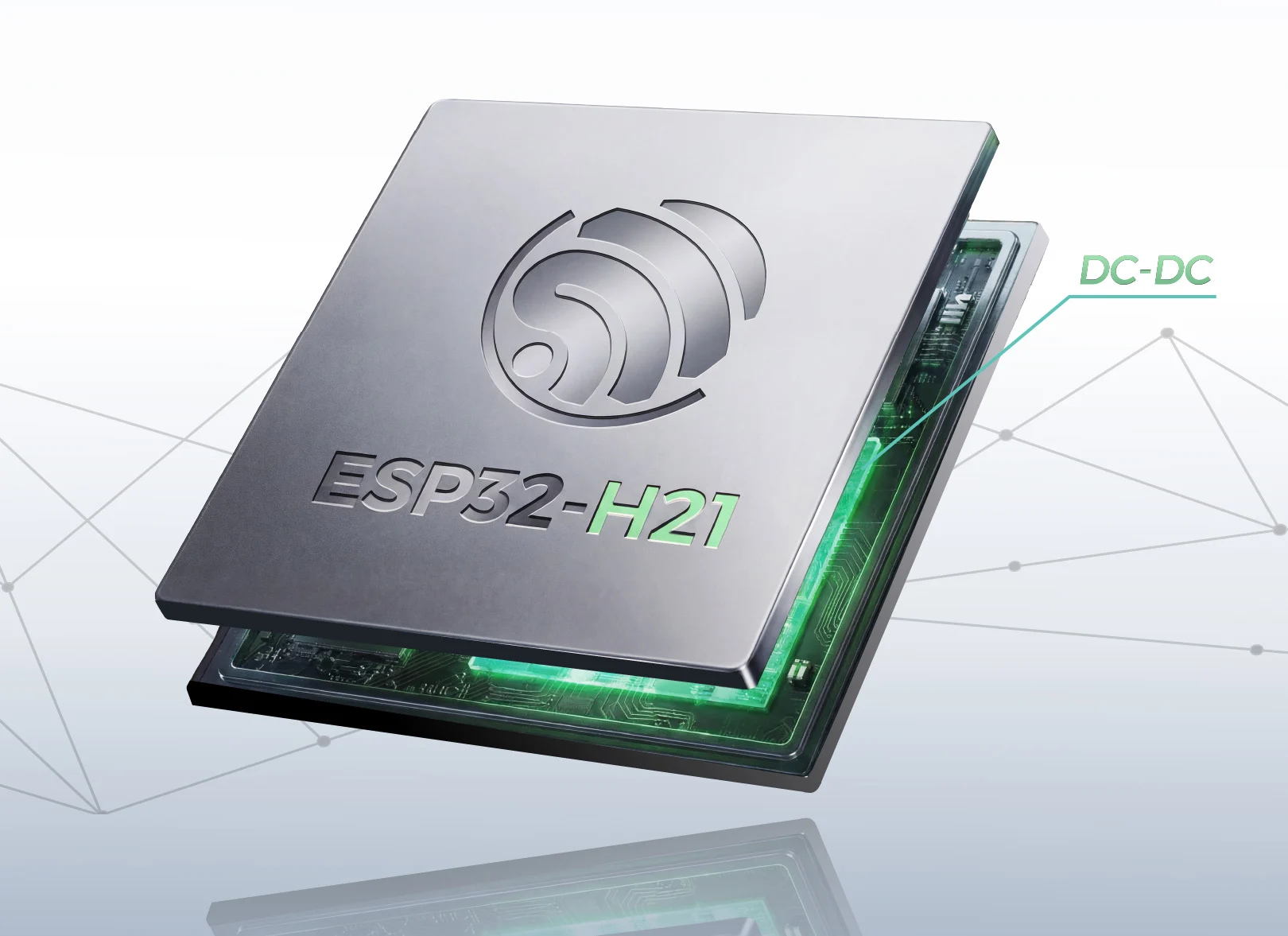
1. The ESP32-H21 features a new built-in DC-DC converter for improved efficiency at lower voltage levels.
2. Current consumption is significantly reduced, estimated at 8.2 mA for RX, 9 µA in light sleep, and 5 µA in deep sleep.
3. Other specifications remain unchanged, including the 96 MHz RISC-V core, 320 KB SRAM, and dual-radio setup with 802.15.4 and BLE.
4. The H21 is ideal for battery-powered projects seeking longer runtimes and can lower BOM costs for those using external converters.
5. The H21 is not a direct replacement for the H2 due to different pin configurations, but transitioning projects should be straightforward.
Espressif refers to this as “a small update to the ESP32-H2 platform.” The key change is the new built-in DC-DC converter, which wasn’t present in the original H2 model. This new feature allows the chip to operate more efficiently at lower voltage levels and reduces the active current consumption. Espressif estimates that the current draw is about 8.2 mA for RX under normal conditions, with a light sleep current of 9 µA and a deep sleep current of 5 µA. This enhancement can significantly extend battery life in real-world, constantly-on applications.
Specifications Remain Unchanged
Besides the new integrated DC-DC converter, everything else remains the same. This includes the RISC-V core that operates at 96 MHz, along with 320 KB of SRAM. The dual-radio setup still features 802.15.4 and BLE, without any Wi-Fi clutter, and retains the usual 19 GPIOs and other peripherals. Therefore, if you’re already working on a project with the H2, moving to the H21 should be relatively straightforward.
Conclusion on Battery Life
In summary, if your project runs on batteries and you aim to achieve a longer runtime without swapping batteries, switching to the H21 is a good idea. For those who already use a DC-DC converter or LDOs, the new integrated converter will help lower the BOM cost and boost efficiency. However, for applications that are not battery-driven or less sensitive to power, the H2 is still likely adequate and may be more affordable or easier to find at first. Keep in mind, though, that this isn’t a direct replacement, as the pin configurations for the two SoCs differ.
Source:
Link