Key Takeaways
1. On Tuesday, many websites and services, including major ones like PayPal and ChatGPT, experienced disruptions due to a Cloudflare error 500 from 11:30 to 14:30 UTC.
2. Cloudflare acts as a middleman for websites, caching data and providing security against attacks, which makes it a crucial service for many online platforms.
3. The outage was caused by a configuration error related to a permissions change in Cloudflare’s database system, leading to excessive error codes.
4. Initial theories suggested an external attack, but the root cause was traced back to Cloudflare’s own network and an oversized feature file in their bot management system.
5. The incident underscores the internet’s vulnerability, highlighting the significant impact a single mistake at a key service provider can have on numerous websites and services.
On Tuesday, many internet users encountered the well-known Cloudflare error 500 while browsing. From 11:30 to 14:30 UTC, a huge number of websites and services became unavailable. Notable names like Ikea, PayPal, ChatGPT, X (formerly Twitter), and others were among those affected. Even Notebookcheck was not spared.
Major Players and Their Impact
When considering major players in the online space, names like Amazon, Google, Microsoft, and Meta (Facebook) often come to mind first. When issues arise within these companies, it can lead to widespread internet disruptions. Cloudflare, which primarily focuses on shielding websites from attacks and enhancing their speed, tends to get overlooked. Many online platforms rely on Cloudflare’s services to improve loading times and keep their servers safe.
How Cloudflare Works
Cloudflare plays a significant role by caching data from sites and acting as a middleman between clients and servers, making connections smoother. Furthermore, it filters out harmful requests and helps manage sudden spikes in traffic. It is particularly recognized for its defenses against DDoS attacks. For many site owners, the ability to optimize loading times by caching pages across a global network of servers is crucial. A large number of websites count on Cloudflare to lighten the load on their own servers while also reducing waiting times for visitors.
On that Tuesday, a major problem impacted Cloudflare’s network, rendering many customer websites and services unreachable. In a blog entry, Matthew Prince, Cloudflare’s CEO, recounted the incidents leading to the largest outage Cloudflare had experienced since 2019.
The Root of the Outage
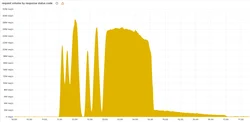
At approximately 11:30 UTC, an unusually high volume of error 5xx codes began to emerge due to a configuration error. The error numbers fluctuated dramatically until 13:00 UTC, which initially led Cloudflare to suspect an external attack. This theory was bolstered by the fact that Cloudflare’s own status page became unreachable at that time. Eventually, the error rates returned to normal low levels within their network. Initial conversations in internal chats even speculated about the possibility of a botnet causing the disruption.
The actual issue was traced back to Cloudflare’s own network. A permissions change in a database system resulted in multiple errors. This change had been made around 11:05 UTC. Consequently, the size of a feature file in the bot management system was artificially increased, nearly doubling its initial size. However, Cloudflare has a fixed size for this file, which is also kept in memory. The oversized files exceeded the allocated memory, leading to a system crash. Since the feature file updates every five minutes and not all Cloudflare clusters operated on the new settings, it meant that users could experience either a fully functional or a broken file at any given moment. This explains the varying error rates. By about 13:37, Cloudflare’s incident response team identified that the adjustments to the bot management system were the cause of the outage. An hour later, they successfully fixed the problem.
Implications of the Outage
The fallout from the Cloudflare outage clearly highlights the precarious reliance of the internet on a few key players. Just one configuration mistake at a critical junction was enough to make countless websites and services inaccessible. This raises concerns about how vulnerable the internet, as we know it, really is.
Source:
Link