
Key Takeaways
1. The early universe was mostly hydrogen and helium, lacking heavy elements or metals.
2. First stars formed hundreds of millions of years after the Big Bang, creating heavy elements through nuclear fusion.
3. Supernova explosions from dying stars scattered heavy elements into space, enriching gas clouds for future star formation.
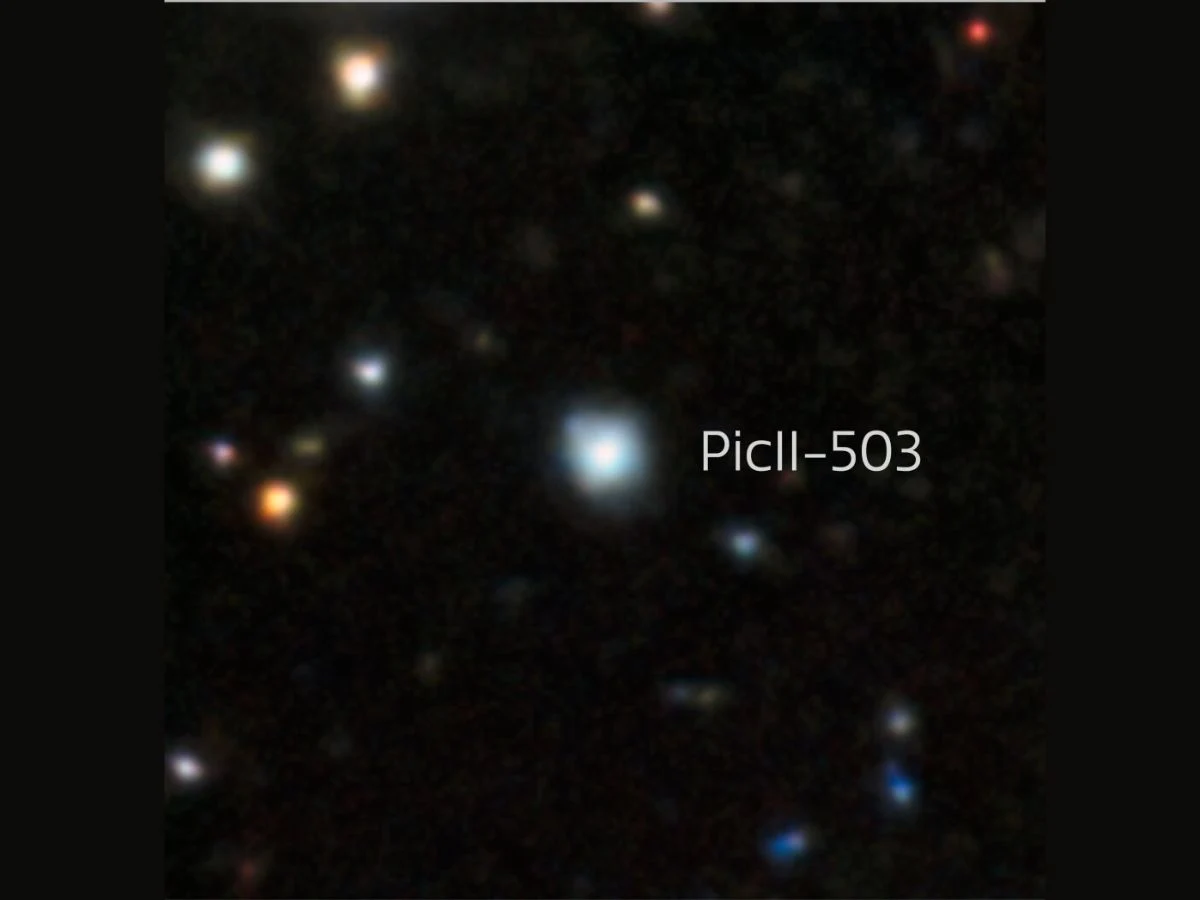
4. PicII-503, a carbon-enhanced metal-poor (CEMP) star, has very low iron and high carbon levels, offering insights into early cosmic history.
5. The discovery of PicII-503 helps scientists understand the chemical evolution of the universe and the processes behind second-generation star formation.
After the Big Bang, the universe was primarily made up of hydrogen and helium. There were no heavy elements at that time, and the early universe lacked any sign of metals. A few hundred million years later, the first stars began to form, and nuclear fusion occurring in their cores created the initial heavy elements, including carbon, magnesium, and oxygen. When these stars eventually died, their supernova explosions scattered these elements throughout space. This mix of elements then combined with gas clouds, providing the building blocks for the next generation of stars.
Early Stars and Their Legacy
The stars that formed in the early stages of cosmic history had very low metallicity, acting like time capsules of the universe’s past. A star named PicII-503 was discovered in the dwarf galaxy Pictor II, and what sets it apart is its nearly absent iron content and significantly high levels of carbon. This characteristic makes PicII-503 one of the most chemically primitive stars ever identified.
Discovering CEMP Stars
This unique star, known as a carbon-enhanced metal-poor (CEMP) star, was found using the Dark Energy Camera attached to the Victor M. Blanco Telescope. Scientists believe that the original star which enriched the gas that led to the formation of PicII-503 experienced a low-energy supernova. This explosion caused the heavier elements to fall back into the remnants, allowing only the lighter elements to escape and eventually form a second-generation star. The discovery of PicII-503 provides a direct chemical record of early stars, enhancing our knowledge of how cosmic chemical evolution unfolded.
Source:
Link