
Key Takeaways
1. CASC successfully conducted the first flight of its eVTOL aircraft on February 6 at Yongchuan Da’an Airport in Chongqing.
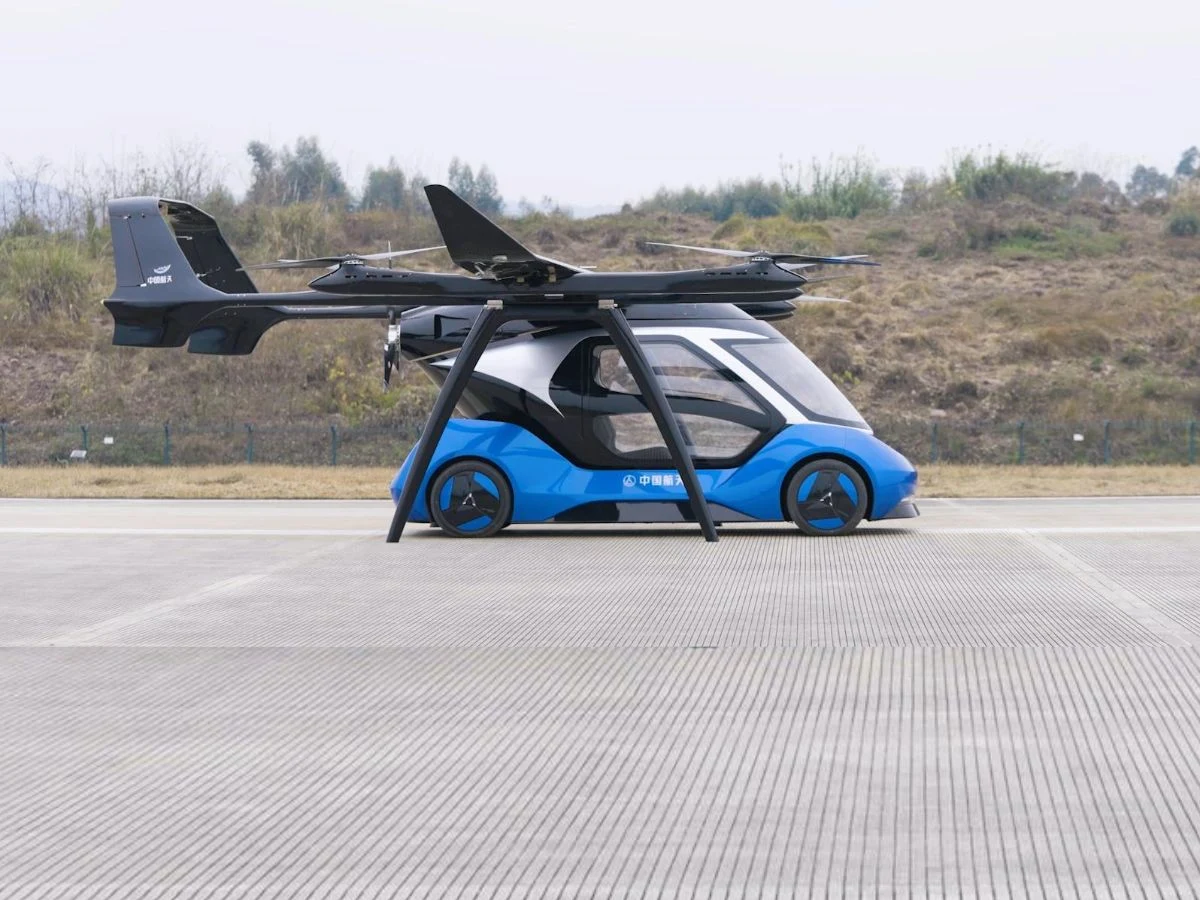
2. The aircraft features a modular design with three main components: wings, a cabin, and a chassis, allowing for easy transport mode shifts.
3. It can carry two passengers, reaching speeds of up to 150 km/h at elevations below 3,000 meters, with a ground operational range exceeding 300 kilometers.
4. The developers integrated advanced automotive technologies and smart systems to create a versatile platform for various travel needs.
5. The aircraft meets rigorous airworthiness standards and is expected to serve in personalized transport, logistics, and emergency response in the future.
The Ninth Academy of the China Aerospace Science and Technology Corporation (CASC) has successfully carried out the first flight of its new electric vertical takeoff and landing (eVTOL) aircraft. This testing happened on February 6 at Yongchuan Da’an Airport in Chongqing, and it confirmed the capabilities of a distinctive flying car design that merges aerospace with automotive technology.
Innovative Design Features
The aircraft features a modular and split-type structure that includes three main components: wings, a cabin, and a chassis. This innovative setup facilitates an easy shift between different modes of transport thanks to a self-developed automatic alignment and coupling system, which allows for the modules to connect or disconnect autonomously under programmed guidance.
Performance and Capabilities
The airborne component can carry two passengers, reaching speeds of up to 150 km/h at elevations below 3,000 meters. When on the ground, the vehicle employs a fully electric, intelligent by-wire chassis that has an operational range exceeding 300 kilometers. By integrating industrial capabilities from top automotive manufacturers and employing tiltrotor control along with smart driving systems, the developers aim to establish a versatile platform that caters to a variety of travel requirements.
Future Prospects
As stated by CASC, the aircraft has been developed following rigorous airworthiness standards. Its modular design permits the swapping of customized cabins and different chassis types based on specific missions. Looking forward, the company anticipates that this multifunctional low-altitude aircraft will be utilized in areas such as personalized transport, logistics, and emergency response tasks.
Source:
Link