Key Takeaways
1. Potential Service Reductions: Starting November 2026, Caltrain may reduce services significantly, including finishing operations as early as 9 PM and halting weekend services.
2. Increased Ridership and Satisfaction: Since electrification, Caltrain has seen a 55% rise in ridership and high satisfaction ratings between 91% and 93%.
3. Impact on Sporting Events: Reduced train frequencies could deter fans from using Caltrain to attend events, as the number of trains before games may drop significantly.
4. Long-Term Planning Issues: Lack of focus on operational costs in infrastructure planning can lead to waste and struggles for public transit systems like Caltrain.
5. Urgent Funding Needs: Caltrain requires secure funding by early 2026 to avoid severe service cuts, pressing politicians and the public for action.
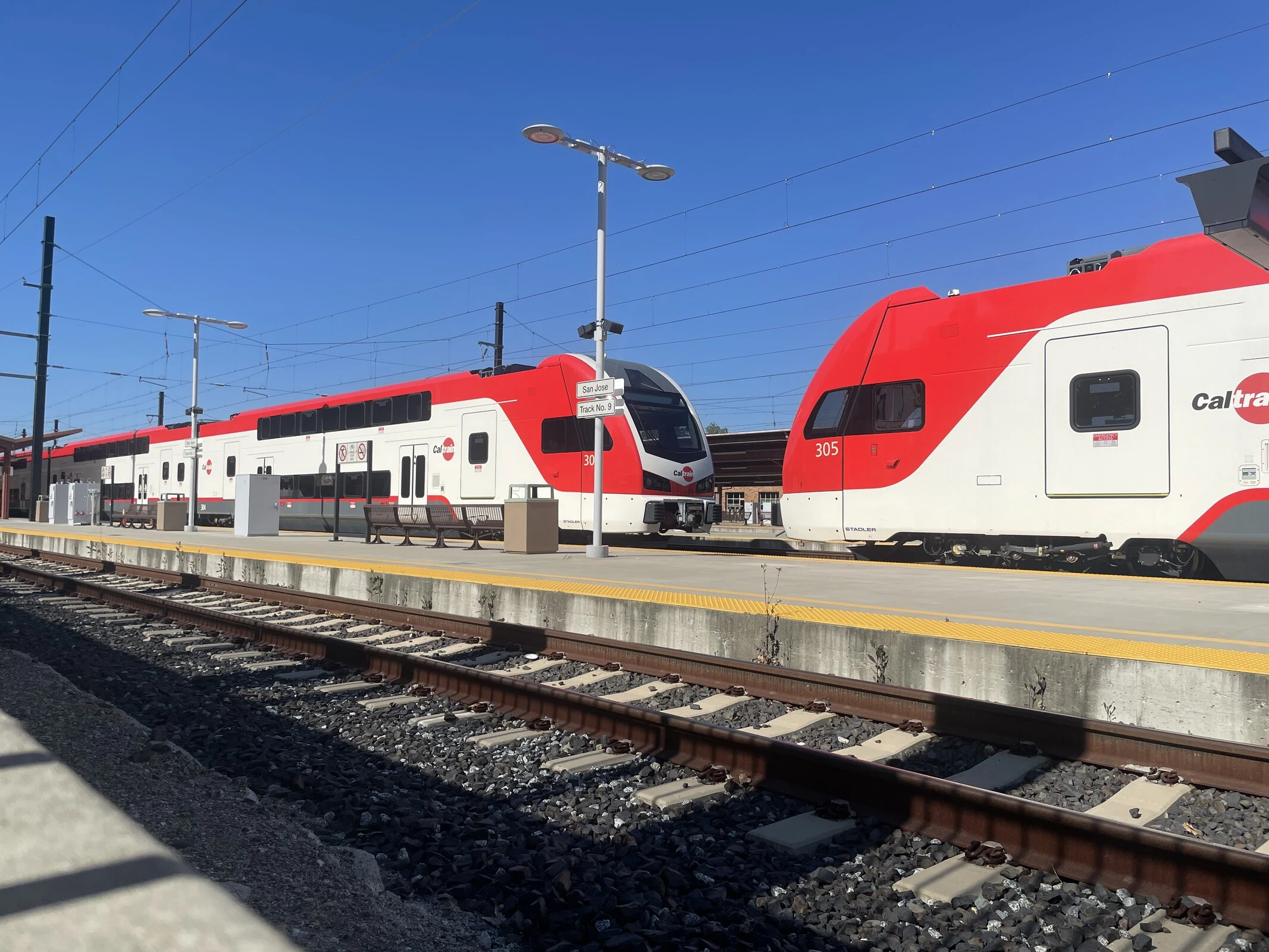
Not only in Germany, new infrastructure is bought for a large amount of money, only to be left unused later because of budget cuts. The new Siemens Mireo Plus H hydrogen trains of the Heidekrautbahn near Berlin are facing some small service reductions, but the freshly built electric Caltrain trains by Stadler, which run between San Francisco and San Jose in the center of Silicon Valley, might face much bigger cuts.
Future of Caltrain Operations
Caltrain has revealed how its services might change starting in November 2026, if the funding needed cannot be found. The situation does not look good, as Caltrain risks losing a lot of its attractiveness to save money. This is happening despite the costly electrification project showing some early efficiency improvements. Since April 2024, Caltrain has been the first “major” electric railway in the region. The trains now operate at higher speeds, leading to less wear and tear, and they are generally simpler to manage. Instead of using diesel trains pulled by locomotives, which now only operate in the southern part, Caltrain utilizes Electric Multiple Units (EMUs).
Increased Ridership and Satisfaction
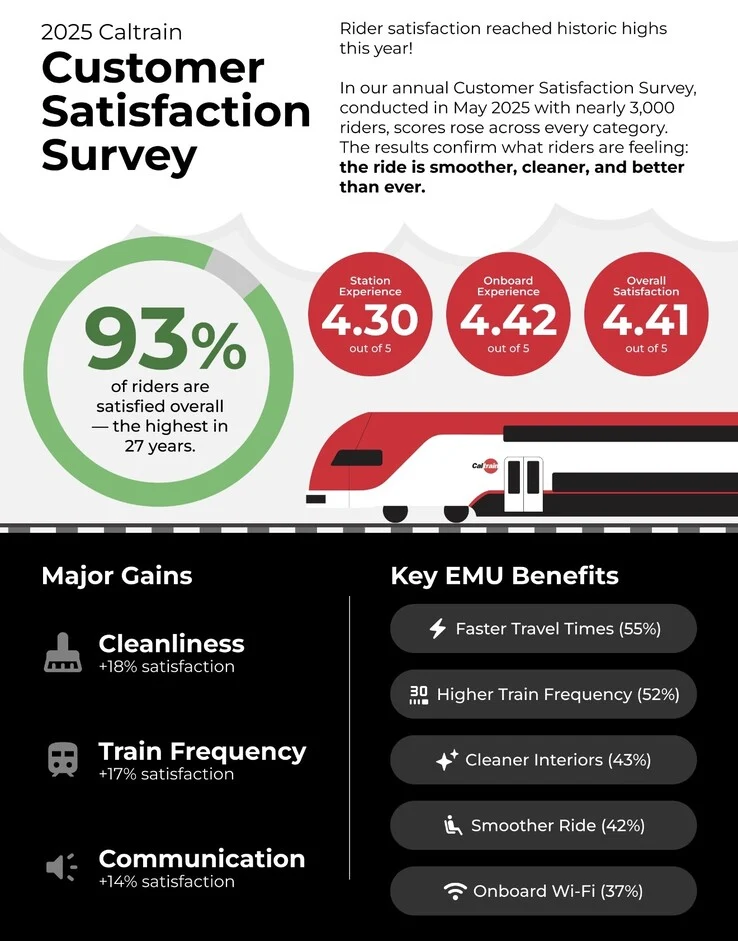
There has been a 55% rise in ridership since the electrified service began. Caltrain reports that weekend passenger numbers have more than doubled. Riders are also quite pleased with the new trains, with satisfaction ratings between 91% in February and 93% in September, which are the highest since surveys started 27 years ago. Revenue has also risen, giving Caltrain a larger budget than previously expected.
However, if funding for public transport gets reduced, Caltrain could become a service mainly for those with no other options. Car owners who think about switching to the train might be put off.
Service Reductions Planned
Starting November 2026, service on this vital rail line is planned to finish as early as 9 PM. This poses a challenge for anyone shopping in San Francisco, as they will need to catch the last train home. Visiting friends or enjoying evening activities at restaurants or cultural events would also become impractical, as the return trip by bus can take a long time, as the writer knows from experience. The only other choice would be to combine the journey with rideshare services like Uber, which can be quite pricey. Those with cars will likely choose not to use Caltrain for evening outings if there’s no reliable return option.
On weekends, Caltrain service is expected to be completely halted, with none of the over two dozen stations being served. Speaking of stations, about a third of the existing and recently updated stations are planned for closure.
Impact on Sporting Events
It’s also worth noting that Caltrain is a key link for sporting events. It remains to be seen whether trains will still operate for events at PayPal Park. The necessary rolling stock and tracks are available, but the cost of transporting fans who switch from cars to trains to ease traffic congestion around the stadium is a concern. Fans are accustomed to having four to five trains per direction within 90 minutes before a game. If this is reduced to two trains per direction at best, it may deter these customers.
The plan also suggests that there will be a maximum of one train per hour in each direction. Consequently, it’s likely that Caltrain will seldom run express trains, previously known as Baby Bullets. Instead, only all-stop services would run, except for the stations that would be closed.
Small Time Savings
The Caltrain Local would then run faster, but the time saved isn’t substantial. Using today’s Caltrain Limited Express as a benchmark, which skips six stations, the journey between San Jose and San Francisco takes about an hour and ten minutes, saving less than ten minutes. The Caltrain Express (formerly Baby Bullet) skips 10 stations and completes the route in about one hour. These minor time savings are also a result of electrification, as the Stadler Kiss trains accelerate much quicker than the older models.
However, saving about ten minutes per trip could allow for the removal of at least one complete run from the daily schedule. Additionally, closing certain stations would lower the number of potential riders, further decreasing the number of passengers per train.
Caltrain insists that no final decisions have been made yet. However, funding must be secured by early 2026. This puts pressure on politicians and the public to avert a worst-case scenario. How likely this scenario is will likely become clearer in the coming months. For now, it seems to be more about minimizing cuts rather than avoiding them entirely.
Long-Term Planning Concerns
In the US, it’s common to see large amounts of money spent on new infrastructure projects, while ongoing operational costs are often neglected in the planning stages. Caltrain illustrates how the absence of long-term planning can potentially lead to disaster and waste taxpayer money. This is one of the reasons public transit often struggles in the US. Nonetheless, several intriguing transit projects have recently commenced operations. Noteworthy examples include the new rail link to Honolulu Airport in Hawaii and the new metro-tram system to LAX in Los Angeles, where regional rail has stood up against the powerful taxi lobby.
The impact of the electric Caltrain on the tech shuttles operated by Apple, Facebook, Google, and others is still uncertain. In Silicon Valley, there’s a privately operated bus network funded by tech companies to transport employees to and from work. Since 2024, the system has faced tighter regulations, with the public transit operator Muni gaining some control over the bus stops. However, there are no current statistics available regarding this.
Source:
Link