
Key Takeaways
1. Brenda Romero described the development of Dungeons & Dragons Heroes as a “miracle” due to its last-minute transformation from a basic hack-and-slash game into a more complete RPG.
2. The game was originally intended to mimic the arcade game Gauntlet but faced challenges in maintaining the essential RPG elements of Dungeons & Dragons.
3. Just five months before the game’s release, the team realized they needed to incorporate RPG features, leading to a rapid pivot in development.
4. Key RPG elements such as quests, items, NPCs, and a progression system were added quickly, showcasing the team’s adaptability under pressure.
5. Despite receiving mixed reviews, the game’s development story highlights the unexpected successes that can arise from collaboration and determination in game design.
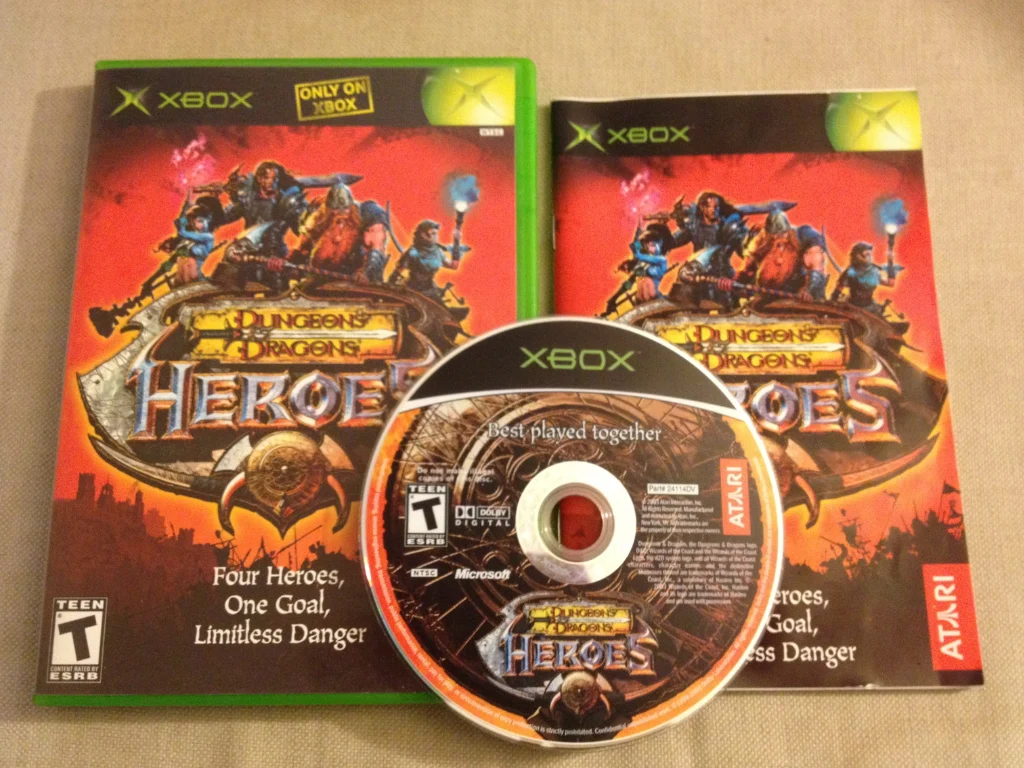
Brenda Romero is still shocked that one of the most well-known RPGs in gaming, the Xbox-exclusive Dungeons & Dragons Heroes, was saved at the last minute during a chaotic development phase just months before its release. She fondly remembers the game and labels it a “miracle.”
An Interview at Dark and Doomy
Recently, Brenda chatted with Time Extension at the Dark and Doomy event in Wakefield, England. In the discussion, she shared insights about the 2003 Xbox-exclusive RPG that was nearly released as a basic hack-and-slash game, lacking the RPG elements crucial to the essence of Dungeons & Dragons. Reflecting on it, she stated, “Holy sht… It was a miracle.”
The Origins of Dungeons & Dragons Heroes
Dungeons & Dragons Heroes was born when Atari suggested creating something akin to the classic arcade game Gauntlet, but with D&D characters. Brenda Romero detailed in the interview:
“They wanted to develop a game that resembled the arcade Gauntlet, but with D&D characters. The idea was to just go in there, fight, and whatever. But I wanted to create a character that could grow, have weapons, go on quests, and have a shop. All of that stuff!”
Brenda found herself in a tricky spot: after spending two decades crafting RPGs, Atari’s request was for her to create a hack-and-slash game that removed everything that made D&D feel true to its roots.
A Shift in Direction
This meant no upgrades for weapons, no in-game economy, no side quests, and no stores within the game. She continued, “At one point, that was my thing. I knew how to do that. But then I found myself in a situation where I was making a non-RPG on a console, and I thought, ‘I’m not sure I’m the right designer for this.’”
The team focused on developing Dungeons & Dragons Heroes according to Atari’s guidelines. However, just five months before launch and three months from certification, an urgent meeting was called to discuss the game’s quality. During this meeting, a programmer stood up and stated, “Brenda’s right. We’re missing a lot of stuff.”
Adding RPG Elements
That was when the team pivoted and began adding various RPG features like quests, items, NPCs, and even a whole progression system as quickly as they could. Reflecting on it, Brenda Romero shared, “I even remember looking at the maps I designed, thinking, ‘Where the fck am I gonna put a store?’ I still remember where I ended up placing them. It was kinda surgical.”
While the game received mixed reviews, Dungeons & Dragons Heroes didn’t turn out to be just a forgettable button-masher; it had a surprising amount of depth given the short development period.
A Miracle in Development
Even Brenda Romero acknowledges the game’s average quality, yet she remains astonished by what the team accomplished in just a few months.
She wrapped up the conversation by saying, “The game ultimately turned out mediocre, but looking back, I’m like, ‘Holy sh*t!’ We did all of that in such a brief time. It was a miracle. Often, people don’t realize the excitement that happens behind the scenes and these wild game stories.”
Though Dungeons & Dragons Heroes may not have revolutionized the gaming world, it stands as a testament that miracles can happen when a group of developers collaborates and refuses to launch an unfinished product.
Source:
Link