Tag: Bluetooth 5.1

  • Lenovo’s Self-Charging Bluetooth Keyboard Now Available for Purchase

    Lenovo’s Self-Charging Bluetooth Keyboard Now Available for Purchase

    Key Takeaways

    1. The Lenovo Self-Charging Bluetooth Keyboard was initially priced at $69.99 but is now available for $99.99, a $30 increase.
    2. It features a supercapacitor for energy storage and a photovoltaic cell to harness power from ambient light.
    3. The keyboard can last up to 1 month on a full charge, which is shorter than the 4 months claimed by a competitor’s product.
    4. It has 108 island-style keys, a dedicated number pad, a low-profile layout, adjustable tilt legs, and a spill-resistant design.
    5. The keyboard connects via Bluetooth 5.1, is compatible with Windows 10 and 11, and can be managed with the Lenovo Accessories and Display Manager app.


    Announced back in January during CES 2025, the Lenovo Self-Charging Bluetooth Keyboard was initially set to hit the shelves in May, but that date came and went without a release. Now, this keyboard is finally up for purchase, but the unfortunate news is that it comes with a higher price tag.

    Pricing Details

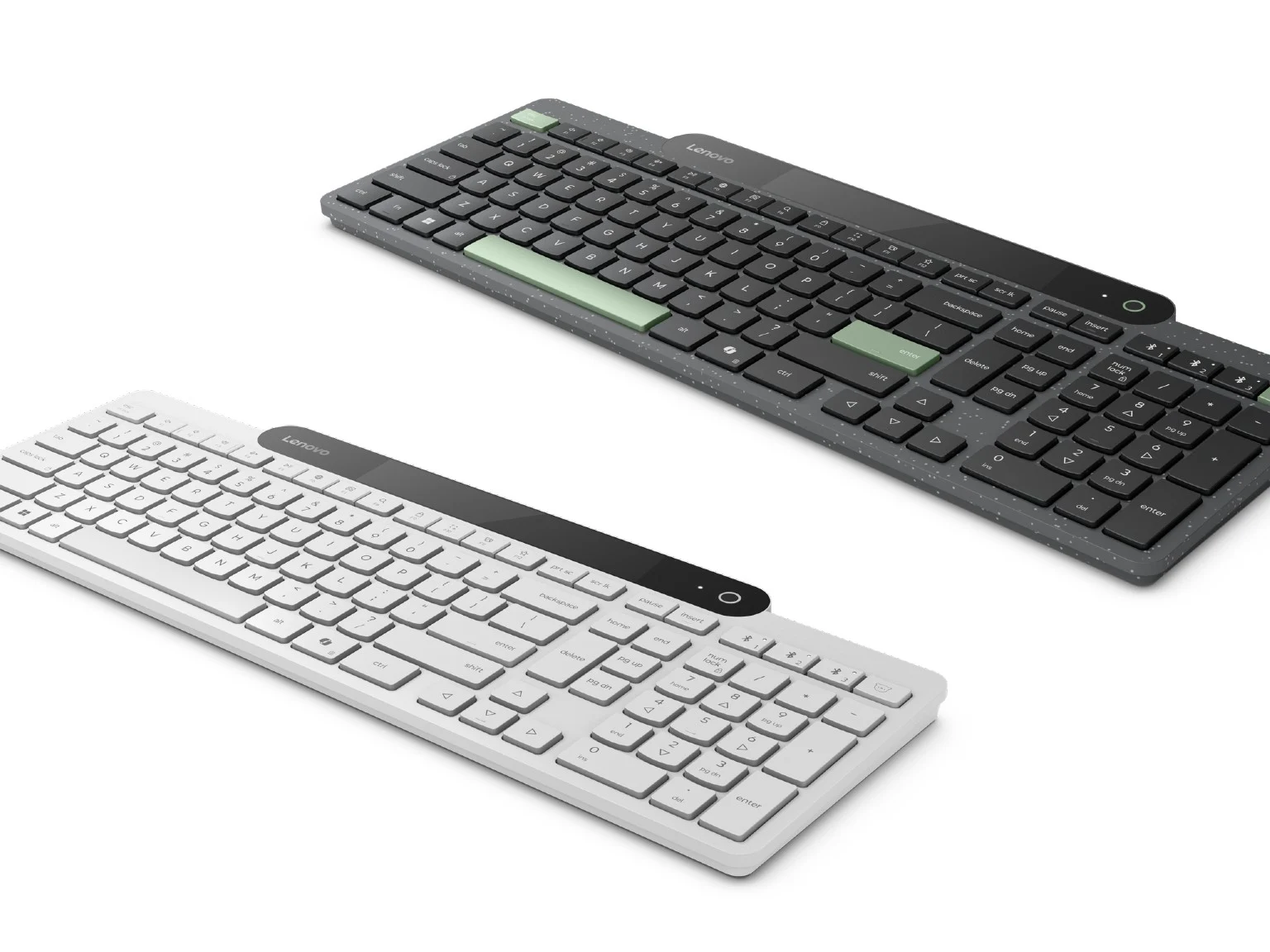
    When Lenovo first revealed this keyboard at CES 2025, they mentioned it would be priced at $69.99 upon its May release. However, the current price is $99.99, which is a $30 hike from what was originally expected. Currently, the keyboard is only offered in black, and there are no updates regarding the potential release of a white variant.

    Unique Features

    What sets the Lenovo Self-Charging Bluetooth Keyboard apart is its lack of a traditional battery. Instead, it utilizes a supercapacitor for energy storage. At the top, there is a photovoltaic cell that enables the keyboard to harness power from ambient light, eliminating the need for direct sunlight exposure.

    For those who prefer working in low-light conditions, there’s a USB-C port available for emergency charging. Once fully charged, the keyboard can last for up to 1 month of usage. This duration is significantly shorter than the 4 months claimed by the Logitech Signature Slim Solar+ Keyboard, which is currently available on Amazon for $99.99.

    Specifications

    The Lenovo Self-Charging Bluetooth Keyboard features 108 island-style keys, complete with a dedicated number pad. According to the specifications, it has a low-profile 2.5 zone keyboard layout designed for quiet typing. The keyboard also includes adjustable tilt legs and a spill-resistant design. It connects through Bluetooth 5.1 and is compatible with Microsoft Swift Pair. Lenovo states that it works with devices running Windows 10 and 11, and can be managed using the Lenovo Accessories and Display Manager app.

    Source:
    Link


  • Lenovo’s Solar-Powered Self-Charging Keyboard at CES 2025

    Lenovo’s Solar-Powered Self-Charging Keyboard at CES 2025

    While there will be much attention on Lenovo’s latest computers and Legion gaming gear, the company is also introducing a variety of fascinating accessories, including a unique self-charging Bluetooth keyboard. This device, which was first revealed a few weeks ago, boasts an exterior made from 95% recycled plastic sourced from consumers. The standout feature of this keyboard is that it doesn’t require conventional charging.

    Innovative Charging Technology

    The Lenovo Self-Charging Bluetooth Keyboard incorporates photovoltaic cells, enabling it to harness energy from surrounding light. Instead of a standard battery, it employs a fast-charging supercapacitor, similar to HP’s rechargeable keyboard and mouse set. Unlike traditional batteries, supercapacitors can store large amounts of energy and recharge at an astonishing speed.

    Impressive Power Life

    According to Lenovo, this keyboard can function for as long as 45 days in complete darkness without needing a recharge. Once the energy runs out, it only takes 2 minutes of charging under a light source with an intensity of 300 Lux to restore it for use.

    User-Friendly Features

    In addition to its innovative charging, the keyboard is designed to be spill-resistant and comes with adjustable tilt legs, dedicated media controls, and a three-zone layout complete with on-screen brightness indicators. Users can also monitor the device’s power in real-time through the Lenovo Accessories and Display Manager.

    This keyboard features Bluetooth 5.1, supports Microsoft Swift Pair, and can connect with up to three devices simultaneously. It is compatible with various operating systems including ChromeOS, Windows 10 and later, macOS, iPadOS, iOS, and Android.

    The Lenovo Self-Charging Bluetooth Keyboard is set to launch in May 2025, priced at $69.99, and will be offered in two different colors.

  • New TOPPING D90 III Discrete: 16-Phase PSRM & Ultra-Low Jitter

    New TOPPING D90 III Discrete: 16-Phase PSRM & Ultra-Low Jitter

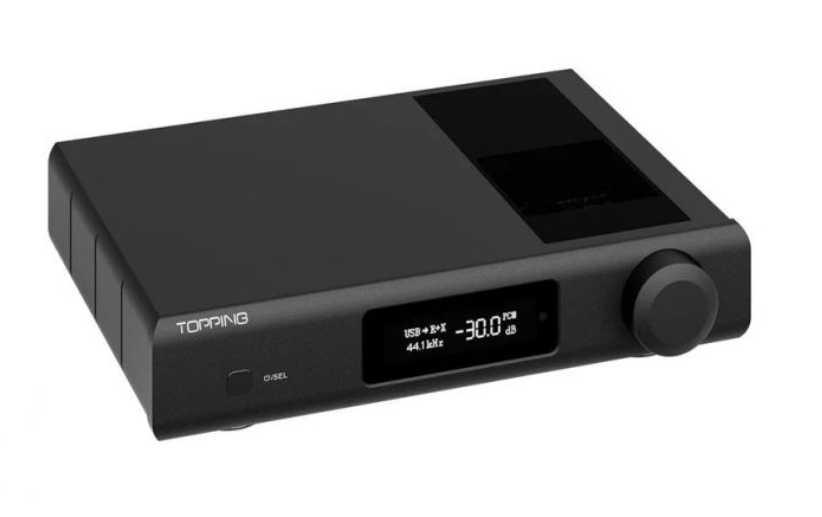
    TOPPING D90 III Discrete is a high-quality digital-to-analog converter (DAC) that offers fully balanced audio performance. It features advanced technology such as 16-phase PSRM modules, ultra-low jitter, and Bluetooth connectivity, making it a great choice for audiophiles who desire top-tier sound.

    Pricing and Availability

    The TOPPING D90 III Discrete is available for $999 on Geekwills. The Silver version is currently up for pre-sale and is set to ship on October 26.

    Innovative PSRM Technology

    At the core of the TOPPING D90 III Discrete are its 16-phase PSRM modules, which are assigned individually to both left and right channels for superior audio output. PSRM stands for Phase Shifted Reservoir Modulation, a discrete 1-bit DAC that provides precise sound reproduction. Its design includes a fast-switching logic array and a high-accuracy voltage reference, which together reduce disturbances and enhance performance reliability.

    Exceptional Jitter Performance

    A key highlight of the D90 III Discrete is its outstanding jitter capabilities. With a jitter rate as low as -157dB, this DAC ensures that your music is played back with exceptional clarity, devoid of noise or distortion.

    Enhanced I/V Conversion Circuit

    The D90 III Discrete incorporates an upgraded I/V conversion circuit that significantly improves audio quality. This circuit is developed with low-distortion operational amplifiers and ultra-low noise parts, ensuring clear voltage output. Consequently, listeners can enjoy a rich dynamic range and a realistic soundstage.

    Realistic Audio Playback

    Boasting a remarkably low Total Harmonic Distortion (THD+N) of less than 0.00006%, the D90 III Discrete provides an authentic music experience. It captures every detail from the recording, making you feel as if you are in the studio alongside the artist.

    LDAC Bluetooth Connectivity

    The D90 III Discrete supports Bluetooth 5.1 through the QCC5125 chip, facilitating high-quality wireless audio streaming. It works with various audio codecs, including LDAC, aptX-Adaptive, aptX HD, AAC, and SBC, allowing for wireless playback of high-resolution audio up to 96kHz/24bit, surpassing standard CD quality.

    Customizable PEQ Adjustments

    For users who prefer to tailor their audio experience, the D90 III Discrete features a ten-band parametric equalizer (PEQ). This allows for adjustments of frequency, gain, and bandwidth across ten bands via TOPPING’s desktop software. Users can even save multiple profiles for quick selection, making it adaptable for different listening styles.

    Easy Plug and Play Functionality

    Designed for straightforward integration, the D90 III Discrete is compatible with various devices and operating systems, including Windows, macOS, Linux, iOS, and Android. It utilizes a third-generation XMOS XU316 USB chip, supporting high-resolution audio playback of up to PCM768kHz/32bit and DSD512, making it a versatile DAC for numerous setups.

    Advanced IIS Input Interface

    Additionally, the DAC includes an IIS interface, a specialized digital audio transmission system. It supports high-end specs like PCM768kHz/32bit and DSD512 native, ensuring it works seamlessly with most digital interfaces.

    Convenient Bluetooth Remote Control

    The D90 III Discrete comes with a user-friendly 2.4G Bluetooth remote control, allowing for easy operation even from a distance. This feature enhances user convenience, making control effortless without needing to be close to the device.

    Key Features

    • Fully balanced HiFi DAC
    • 16-phase PSRM modules for left and right channels
    • Ultra-low jitter performance (-157dB)
    • New I/V conversion circuit
    • THD+N < 0.00006% for realistic music reproduction
    • Bluetooth 5.1 with QCC5125 chip
    • Supports LDAC, aptX-Adaptive, aptX HD, AAC, SBC
    • Ten-band customizable PEQ adjustment
    • USB input supports PCM768kHz/32bit & DSD512
    • IIS input supports PCM768kHz/32bit & DSD512 native
    • Plug-and-play compatibility with Windows, macOS, Linux, iOS, Android
    • 2.4G Bluetooth remote control for flexible operation

    Image 1
    Image 1
  • IQUNIX MG65 Low-Profile Mechanical Keyboard Released at $96

    IQUNIX MG65 Low-Profile Mechanical Keyboard Released at $96

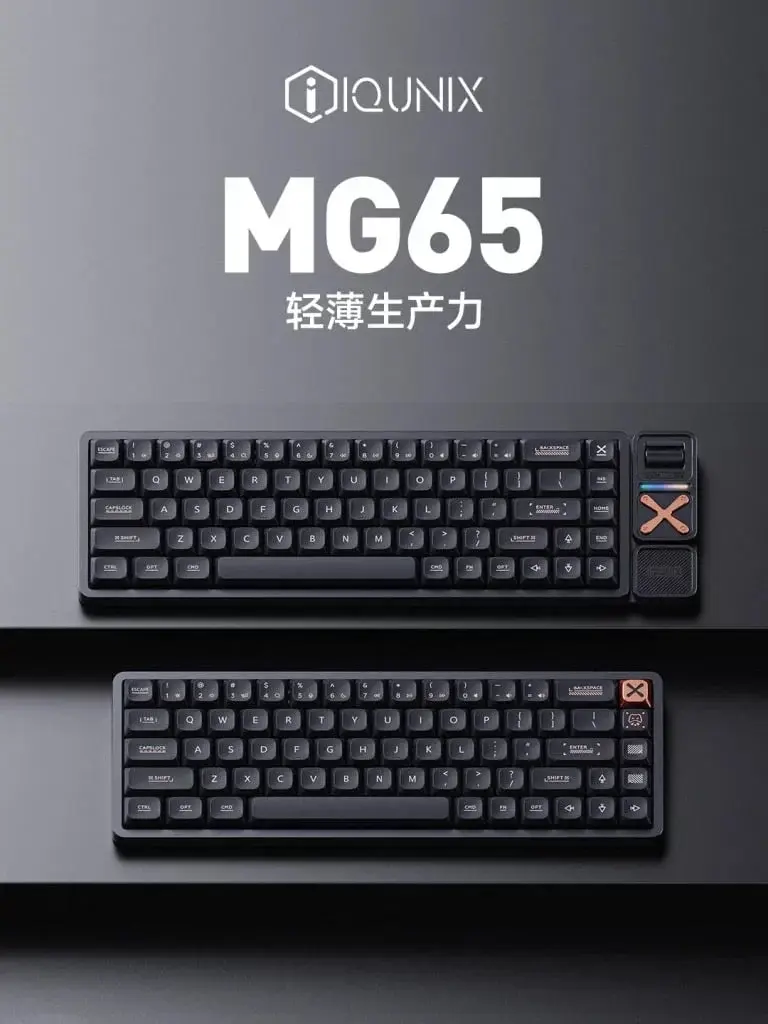
    IQUNIX’s latest MG65 series keyboards are currently on pre-sale in China, available in two models: Regular and Pro. The Regular model is priced at 699 CNY, which is roughly $96, while the Pro model costs 899 CNY, about $124. Both models are offered in two colors: Mist White and Night Black.

    Design and Build

    The IQUNIX MG65 series showcases a sleek, ultra-thin design complemented by a durable aluminum alloy shell. The keycaps are coated to resist dust and grime, contributing to the keyboard’s longevity. Remarkably, the MG65 maintains a minimal thickness of just 11mm.


    Weight and Specifications

    The Regular MG65 weighs 900 grams, while the MG65 Pro comes in at 1030 grams, making these keyboards relatively heavy for their low-profile design. The MG65 series is equipped with PBT keycaps and features a total of 68 keys. Both models include a built-in battery with a capacity of 3000 mAh and 3.7V.

    Connectivity and Charging

    The keyboards can be charged via a USB Type-C port. They also support multiple modes of connectivity: Bluetooth mode, 2.4 GHz wireless usage, and wired mode. The Bluetooth interface is version 5.1, ensuring stable and efficient wireless performance.