
Key Takeaways
1. Researchers developed a compact 4D imaging sensor on a single silicon chip to improve 3D vision systems in robots and drones.
2. The new sensor uses a continuous laser beam with a grid of 62,000 tiny pixels that function as both transmitters and receivers.
3. It quickly measures distances and speeds by analyzing shifts in the frequency of returning light waves.
4. Successful tests showed the sensor’s ability to map indoor spaces and detect details from 65 meters away outdoors.
5. The technology is scalable and could enhance vision capabilities in autonomous machines, drones, and consumer devices like cameras and smartphones.
Current 3D vision systems found in both robots and drones tend to be large, costly, and often have difficulty handling rapid and unpredictable movements in the real world. To address these issues, a team of researchers has created an advanced 4D imaging sensor that is compactly housed on a single silicon chip. This innovative technology, explained in the journal Nature, produces highly precise digital maps of the environment while also tracking the exact speed of moving objects.
New Technology Features
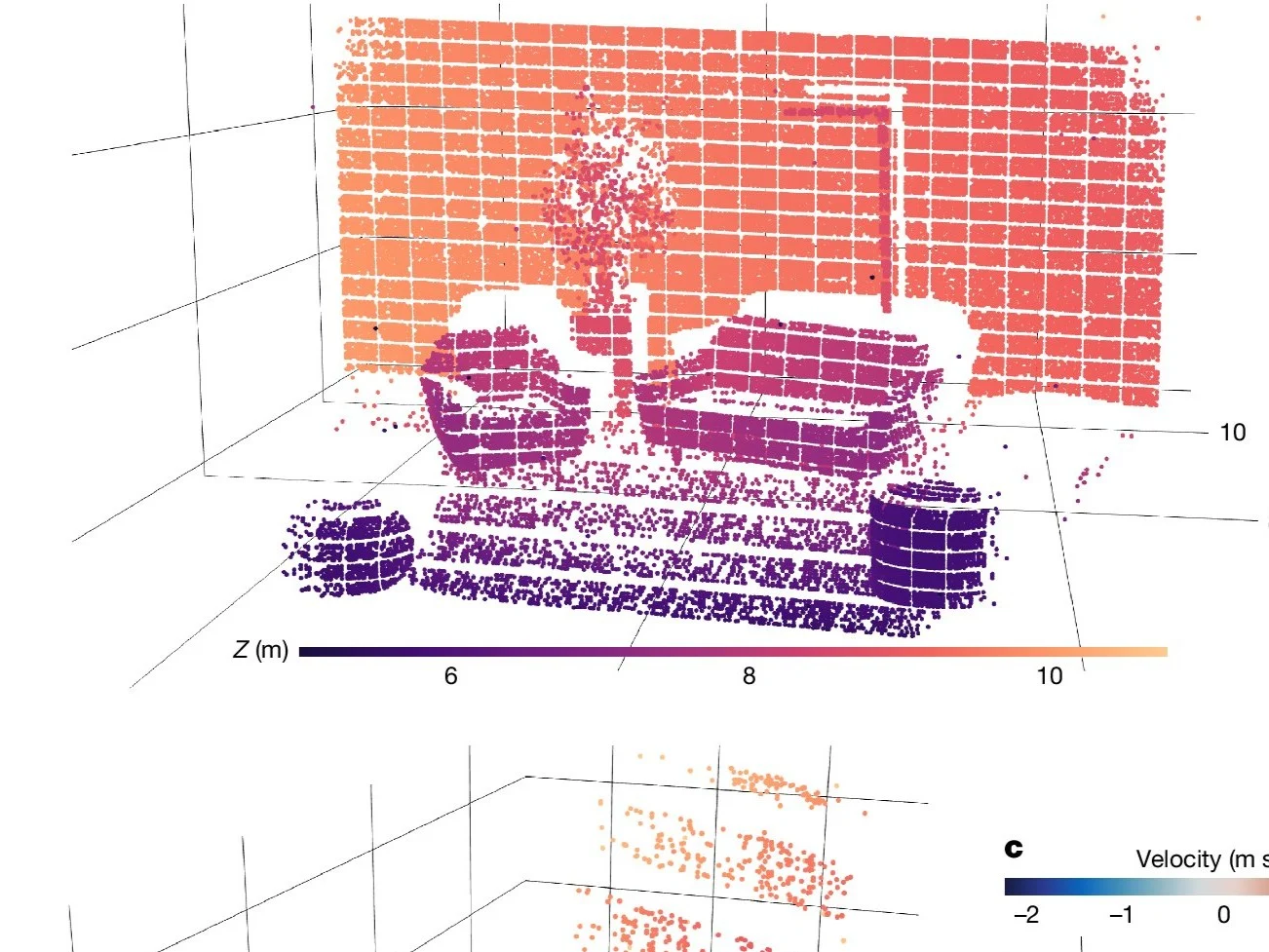
Differing from traditional sensors that depend on fast pulses of light and need separate parts for sending and receiving signals, the newly crafted chip works with a continuous laser beam. The laser light is directed through a physical grid of nearly 62,000 tiny stationary pixels. Each pixel in this grid serves as both a transmitter and a receiver, allowing the device to remain exceptionally compact. By examining minute shifts in the frequency of the returning light waves, the system quickly determines how far away an object is and the speed at which it is moving.
Successful Testing
The research team has effectively tested the sensor in various conditions, such as mapping indoor spaces and swiftly gauging the speed of a spinning disk. During long-range outdoor evaluations, the chip accurately picked up intricate details, including windows and balconies on a building that was located 65 meters away.
Future Potential
Since the design merges all required electronic and optical components onto a single chip, it is both compact and scalable. While there is still room for enhancement in terms of resolution and range, this 4D technology holds the promise of significantly boosting the vision capabilities of autonomous machines, drones, and potentially everyday digital cameras and smartphones.
Source:
Link