Key Takeaways
1. AMD’s Dominance: AMD chips are preferred for gaming handhelds due to their strong performance and low power consumption, with specialized chips for handheld devices.
2. Intel’s Catch-Up: Intel struggled during the Meteor Lake era but made significant improvements with the Lunar Lake generation, now offering performance and efficiency comparable to AMD.
3. New Intel Processors: Intel’s recent Panther Lake processors feature advanced integrated graphics (Arc B390 and B370), improving gaming performance by 50-70% over older models.
4. Thermal Design Power (TDP): The new chips perform well within a TDP range of 20-35 Watts, suitable for modern gaming handhelds.
5. Future Competition: To stay competitive by 2026, manufacturers focused on AMD will need to offer Intel alternatives, or lower prices as Panther Lake’s capabilities surpass AMD’s current offerings.
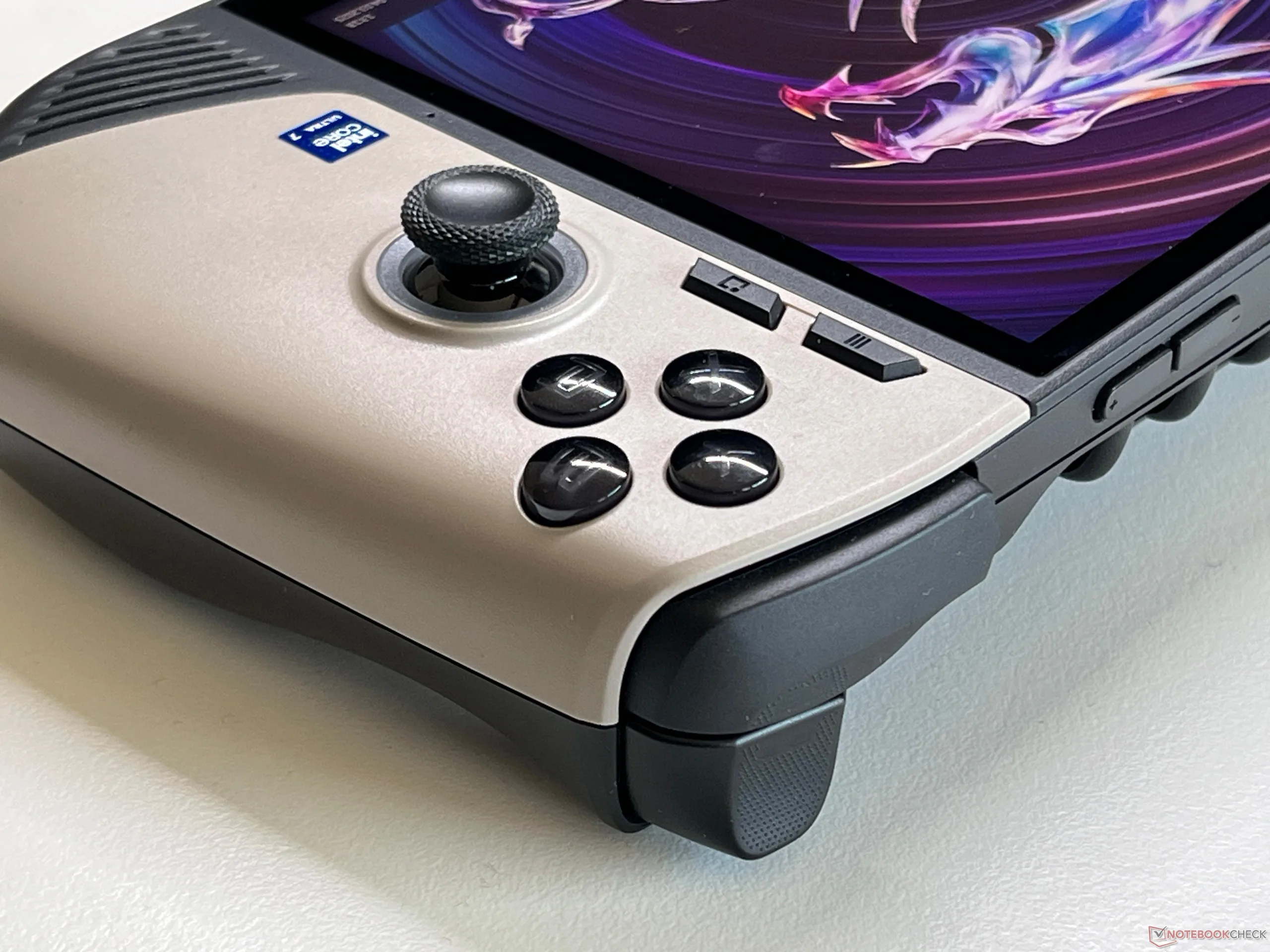
Gaming handhelds continue to hold a strong appeal, with numerous makers opting for AMD chips in the past few years. This is mainly due to their impressive performance while consuming less power. AMD even provides specialized chips designed for handheld devices, focusing on enhancing GPU performance. In contrast, Intel lagged behind during the Meteor Lake era, needing more power to match similar performance levels. Consequently, only a few Intel handhelds, such as the MSI Claw, were available. However, the situation shifted with the arrival of the Lunar Lake generation last year, allowing Intel to catch up to AMD in both performance and efficiency, bringing the two platforms nearly level.
New Developments in Chip Technology
While AMD did not introduce a fresh chip generation for handhelds this year, Intel has rolled out their latest Panther Lake processors. The new models featuring the Arc B390 and Arc B370 integrated graphics units (iGPUs) showcase significant advancements in graphics capabilities, leading to enhanced gaming performance. Our evaluations revealed an improvement of 50-70% at similar power levels when comparing these new iGPUs to the older Arc Graphics 140V and 140T, as well as against the AMD Radeon 890M.
Competitive Landscape Ahead
This marks the first notable performance boost in the handheld segment in a few years. The new chips have demonstrated excellent performance within a thermal design power (TDP) range of 20-35 Watts, which aligns with what most modern gaming handhelds utilize. Currently, MSI stands out as one of the few manufacturers offering Intel-based handhelds, and we anticipate they will introduce a model powered by the new Panther Lake chips shortly.
To remain competitive in 2026, other manufacturers that have primarily focused on AMD-based handhelds will likely need to provide an Intel alternative. If they do not, they may have to significantly lower their prices, as AMD’s existing chips cannot compete with Panther Lake’s capabilities. We are excited to get our hands on the first handhelds equipped with the new Arc B390 or Arc B370 GPUs. In the meantime, we invite you to check out our detailed analysis articles and reviews for further insights on the new CPUs and iGPUs.