Key Takeaways
1. Smart rings are gaining popularity for tracking health metrics similar to smartwatches, with new models like the Aivela Ring Pro Smart being introduced.
2. The Bond Ring, from Wilder Tech Inc., claims to have advanced features but may not work as effectively as advertised.
3. Concerns exist about the Bond Ring’s ability to generate power solely from body heat, as no other company has successfully done this.
4. The Bond Ring is said to include numerous sensors for various health metrics, but skepticism remains about its capability to deliver all these features.
5. It’s advised to avoid pre-ordering the Bond Ring due to doubts about its performance and consider more established options like the Samsung Galaxy Ring or Oura Ring 4.
Smart rings are becoming popular in the world of wearable technology. Many new versions are being launched, each claiming to have unique features. One recent addition is the Aivela Ring Pro Smart, which was recently introduced on Kickstarter. Generally, smart rings are designed to track health metrics like smartwatches, helping users enhance their lifestyle choices, including fitness and sleep.
New Features and Innovations
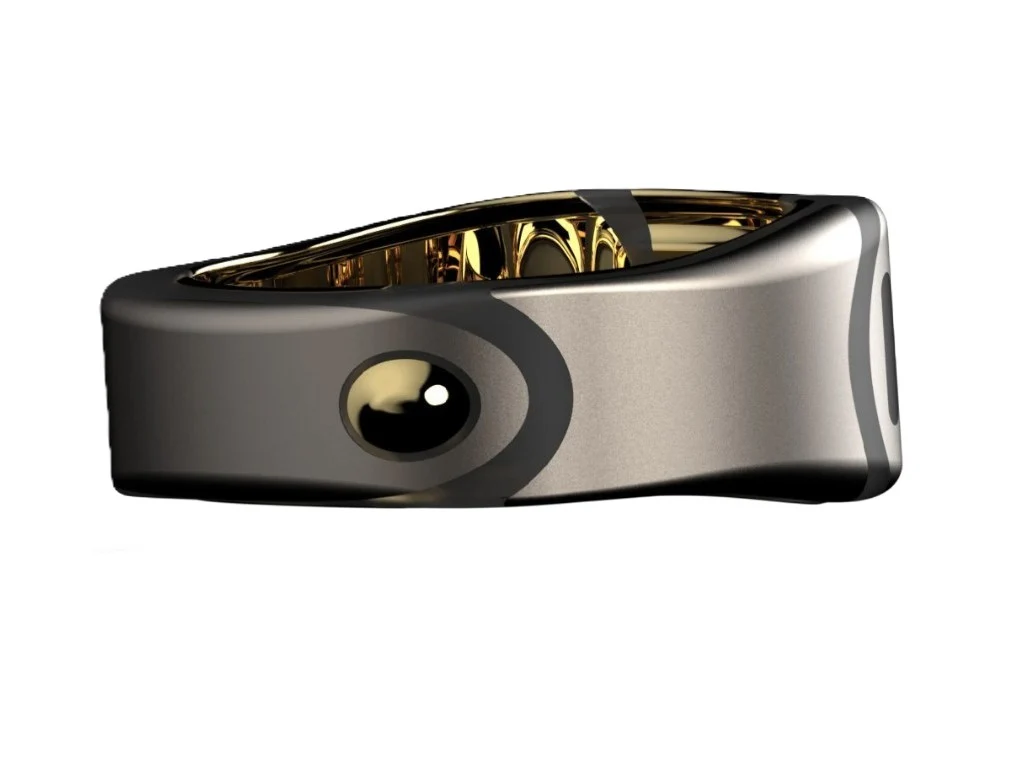
Another notable smart ring is the Bond Ring, which showcases a range of exciting features and advancements. This product was revealed a few months ago by a newly established company based in Detroit called Wilder Tech Inc., with pre-orders expected to start shipping in November. It’s important to mention that the ring is unlikely to work entirely as it has been promoted.
Concerns About Power Source
The claim that the ring operates solely on energy produced by body heat raises skepticism. In theory, this would mean the device wouldn’t require charging and could be worn continuously. This would indeed be convenient since most smart rings typically need charging for about an hour every four to ten days. However, it’s debatable whether a smart ring can actually generate sufficient energy from body heat given its small size. No other company has successfully utilized this concept so far.
Sensor Overload
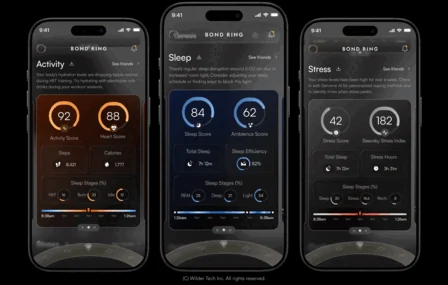
Additionally, the numerous sensors that are said to be included in the ring raise some eyebrows. The company asserts that the Bond Ring can monitor ECGs, track blood pressure trends, measure body temperature, pulse, oxygen saturation (SpO2), heart rate variability (HRV), and maximum oxygen uptake (VO2 max). It also claims to assess body composition, which consists of body fat, muscle, skeletal mass, and water retention. These are merely the internal sensors; the tiny ring is also said to have sensors for UV exposure, ambient temperature, light intensity, and noise levels.
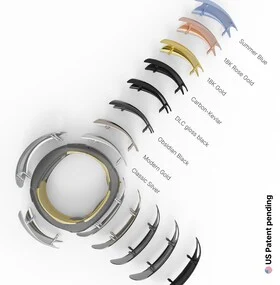
The promotional material gives the impression that this smart ring includes every feature imaginable. Along with energy from body heat and a variety of sensors, the ring is reportedly water and dust resistant according to IP6X standards, and it offers customizable side panels for design variation. Additionally, it boasts integrated AI functions (“Powered by ChatGPT o3 PRO”) and a security chip that supposedly makes it the “world’s most secure” wearable.
Conclusion
In conclusion, it’s very improbable that the ring will perform as advertised. Not even at its steep price of $1,500, and certainly not by November this year. It seems more likely that the company has overestimated its capabilities or is making misleading claims about the product. Therefore, pre-ordering the ring from the company’s site is not advisable. If you’re in the market for a smart ring, consider looking at more established options like the Samsung Galaxy Ring or the Oura Ring 4.
Source:
Link