Key Takeaways
1. MSI has launched the EdgeXpert MS-C931 model, but availability was delayed due to production issues at Nvidia.
2. The new 99SUS 1 TB model is priced at $2,999 and features a GB10 superchip with a Blackwell GPU and a Grace CPU.
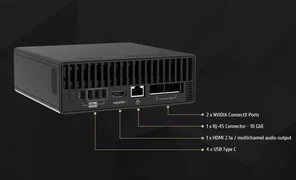
3. Connectivity options include 4 USB-C 3.2 ports, HDMI 2.1a output, a 10 GbE NIC, and Wi-Fi 7 with BT 5.3.
4. The mini PCs run on Nvidia DGX OS and support major AI frameworks, allowing for easy integration with popular AI models.
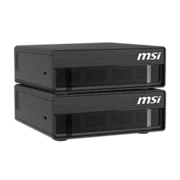
5. Users can link two units for enhanced performance of up to 2 PetaFLOPs, 256 GB of memory, and 8 TB of storage.
Back in May, several big Original Equipment Manufacturers (OEMs) announced they would soon launch their tiny AI supercomputers based on Nvidia’s DGX Spark Grace Blackwell platform. Among these companies was MSI, which introduced its EdgeXpert MS-C931 model. However, the availability of these high-performance mini PCs got delayed for several months due to reported production issues at Nvidia. The good news is that Nvidia began shipping its versions a few weeks ago, allowing OEM partners to catch up. MSI is showcasing the EdgeXpert mini PCs, with prices starting at $2,999, though it seems like the product codes and case designs have changed since then. The original MS-C931 still has a product page but is not for sale. Instead, MSI now has a 99SUS 1 TB base model priced at $2,999, along with pricier options like the 11SUS 4 TB and 01SKUS X2 8 TB.
Specifications of the New Model
The specifications for the 99SUS 1 TB are very similar to the earlier MS-C931, with the exception that the Bluetooth version was downgraded from 5.4 to 5.3. This model features the GB10 superchip alongside a Blackwell GPU, which can handle 1 PetaFLOP of FP4 AI tasks, as well as a Grace CPU that has 10 ARM Cortex-X925 cores and another 10 ARM Cortex-A725 cores. Complementing the superchip is 128 GB of LPDDR5X unified system memory, boasting a bandwidth of 273 GB/s. Both the CPU and GPU can access this LPDDR5X RAM through an NVLink C2C interconnect that provides 5 times the PCIe 5.0 bandwidth. Regarding storage, MSI offers NVMe SSD options of either 1 TB or 4 TB. The physical dimensions of the case are 151 x 151 x 52 mm (1.19 liters in volume), and it weighs in at 1.2 kg.
Connectivity Options
For connections, the unit provides 4 USB-C 3.2 20 Gbps ports with Power Delivery support, an HDMI 2.1a video output that includes multichannel audio, a 10 GbE NIC, and 2 Nvidia ConnectX-7 ports. Wireless connectivity is provided by a Wi-Fi 7 + BT 5.3 card, ensuring users stay connected.
On the software front, these mini PCs run on Nvidia DGX OS (based on Ubuntu), which comes with the complete Nvidia AI software ecosystem, including frameworks, SDKs, NIMs, and deployment blueprints. Developers can quickly access CUDA, PyTorch, TensorFlow, and Jupyter, with performance enhanced by Nvidia TensorRT. The system is crafted for straightforward integration with top AI models like DeepSeek R1, Llama 3.1, and major Google/Meta frameworks.
Performance Enhancements
To double the performance, users can link two of these units using the ConnectX-7 ports, allowing for up to 2 PetaFLOPs of AI performance, 256 GB of unified memory, and 8 TB of storage.
MSI designed the EdgeXpert AI mini PCs with a precise dual-fan cooling system, featuring ultrawide fins and a sophisticated heat-pipe layout that lets users manage fan speeds and airflow to keep the system quiet, even during heavy workloads.
It appears that initial stock was limited since these units are currently out of stock on the MSI website, but restocks are expected regularly as Nvidia slowly releases more DGX Spark kits to its OEM partners. Interested customers can sign up for email alerts when the products are back in stock.