
Tag: AI Impact

  • AI’s Impact on Jobs: Reddit Users Skeptical of New Study Findings

    AI’s Impact on Jobs: Reddit Users Skeptical of New Study Findings

    Key Takeaways

    1. Recent research from Yale University indicates no strong signs of widespread job loss due to AI since the launch of ChatGPT in November 2022.
    2. The study compares current labor market changes with historical technological revolutions, finding shifts in job types remain within normal ranges.
    3. Young professionals aged 20 to 24 are showing more noticeable changes in job patterns, but the reasons are unclear and difficult to attribute solely to AI.
    4. Historical context suggests that significant changes in the job market typically take years or decades following technological advancements.
    5. Criticism of the study includes concerns about its short observation period, lack of representative usage data, and general skepticism towards academic research findings.


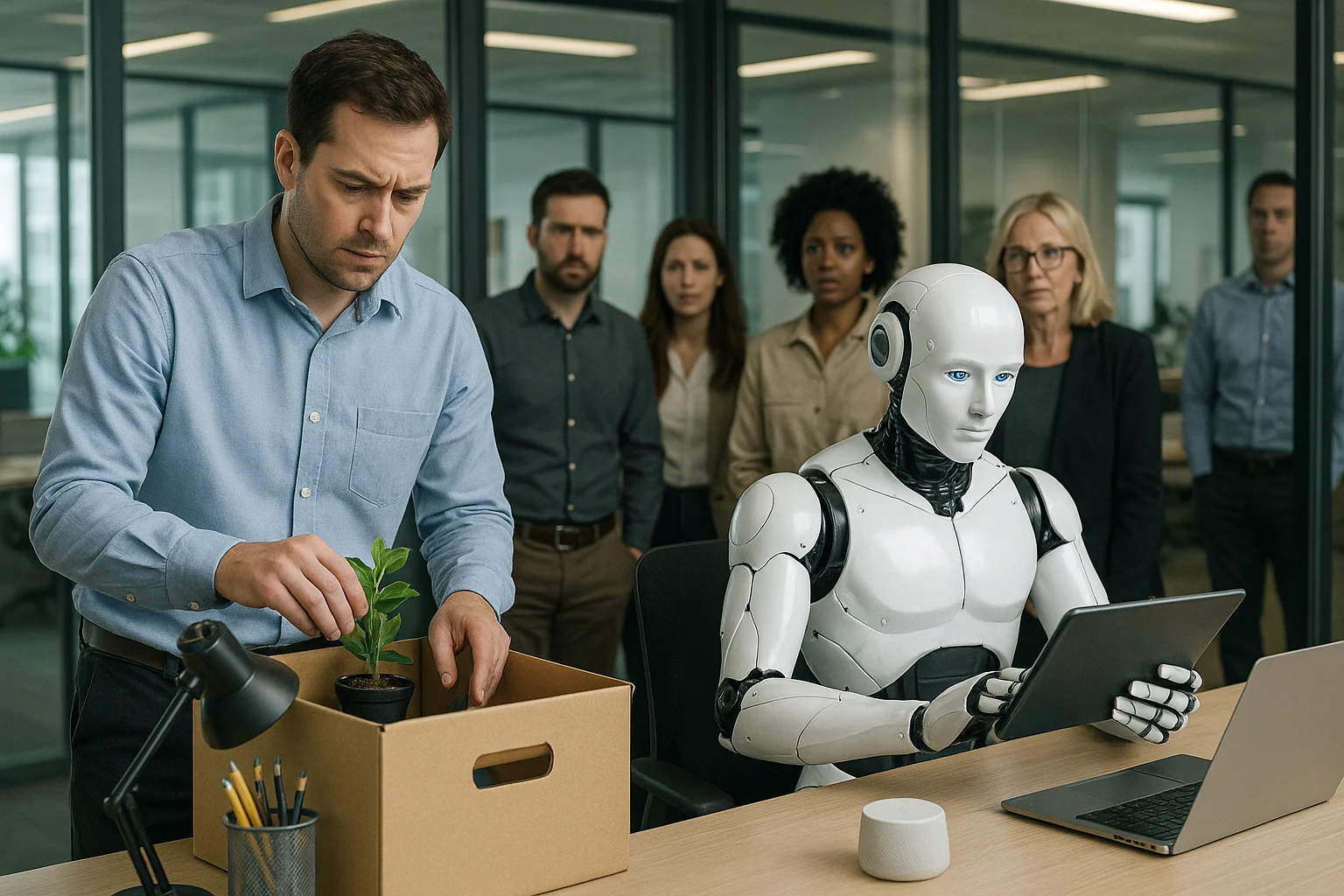
    Since the launch of ChatGPT in November 2022, there has been a lot of discussion about the possibility that artificial intelligence might endanger whole jobs and cause large-scale unemployment. A new research from Yale University, released on October 1, 2025, by Martha Gimbel, Molly Kinder, Joshua Kendall, and Maddie Lee, shows a somewhat different view – at least for the time being. Even with the quick rise of generative AI, the researchers did not find strong signs of widespread job loss or significant structural changes in the job market in the US up to now.

    Examining Labor Market Changes

    Thirty-three months after the debut of ChatGPT, the researchers looked into whether the labor market was changing more quickly than it did during past technological revolutions, like the rise of personal computers or the internet. They compared the current situation with three historical periods: the PC era (1984–1989), the internet boom (1996–2002), and a pre-AI control period (2016–2019). Their analysis used CPS data, AI exposure estimates from OpenAI, and user data from Anthropic.

    Findings on Job Losses

    The findings are quite telling: while there are slight shifts in job types, these remain within the normal range of historical changes. Even in industries that are heavily impacted by AI, like information and finance, the researchers did not find solid proof of job losses that could be directly linked to AI technologies.

    The research particularly highlighted young professionals. Among university graduates aged 20 to 24, there were more noticeable changes in job patterns, although the exact reasons for this are not clear. The small sample size and overall labor market trends make it hard to determine if AI is the main factor. The authors are careful in their interpretations and note the study’s constraints: the exposure data relies on theoretical models, while actual usage information is still sparse. They call on AI firms to share more detailed and clear data, including specifics at the company level.

    Context of Technological Shifts

    When viewed against historical changes, this study provides context for the ongoing discussions about AI-related job losses. Past technological advancements, like the introduction of computers or the internet, typically took years or even decades to have a significant effect on the job market. The researchers argue that expecting AI to lead to immediate changes is unrealistic.

    On Reddit, particularly in a popular thread on r/technology, users expressed skepticism. Many people criticized the study for being out of touch with reality, pointing to actual layoffs, increased performance pressure, and hiring freezes. The most common points of criticism were the brief 33-month observation period, the insufficient representative usage data, and a general mistrust of academic research.

    Source:
    Link


  • AI Disrupts Entry-Level Job Market in the UK

    AI Disrupts Entry-Level Job Market in the UK

    Key Takeaways

    1. AI growth is significantly impacting the job market, leading to concerns about job replacement for entry-level positions.
    2. There has been a 32% decrease in entry-level job openings in the UK since the introduction of ChatGPT in 2022.
    3. Entry-level positions are expected to shrink to 25% of the overall UK job market by 2025.
    4. Major companies like Microsoft and Google are rapidly integrating AI into their operations, increasing reliance on technology.
    5. Experts warn that governments need to act now to manage AI regulations and mitigate potential unemployment during this technological shift.


    The rapid growth of AI in recent years is beginning to change the industrial scene in a major way. Nonetheless, experts have raised concerns that businesses will increasingly replace human labor with AI technology. For example, Dario Amodei, the CEO of Anthropic, has cautioned that AI may lead to a 50% reduction in entry-level positions within the next five years.

    Job Market Shift

    Amodei’s forecasts now appear to be alarmingly correct, as Adzuna, a job search platform based in the UK, has noted a significant decline in job openings for entry-level positions. According to their research, ever since ChatGPT was introduced in 2022, the UK job market has experienced a 32% decrease in new “graduate jobs, apprenticeships, internships, and junior positions that don’t require a degree,” as reported by The Guardian.

    Decline in Opportunities

    This fall in entry-level job vacancies is also said to have led to a shrinking of these positions to just 25% of the overall UK job market by 2025, marking a 4% drop from 2022 figures.

    Adzuna’s results seem to align with findings from Indeed. The Guardian cites Indeed’s data, stating that university graduates in the UK are facing the “most challenging job market since 2018,” with “advertised roles for recent grads having decreased by 33% in mid-June compared to last year.”

    The Unstoppable AI

    The ongoing advancement of AI is unlikely to slow down, as companies of all sizes are quickly adapting to integrate more AI into their teams. For instance, Microsoft is already creating 20-30% of its code using AI, while Google is producing even more.

    In light of this, Dario Amodei’s statement that “you can’t just step in front of the train and stop it” is quite relevant. According to Dario, the best we can do is “steer the train—steer it 10 degrees in a different direction from where it was going. That’s possible, but we need to act now.”

    It is uncertain how governments globally will manage AI regulations to ensure that the temporary surge in unemployment that often accompanies the beginning of a new “Industrial Revolution” doesn’t inflict as much pain this time around.

    Source:
    Link

  • MIT Study: ChatGPT’s Impact on Brain Health and Cognition

    MIT Study: ChatGPT’s Impact on Brain Health and Cognition

    Key Takeaways

    1. Overusing generative AI can harm critical thinking skills and creativity.
    2. Reliance on AI leads to diminished cognitive abilities and a decline in brain function.
    3. Users of AI may develop confirmation bias, only engaging with information that supports their beliefs.
    4. The study found that participants using AI experienced higher frustration and produced less satisfactory essays.
    5. The long-term effects of AI on cognitive abilities are still unknown and could have serious societal implications.


    A recent investigation called “Your Brain on ChatGPT: Accumulation of Cognitive Debt when Using an AI Assistant for Essay Writing Task” (PDF) by researchers from MIT Lab examined how large language models impact the human mind.

    Generative AI and Its Effects on Thinking

    In April, Microsoft commissioned a study that revealed that overusing generative AI harms critical thinking skills and stifles creativity. The MIT research not only backs up these claims but indicates that the repercussions could be even more extensive.

    The primary outcome shows a decline in brain function, with individuals who often rely on AI showing diminished cognitive abilities. The researchers also found a reduction in the tendency to critically evaluate information, leading to an “echo chamber effect.” This phenomenon causes individuals to only see content that supports their existing beliefs, known as “confirmation bias.” As a result, conversations around differing perspectives decline, leading to increased political division and loneliness, among other issues.

    Experiment Details

    A total of 54 participants, aged between 18 and 39, were split into three separate groups, each tasked with writing an essay. The first group utilized generative AI models like ChatGPT or Google Gemini for their work.

    The second group had the chance to use search engines for gathering information, while the third group had no tools available at all. Following this, all participants underwent a second phase where they were again without any tools.

    Frustration and Outcomes

    Besides the effects mentioned earlier, it was observed that those in the first group experienced higher frustration levels and produced less satisfactory results compared to the other groups.

    It’s important to mention that the findings of this study have not been peer-reviewed yet. Additionally, long-term effects are still unknown. However, if ongoing research continues to show that the use of generative AI models results in reduced brain activity and critical thinking over time, there could be serious implications for society and human progress in the future.

    Source:
    Link