
Key Takeaways
1. The YouTuber “Hyperspace Pirate” created a 3D-printed diving helmet with a unique air supply system on a floating platform.
2. The helmet’s design is available for free on Thingiverse, and users are encouraged to create a cardboard prototype for accurate sizing.
3. Safety is emphasized, with a recommendation to use only oil-free electric compressors to avoid dangerous gas exposure and health hazards.
4. Initial tests were conducted in a pool, with potential for deeper ocean exploration if the compressor design is improved.
5. The project requires careful planning and is suited for skilled makers and divers, rather than casual hobbyists.
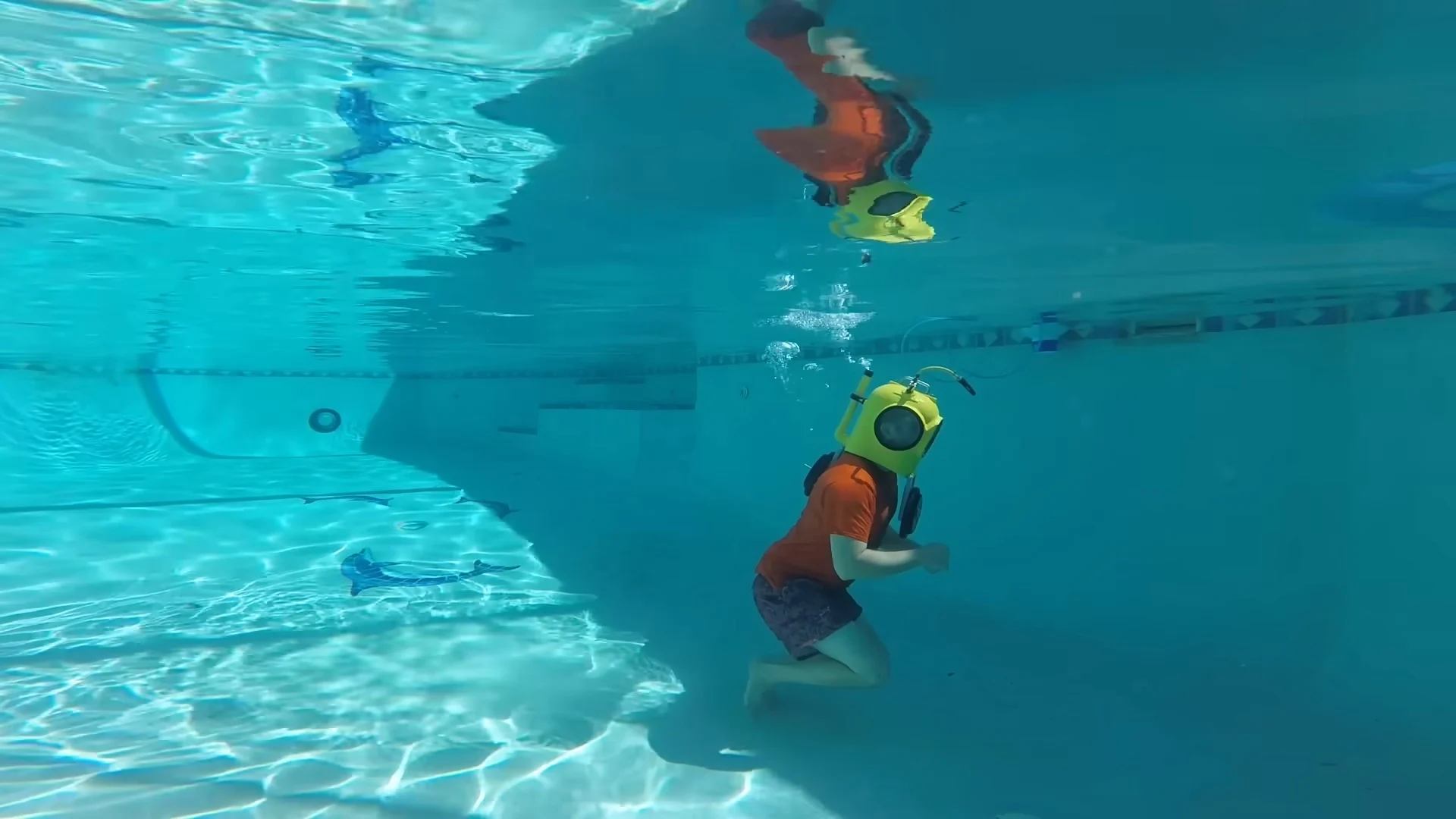
YouTuber “Hyperspace Pirate” has created a unique maker project: a completely 3D-printed diving helmet that comes with an air supply unit placed on a floating platform. The idea is pretty simple — traditional diving helmets function like an upside-down bucket, letting fresh air flow in through a hose. However, the simplicity can be misleading. Before entering the water, the creation requires meticulous technical planning, calculations, and careful testing — skipping these steps can quickly turn dangerous.
Free Design Available
The helmet’s 3D model can be downloaded for free on Thingiverse. Since everyone has different head sizes, the maker suggests measuring your own dimensions using a basic cardboard prototype, which he humorously refers to as “cardboard-aided design.” The helmet was constructed using ABS plastic, with separate pieces glued together and reinforced with fiberglass and epoxy resin. It’s important to note that polyester resin should be avoided as it can dissolve ABS. After assembling, he painted it and added a layer of lacquer for a finished look.
Safety First with Air Supply
Air is provided by a non-oil electric compressor that is attached to a flotation device along with a power inverter and battery packs, keeping everything buoyant at the surface. The maker warns against using gas-powered compressors — the exhaust gases like carbon monoxide and carbon dioxide might travel down the air hose and into your lungs, which could be deadly. Additionally, air contaminated with oil presents significant health hazards, so only oil-free, electric compressors should be utilized. The connection to the helmet is made using a standard 1/4-inch SAE fitting.
Testing in the Pool
The maker conducted his initial tests in his backyard pool. Ideally, this system should be able to function at depths of up to ten meters, as long as the compressor can provide at least 41 liters of air per minute. With a more compact, waterproofed compressor design, the builder thinks real ocean exploration could be feasible. However, whether a pool float that carries a compressor, batteries, and an inverter could withstand open-water conditions is another matter. Overall, this project is clearly aimed at skilled makers — and divers — rather than someone looking for a casual weekend project. Nevertheless, the project video is genuinely entertaining, presented with a playful touch.
Hyperspace Pirate on Youtube
Source:
Link