Key Takeaways
1. Samsung’s new monitor features QD-OLED technology with a 360 Hz refresh rate and a 0.03 ms response time, making it suitable for both office tasks and gaming.
2. The monitor uses a unique vertical stripe pixel layout (V-Stripe) that improves text readability and image clarity, ideal for document editing and content creation.
3. Samsung will showcase the V-Stripe panels at the 2026 CES expo, with orders already placed by companies like Asus, Gigabyte, and MSI.
4. The company has addressed overheating and power usage issues in the new monitor design, achieving a peak brightness of 1300 nits.
5. The monitor’s new 21:9 aspect ratio offers more horizontal pixels, enhancing the viewing experience while still managing power demands and refresh timing challenges.
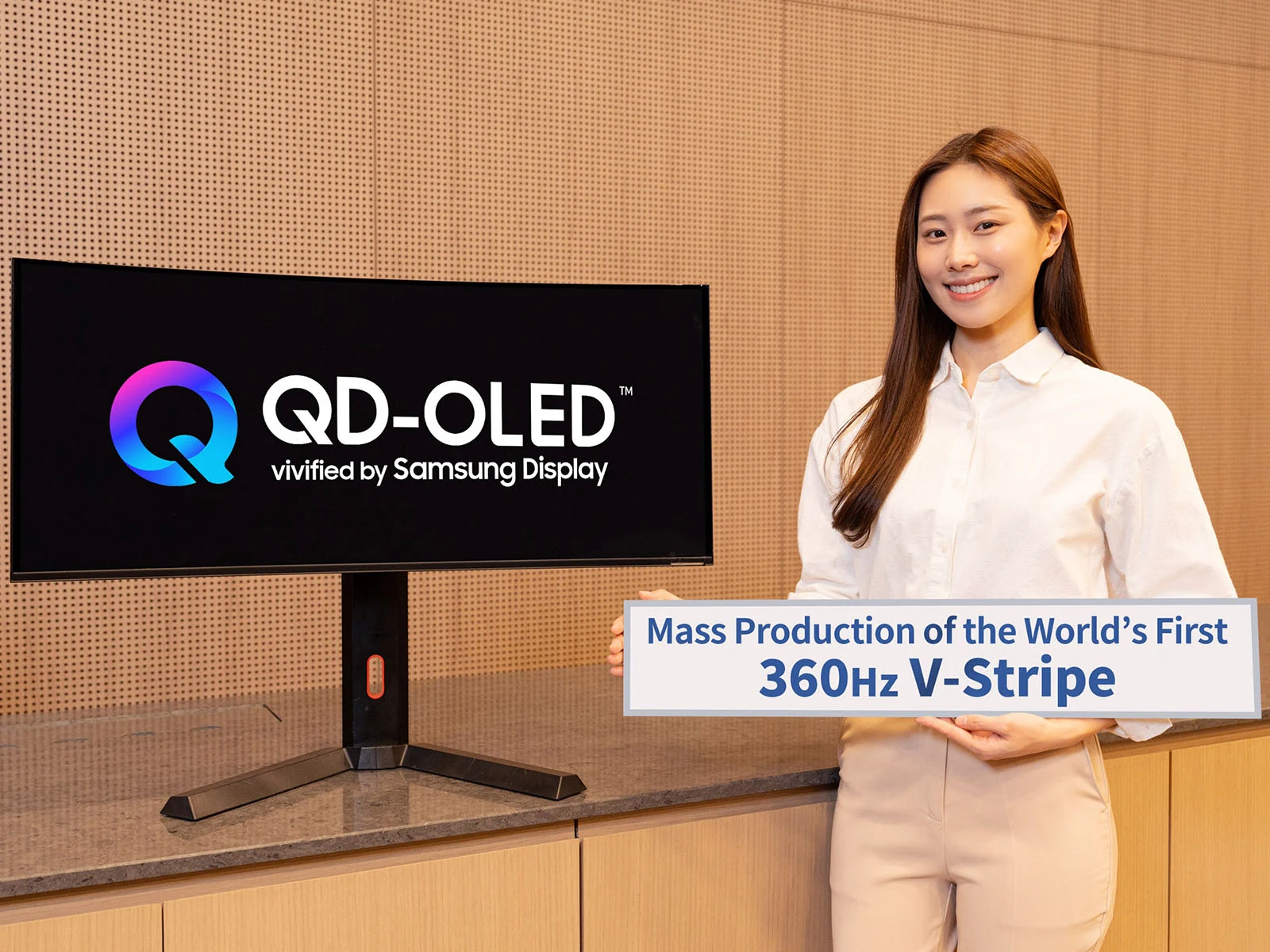
Samsung has designed a monitor that could be the ultimate choice for office tasks, featuring vibrant QD-OLED technology along with an impressive 360 Hz refresh rate and a lightning-fast 0.03 ms response time, making it a great option for gaming as well.
Cutting-Edge Technology
This monitor is the first of its kind to use a QD-OLED panel with such a rapid refresh rate, utilizing a vertical stripe pixel layout (V-Stripe). This arrangement enhances the readability of text by creating sharper edges, making it ideal for office work like document editing, programming, or even just reading. It’s also beneficial for content creators due to the clearer, more precise images.
Upcoming Showcase
At the 2026 CES expo, which kicks off on January 6 in Las Vegas, Samsung will present these innovative V-Stripe panels, which have already been ordered by companies such as Asus, Gigabyte, and MSI.
Overcoming Challenges
Samsung has successfully tackled the issues of overheating and increased power usage associated with the new vertical subpixel configuration by “improving organic material efficiency and optimizing design” of the QD-OLED tech. This advancement allows for a peak brightness of 1300 nits, surpassing the current 33% discounted Odyssey G7 QD-OLED monitor available on Amazon.
The conventional subpixel layout in bright Quantum Dot screens has an RGB “triangle,” leading to blurred character edges and halo artifacts that can be hard on the eyes, especially for those who spend long hours editing documents or coding. With the new vertical arrangement, red is the longest subpixel, followed by a shorter green, and an even shorter blue, resulting in crisper text.
Aspect Ratio Benefits
Additionally, the introduction of a new 21:9 aspect ratio with the V-Stripe monitor panels brings more horizontal pixels compared to the older 16:9 models. This change has led to increased power demands and posed further challenges in synchronizing the refresh timing between the left and right sides, which Samsung has addressed through matrix design optimizations and the use of newer, more energy-efficient organic diode materials.
Samsung has stated that its advanced QD-OLED technology has allowed it to secure 75% of the OLED monitor market share, although final figures have yet to be revealed. It will be interesting to see what Asus, MSI, Gigabyte, and other monitor manufacturers will announce at CES 2026, but Samsung confirms that mass production of its sharp V-Stripe QD-OLED panels with 360 Hz refresh has already commenced.
Source:
Link