Tag: Xiaomi SU7 Ultra

  • Xiaomi Launches SU7 Ultra High-Performance Electric Sedan in China

    Xiaomi Launches SU7 Ultra High-Performance Electric Sedan in China

    Xiaomi has revealed the SU7 Ultra, a prototype presented in July, and it has officially launched in China today, three months later. This high-performance electric sedan comes with some remarkable statistics worth noting.

    Performance Highlights

    The SU7 Ultra impresses with a staggering 1,500 horsepower and a 0-to-100 km/h acceleration time of less than 2 seconds, establishing new benchmarks for electric vehicle capabilities. However, this performance comes at a high cost. Let’s dive into the specifics.

    Design Features

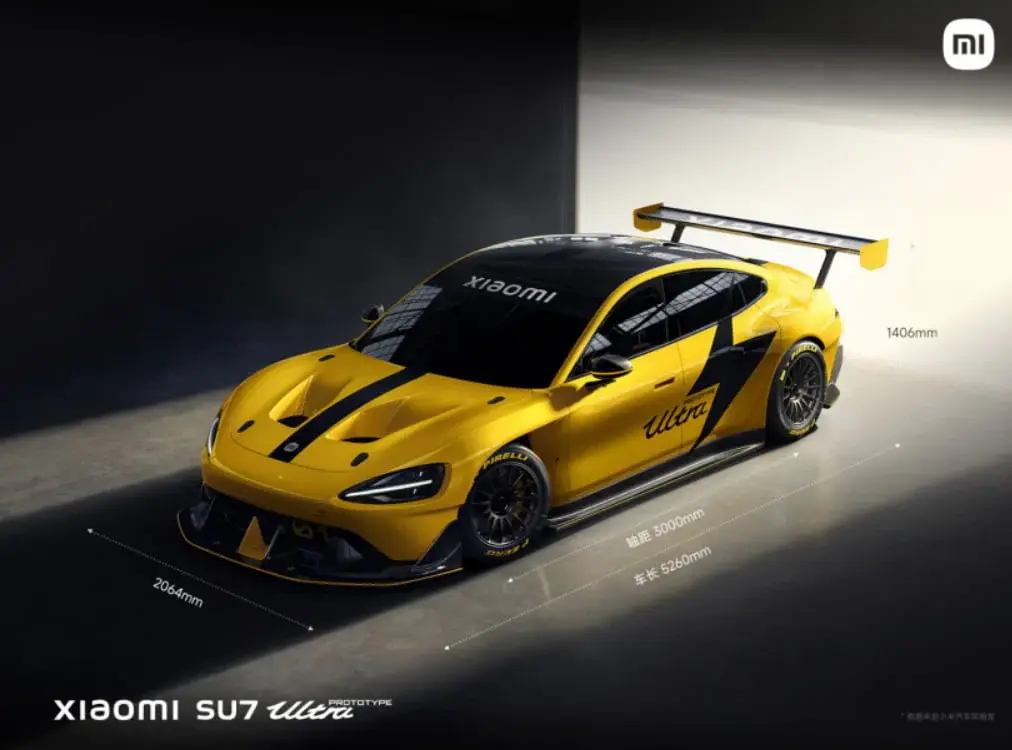
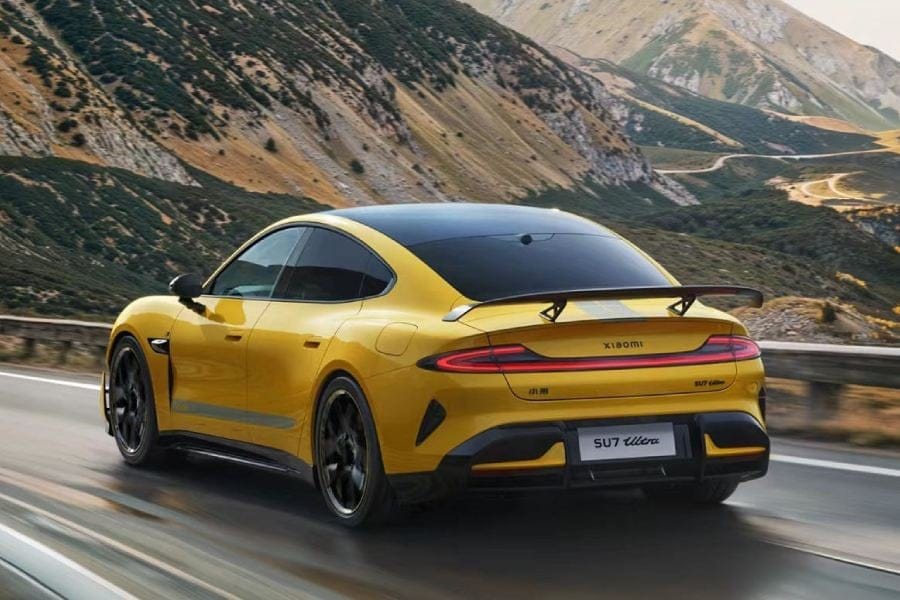
    This model expands on the design of the standard SU7 sedan, emphasizing improved aerodynamics. It showcases sportier bumpers and a large rear spoiler that measures 1.56 meters in width, along with a broader body than its standard version.

    These enhancements, paired with an active rear diffuser, result in a claimed downforce of 265 kilograms. The SU7 Ultra is equipped with 21-inch wheels fitted with Pirelli P Zero 5 tires. The interior reflects a mix of luxury and performance, featuring Alcantara leather on the seats, steering wheel, door panels, and various other elements. Additionally, Xiaomi incorporates carbon fiber into components such as the doorstep panels and center tunnel.

    Power and Specs

    Under the hood, the SU7 Ultra uses a CATL-sourced Qilin 2.0 battery with a capacity of 93.7 kWh. This battery reportedly has a maximum discharge of 1,330 kW and supports rapid DC charging, allowing a 10-80% charge in a mere 11 minutes.

    Powering the vehicle are three electric motors—two V8s and one V6—collectively producing 1,138 kW (1,526 hp) and a peak torque of 1,770 Nm. This setup enables the SU7 Ultra to sprint from 0 to 100 km/h in only 1.98 seconds, hit 200 km/h in 5.86 seconds, and achieve a top speed of 350 km/h. Moreover, it records a quarter-mile time of 9.23 seconds and features Asil-D torque vectoring for better handling.

    Braking and Rivals

    The braking system of the SU7 Ultra is noteworthy, featuring the largest carbon ceramic brake discs found in any production vehicle to date. The front discs are sized at 430 mm x 40 mm, while the rear ones are a bit smaller at 410 mm x 32 mm.

    These brakes can endure extreme temperatures exceeding 1,300°C (2,372°F) and come with Akebono calipers (six-piston in the front and four-piston in the back) for outstanding stopping capabilities. Notably, the SU7 Ultra can halt from 100 km/h to a full stop in just 30.8 meters. Although the prototype set a record lap time at the Nürburgring Nordschleife, the production model may be a bit slower because of its additional weight, with the prototype weighing in at 1,900 kg thanks to its carbon fiber body.

    Pricing and Market Impact

    The price of the Xiaomi SU7 Ultra is set at 814,900 yuan (around 114,200 USD) in China. Pre-orders are currently available, but mass production and deliveries are not anticipated until March 2025.

    Xiaomi’s CEO Lei Jun has positioned the SU7 Ultra as an appealing option against the Porsche Taycan Turbo GT, which offers less power for a higher price of 1,998,000 yuan in China. According to Goldman Sachs, they predict sales of the SU7 Ultra could reach 4,000 units by 2025. The vehicle appears to be gaining traction in China, as it received 3,680 reservations within just 10 minutes after its launch event concluded.


    Image 1
    Image 1
    Image 1
  • Xiaomi SU7 Ultra: Enhanced EV with Carbon-Ceramic Brakes and Triple Motors

    Xiaomi SU7 Ultra: Enhanced EV with Carbon-Ceramic Brakes and Triple Motors

    Xiaomi has transformed its first electric vehicle (EV) into a car that even a Ford executive would appreciate. Nevertheless, this still doesn’t seem to satisfy CEO Lei Jun, who back in July 2024 shared his dreams of evolving the SU7 into something more akin to a hypercar.

    Design Features

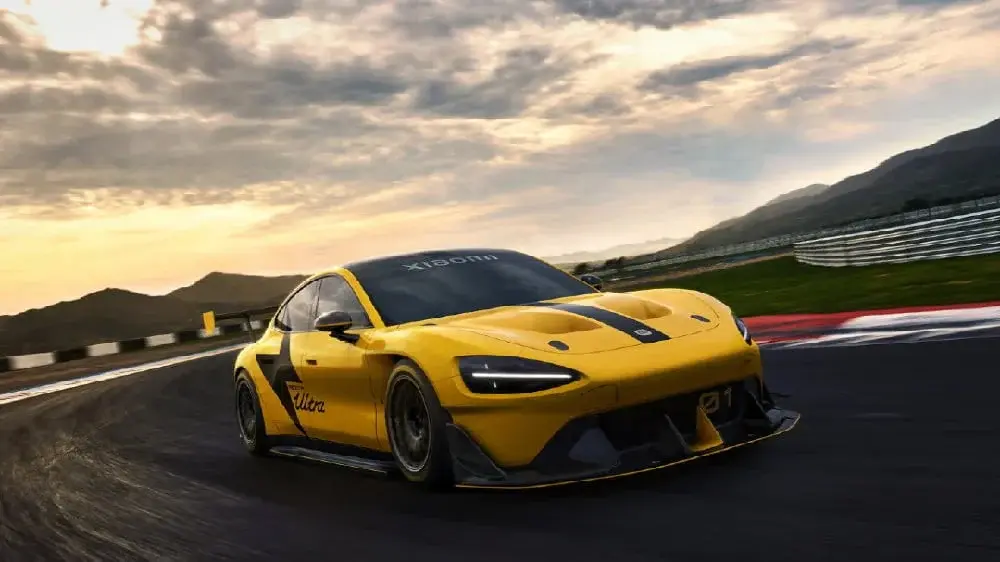
    The Ultra prototype bears a strong resemblance to the company’s initial mid-range sedan, but it stands out with distinct features like a front splitter, a massive rear wing, and a striking new yellow paint job.

    Performance Specifications

    Xiaomi has outfitted the vehicle with a motor system boasting a rated output of 1,138 kilowatt (kW), which is equivalent to 1,526 horsepower, and it utilizes CATL’s second-generation cell-to-body Qilin battery pack, enabling outputs of up to 1,300 kW.

    The most impressive upgrade, however, might be the transition to carbon-ceramic brakes, which are designed to withstand temperatures of at least 1,300 degrees Celsius.

    Brake Technology and Costs

    These brakes are often considered thicker— with the SU7 Ultra’s measuring up to 40 millimeters (mm) in height— yet they are lighter and more durable compared to standard brakes. Still, they come with a hefty price tag, with production costs reportedly comparable to that of an average car for the SU7 Ultra.

    In addition, the anticipated production model is projected to be priced around 799,999 yuan, which translates to roughly $112,270, set for an early 2025 release, not including the carbon fiber body seen on the original prototype.

    Upcoming Launch

    Meanwhile, the SU7 Ultra is expected to make its debut alongside the Xiaomi 15 series, which features advanced flagship Android smartphones, on October 29, 2024.

    Xiaomi via MyDrivers

    Digital Chat Station via Weibo

    Car News China


    Image 1
    Image 1
    Image 1
    Image 1
  • Xiaomi SU7 Ultra FAQs: First Second-Gen Kirin Battery Debut

    Xiaomi SU7 Ultra FAQs: First Second-Gen Kirin Battery Debut

    Xiaomi’s recent “SU7 Answering Questions” episode provides insights into the SU7 Ultra Prototype, user connectivity features, and car ownership specifics.

    The SU7 Ultra Prototype showcases advanced in-house innovations, including a Xiaomi-designed super motor and co-developed track-level battery technology. It also introduces the world’s first second-generation Kirin battery. Xiaomi aims to incorporate these technologies into mass-produced cars following the prototype’s New Zealand trial this October.

    Seamless Command Switching

    Drivers can easily switch between Xiaoai and Siri commands. CarPlay users will be pleased to know that Xiaomi’s voice assistant Xiaoai remains available for voice wake-up. The ability to switch between Xiaoai and Siri ensures a seamless user experience. The “IVI” mark on the panoramic roof designates installation points for a roof rack. Xiaomi advises users to prioritize safety and adhere to guidelines when installing a roof rack.

    High-Speed Performance and Service Package

    Xiaomi’s lab data confirms the vehicle’s impressive downforce at high speeds, although comparing it to other models’ downforce data at different speeds could be misleading. The worry-free service package, which is non-refundable after 7 days, offers benefits that transfer to the next car owner.

    Policy details can be accessed through the Xiaomi Auto app once the car is activated and insurance is confirmed. To power down, navigate to “Settings,” while restarting involves pressing the brake, locking the car, or using the start/stop button. For a system reboot, hold both steering wheel roller buttons for 10 seconds.

  • Xiaomi SU7 Ultra Electric Car Unveiled: 0-100 km/h in 1.97 Seconds

    Xiaomi SU7 Ultra Electric Car Unveiled: 0-100 km/h in 1.97 Seconds

    Xiaomi has unveiled the pinnacle of its SU7 electric car series – the SU7 Ultra. Designed with a focus on pure performance and track supremacy, the SU7 Ultra aims to break lap time records.

    The car features ultra-fast charging capabilities and a braking system optimized for the track. The SU7 Ultra's specifications are almost unbelievable. Equipped with Xiaomi V8s electric motors, it delivers a total of 1548 horsepower, accelerating from 0 to 100 km/h in just 1.97 seconds and reaching a top speed of over 350 km/h.

    Advanced Battery and Braking System

    At the heart of this powerhouse is the world’s first CATL Kirin II battery, offering both ultra-fast charging and exceptional power delivery. Additionally, the SU7 Ultra is equipped with a track-optimized braking system that can bring the car to a complete stop from 100 km/h in only 25 meters.

    Lightweight Design

    Xiaomi has significantly reduced the weight of the SU7 Ultra by extensively using carbon fiber materials. This aggressive weight reduction strategy results in a total weight of an impressive 1900kg. The car’s aerodynamic design focuses on maximizing downforce, achieving a level that even exceeds the car’s own weight.

    With these extraordinary features, Xiaomi aims to take on lap times set by non-mass-produced cars in October 2024. Their ambitions extend to 2025, where they plan to dominate the Nürburgring mass production car lap time list.